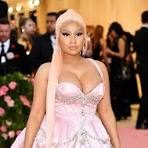

A wave of controversy swept across social media platforms this week following viral posts alleging that global celebrities are involved in secret ritualistic crimes, claims attributed online to U.S. rapper Nicki Minaj but for which no verified evidence has been presented.
The allegations were amplified by Dom Lucre, a popular social media personality, who claimed in a widely shared post that Minaj had “revealed” the existence of an alleged secret cult within the entertainment industry. According to the post, unnamed celebrities were accused of engaging in extreme criminal acts as part of occult practices.
“Your favourite artist has been practising rituals in a satanic cult,” the post quoted Minaj as saying, adding that the so-called activities were linked to power and influence. Dom Lucre further asserted, without evidence, that the entertainment industry was “on fire” as a result of the claims.
However, as of the time of reporting, there is no verified public statement, interview, or social media post from Nicki Minaj confirming these allegations, nor has any credible investigative body substantiated the claims.
Despite the lack of verification, the posts triggered an intense reaction among supporters and critics alike. Several users praised Minaj for what they described as “courage,” while others framed the claims within long-standing political and ideological conspiracy narratives.
One user wrote, “Only God can give this kind of courage,” while another claimed, “The jig is up—Hollywood is on fire.”
Other posts escalated the discussion by linking the allegations to U.S. politics, accusing unnamed political figures and parties of complicity, again without evidence. Some comments called for extreme punishment of alleged participants, prompting concern among observers about online radicalisation and incitement.
The controversy also revived online interest in the 2009 case of Gabriela Rico Jiménez, a young Mexican model who was filmed in a distressed state outside a hotel in Monterrey, making allegations against powerful figures.
In the video, Rico Jiménez appeared agitated and made incoherent claims involving global elites and criminal conspiracies. Authorities at the time attributed her behaviour to a mental health crisis and detained her briefly. No official records have clarified her long-term fate.
While some online users now cite her case as “proof” of hidden crimes, journalists and researchers note that no credible evidence has ever supported her claims, and there is no confirmed link between her case and any current allegations.
Media analysts and human rights observers warn that the viral spread of unverified and extreme allegations can cause real-world harm.
“There is a clear pattern where sensational claims, stripped of evidence, gain traction during periods of political polarisation,” said a Lagos-based media researcher. “Such narratives often recycle older conspiracy theories and attach them to current public figures.”
Fact-checking organisations have also cautioned the public against treating social media posts as verified information, especially when claims involve serious criminal allegations.
As of early 2026, no law enforcement agency, court, or international body has announced investigations supporting the allegations circulating online, and no mainstream media outlet has confirmed the claims attributed to Minaj.
Nicki Minaj has not publicly responded to the viral posts at the time of this report.