

The Rule of Law and Accountability Advocacy Centre (RULAAC) has said that President Bola Tinubu’s 66th Independence Anniversary address failed to give a substantive account of the security situation or commit to the integrity of the 2027 general elections, urging his administration to ensure that economic gains translate into better lives for ordinary Nigerians.
In a statement issued Thursday and signed by its Executive Director, Okechukwu Nwanguma, the group acknowledged the president’s references to economic growth, declining inflation, improving foreign reserves, a more stable foreign-exchange market and increased non-oil exports. It said, however, that Nigerians would judge the state of the nation by a different standard.
“For millions of Nigerians, the most urgent question is not whether particular macroeconomic indicators have improved, but whether those improvements are translating into a better quality of life,” the statement said.
RULAAC noted that Mr Tinubu himself acknowledged that economic success cannot be measured by statistics alone, but must be reflected in food on families’ tables, electricity in homes, quality education and security in communities. The president told Nigerians the country was moving “from reform to prosperity.”
The group said food, transportation, housing, healthcare and education remain difficult for many households to afford, and that the purchasing power of wages has been substantially eroded by inflation.
“Government must therefore move urgently from celebrating improvements in macroeconomic indicators to demonstrating measurable improvements in household welfare,” it said.
RULAAC called for a transparent accounting of the savings and additional revenues generated by the reforms, and how they are being invested in social protection, healthcare, education, public transportation, employment and infrastructure. It also criticised what it described as waste and ostentation in government.
“Citizens cannot continually be asked to make sacrifices while government at all levels appears insufficiently committed to reducing waste, ostentation and the cost of governance,” the statement said.
On security, the group said it was concerned that the address did not provide “a sufficiently substantive account of the security situation or a clear assessment of progress, failures and outstanding challenges.” It cited terrorism, banditry, kidnapping and communal violence as continuing threats to lives, livelihoods and economic activity.
“Farmers cannot contribute meaningfully to food security when they cannot safely access their farms,” it said. “Businesses cannot thrive where kidnapping and violent crime impose additional costs.”
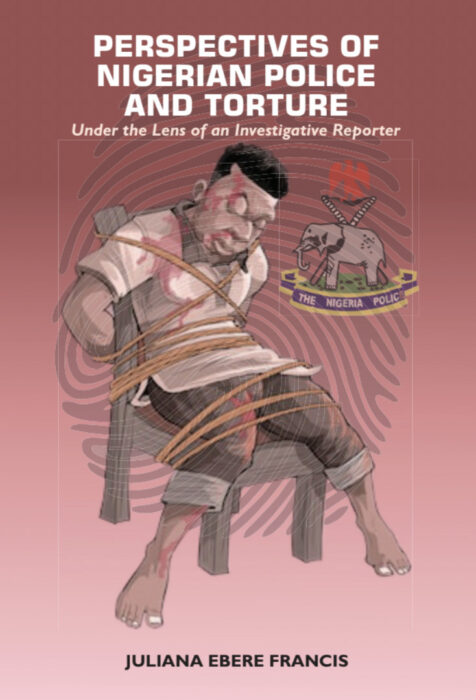
RULAAC also said security must include protection from abuses by state agents. It said it continues to receive and document allegations of arbitrary arrest, torture and other ill-treatment, prolonged detention, extortion and unlawful seizure of property by law-enforcement personnel.
“A democratic government committed to security must protect citizens both from criminals and from abuses committed by those entrusted with enforcing the law,” the group said, calling for police reform, accountability for misconduct, effective civilian oversight and full implementation of the Police Act 2020.
The organisation argued that Nigeria’s challenge is not only economic but also “a crisis of institutions, accountability and public confidence.”
“Economic reform without governance reform will not be sufficient,” it said. It urged greater transparency in public spending, stronger anti-corruption institutions, respect for judicial independence, and protection for freedom of expression, peaceful assembly, journalists, human-rights defenders and civil society.
“The rule of law cannot be selectively applied,” the statement added.
On the 2027 polls, RULAAC described the absence of a substantive commitment as a significant omission, noting that the country is already effectively in an electoral season, with reports of political intimidation, disruption of political activities and violence.
“The credibility of the 2027 elections will not be determined only on election day. It is being determined now,” the statement said.
The group said every party and candidate must be able to campaign freely, security agencies must remain “professional, impartial and politically neutral,” and the Independent National Electoral Commission (INEC) must be allowed to act independently and “demonstrate transparency, consistency and institutional courage.”
It added that election technology such as BVAS and electronic transmission or publication of results can strengthen transparency, “but technology alone cannot guarantee credible elections where violence, intimidation, vote-buying, abuse of state resources or partisan conduct by public institutions is tolerated.”
Noting that Mr Tinubu is both president and “an interested political actor in the electoral process,” RULAAC said he bears a particular responsibility to ensure state institutions are not used to give any candidate or party improper advantage. It urged him to publicly commit to guaranteeing equal security protection for all lawful political activities regardless of party, directing security agencies to maintain strict neutrality, and ensuring prompt investigation and prosecution of political and electoral violence without regard to affiliation.
The group also urged him to protect citizens, journalists, election observers and civil society organisations, respect INEC’s independence and refrain from improper interference, and ensure that federal institutions and public resources are not used for partisan purposes.
It further called for support for enforcement against vote-buying, intimidation and other electoral offences, and for respect for lawful electoral outcomes and constitutional mechanisms for resolving disputes.
“These commitments should not remain rhetorical,” the group said. “Nigerians must see them reflected in the conduct of state institutions throughout the months preceding the elections.”
Concluding, RULAAC said independence must carry practical meaning in citizens’ daily lives.
“At 66, Nigeria requires more than optimism,” the statement said. “It requires accountable institutions, responsible political leadership, security founded on respect for human rights, an economy whose gains reach ordinary citizens and an electoral process in which Nigerians can freely determine who governs them.”
It called on the Federal Government to use the period before the 2027 elections to rebuild public confidence through measurable improvements in security, living conditions, institutional accountability, and democratic freedoms.
“Nigeria’s democracy will be strengthened when citizens, not governments, political parties or security agencies, are genuinely free to determine the country’s political future through credible elections,” Mr Nwanguma said.