

Rights group faults Tinubu’s Independence Day speech for silence on security and electoral integrity
The Rule of Law and Accountability Advocacy Centre (RULAAC) has urged the Federal Government to ensure that improving economic indicators lead to better lives for citizens, saying President Bola Ahmed Tinubu’s 66th Independence Anniversary address left out substantive commitments on security and the integrity of the 2027 general elections.
In a statement issued Thursday and signed by its Executive Director, Okechukwu Nwanguma, the organisation responded to the President’s broadcast, in which he said the administration’s reforms were beginning to yield results and that Nigeria was moving “from reform to prosperity.”
Nwanguma said RULAAC acknowledged the importance of macroeconomic stability and noted the President’s references to economic growth, declining inflation, improved foreign reserves, a more stable foreign-exchange market and increased non-oil exports.
He also noted the President’s own acknowledgement that economic success cannot be measured by statistics alone, but must be reflected in the food on families’ tables, electricity in homes, quality education for children and security in communities.
“It is precisely by this standard that Nigerians will assess the state of the nation,” Nwanguma said.
According to Nwanguma, the most urgent question for millions of Nigerians is whether improvements in macroeconomic indicators are translating into a better quality of life.
He said food, transportation, housing, healthcare and education remain difficult for many households to afford, and that the purchasing power of wages has been substantially eroded by cumulative inflation and rising costs.
He called on the government to move from celebrating indicators to demonstrating measurable improvements in household welfare.
To keep public legitimacy for the sacrifices imposed by reforms, he said, Nigerians are entitled to a transparent account of the savings and additional revenues the reforms have generated, and of how these are being invested in social protection, healthcare, education, public transportation, job creation and productive infrastructure.
Nwanguma added that citizens cannot continually be asked to make sacrifices while government at all levels appears insufficiently committed to reducing waste, ostentation and the cost of governance.
RULAAC said it was concerned that, despite the severity of insecurity in various parts of the country, the President’s address did not give a sufficiently substantive account of the security situation, or a clear assessment of progress, failures and outstanding challenges.
Nwanguma cited terrorism, banditry, kidnapping, communal violence and other criminality as continuing threats to lives, livelihoods and economic activity. “Farmers cannot contribute meaningfully to food security when they cannot safely access their farms,” he said. “Businesses cannot thrive where kidnapping and violent crime impose additional costs. Communities cannot prosper when residents live in fear.”
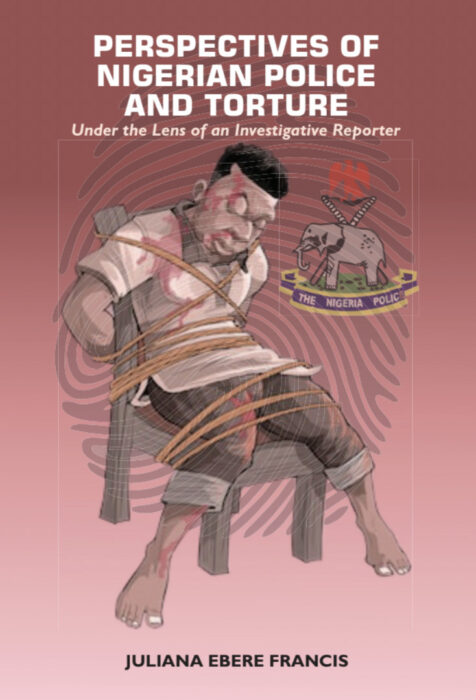
He said security must also be understood beyond military operations, noting that Nigerians must also be protected from unlawful conduct by state agents. RULAAC, he said, continues to receive and document allegations of arbitrary arrest, torture and other ill-treatment, prolonged detention, extortion and unlawful seizure of property by personnel of law-enforcement agencies.
“A democratic government committed to security must protect citizens both from criminals and from abuses committed by those entrusted with enforcing the law,” he said, calling for police reform, accountability for misconduct, effective civilian oversight and full implementation of the safeguards in the Police Act 2020 and other applicable laws.
Nwanguma said Nigeria’s challenge is not merely economic but also a crisis of institutions, accountability and public confidence, adding that economic reform without governance reform would not be sufficient.
He urged the government to be more transparent in public spending, strengthen anti-corruption institutions, respect judicial independence, guarantee freedom of expression and peaceful assembly, and protect the work of journalists, human-rights defenders and civil society organisations.
“The rule of law cannot be selectively applied,” he said, stressing that political officeholders, security officials and politically connected persons must be subject to the same laws as ordinary citizens.
RULAAC described the absence of a substantive commitment on the integrity of the 2027 general elections as one of the important omissions in the President’s address.
Nwanguma said the country was already effectively in an electoral season, with political mobilisation underway and incidents and allegations of political intimidation, disruption of political activities and violence requiring serious attention.
“The credibility of the 2027 elections will not be determined only on election day. It is being determined now,” he said.
He said every party and candidate must be able to organise, campaign and communicate freely without intimidation or violence, and that security agencies must remain professional, impartial and politically neutral.
Allegations of attacks on political opponents should be promptly and independently investigated regardless of the affiliations of victims or alleged perpetrators, he added, and those responsible for electoral violence should be prosecuted rather than protected by political influence.
On the Independent National Electoral Commission (INEC), Nwanguma said the body must be allowed to exercise its constitutional and statutory responsibilities independently, and must itself demonstrate transparency, consistency and institutional courage.
He said election technology, including BVAS and electronic transmission or publication of results, can strengthen transparency but cannot guarantee credible elections where violence, intimidation, vote-buying, abuse of state resources or partisan conduct by public institutions is tolerated.
Noting that President Tinubu is both head of state and an interested political actor in the electoral process, Nwanguma said that position places a particular responsibility on him to ensure state institutions are not used to give improper advantage to any candidate or party.
RULAAC urged the President to make an unequivocal public commitment that his administration will guarantee equal security protection for all lawful political activities regardless of party, and direct security agencies to maintain strict neutrality in the electoral process.
It also wants him to ensure prompt investigation and prosecution of political and electoral violence without regard to political affiliation, and to protect the rights of citizens, journalists, election observers and civil society organisations.
The group further called on the President to respect INEC’s institutional independence and refrain from improper interference in its operations, and to ensure that federal institutions and public resources are not unlawfully deployed for partisan purposes.
Finally, it urged him to support effective enforcement against vote-buying, intimidation and other electoral offences, and to respect lawful electoral outcomes and constitutional mechanisms for resolving disputes.
“These commitments should not remain rhetorical,” Nwanguma said. “Nigerians must see them reflected in the conduct of state institutions throughout the months preceding the elections.”
Nwanguma said the President had rightly observed that independence carried the promise of freedom to shape one’s own destiny, but that this freedom must have practical meaning.
He said a Nigerian who cannot afford basic food, a farmer who cannot safely reach his farm, a young person unable to find productive work, and a citizen afraid to criticise officials or participate peacefully in civic life all experience diminished freedom, as does a voter who cannot attend a political meeting or cast a ballot without intimidation.
“At 66, Nigeria requires more than optimism,” he said. “It requires accountable institutions, responsible political leadership, security founded on respect for human rights, an economy whose gains reach ordinary citizens and an electoral process in which Nigerians can freely determine who governs them.”
RULAAC called on the Federal Government to use the period between the anniversary and the 2027 elections to rebuild public confidence through measurable improvements in security, living conditions, institutional accountability and the protection of democratic freedoms.
Nwanguma said the ultimate evidence of a transition “from reform to prosperity” would be found not in speeches or statistics, but in whether families can afford food, whether citizens can travel and work without fear, whether public officials are accountable to the law, and whether every Nigerian can freely take part in the 2027 elections without violence, intimidation or improper interference.
“Nigeria’s democracy will be strengthened when citizens, not governments, political parties or security agencies, are genuinely free to determine the country’s political future through credible elections,” he said.