


The Rule of Law and Accountability Advocacy Centre (RULAAC) has welcomed the acquittal of Thaddeus Ojokoh and Damian Ibeh by an Imo State High Court, but says their freedom must be followed by an independent investigation into the police and compensation for the men.
The High Court of Imo State on October 23, 2026, discharged and acquitted Mr. Thaddeus Ikechukwu Ojokoh and Mr. Damian Ibeh of the criminal allegations the police brought against them, more than three years after their arrest.
In a statement signed by its Executive Director, Okechukwu Nwanguma, RULAAC called the verdict “a victory for truth, due process and the rule of law” and commended the court for “subjecting the prosecution’s case to the required standard of proof.”
The group also thanked the lawyers who defended the men pro bono, as well as the families, journalists and human-rights advocates who kept the case in public view.
But Nwanguma said the acquittal was not the end of the matter. “Acquittal without an investigation into how citizens came to be arrested, allegedly tortured, publicly labelled as terrorists and prosecuted for capital offences would leave the machinery of abuse untouched,” the statement said.
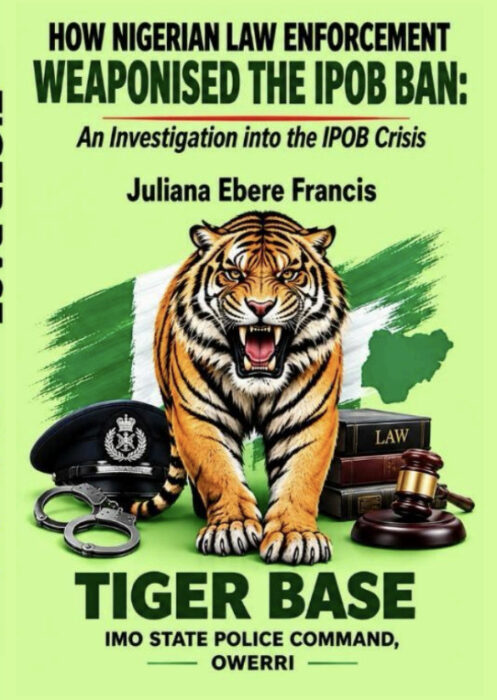
According to RULAAC, Ojokoh, a professional tailor, was arrested at Afor-Oru Market on April 15, 2023, by officers attached to the Tiger Base in Owerri. He was later accused of taking part in the April 21, 2023 killing of police officers and civilians at Okpala Junction, six days after he was already in police custody.
RULAAC said the police also claimed the arrest of another suspect and his alleged confession led to Ojokoh’s arrest, although the available dates showed he had been detained before that confession.
When the contradictions were exposed, the group said, the official account changed. The Imo State Police Public Relations Officer reportedly claimed Ojokoh had confessed to attending planning meetings and, as an alleged coordinator, did not need to be present at the attack.
“This was not a minor procedural error or an innocent confusion of dates,” the statement said. “It appeared to be an attempt to explain away an impossible allegation.”
RULAAC said it petitioned the Inspector-General of Police in 2023 for a prompt and impartial investigation. “The collapse of the prosecution reinforces the concerns RULAAC raised from the beginning,” it said.
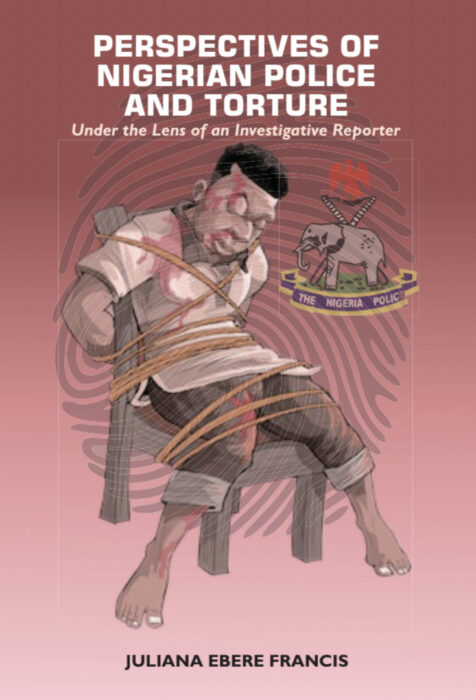
Ojokoh alleged that he was severely beaten after his arrest and forced, under threat of further violence, to thumbprint a statement he neither made freely nor understood. According to his account, he lost consciousness from the torture, and when he came round officers presented him with a prepared statement and threatened him with a cutlass if he refused to sign.
“A statement extracted through torture, intimidation or threat is not a confession,” RULAAC said. “It is evidence of a crime committed against the suspect.”
The group cited the Constitution, the Anti-Torture Act 2017, the Police Act 2020 and Nigeria’s international obligations, and said safeguards such as access to a lawyer and electronic recording of confessions exist to protect suspects and “conscientious police officers alike.”
RULAAC said the case was part of a wider pattern, pointing to what it called contradictory police claims in the cases of Mr. Johnbosco Onuocha and the late Mr. Japheth Njoku.
On Njoku, the group said the police spokesperson, during an inspection of Tiger Base in early 2026, described him on video as a “confessed kidnapper.” He later withdrew the claim and said he had confused Njoku with another suspect.
“That explanation is wholly inadequate,” the statement said. RULAAC noted that a coroner later found Njoku died following torture and other unlawful treatment in police custody, and recommended criminal prosecution and disciplinary action against the officers implicated.
The false label, RULAAC argued, had the effect, “whether intended or otherwise,” of prejudicing public opinion against a dead victim and diverting attention from the officers responsible for his custody.
“Serious allegations of abuse emerge from Tiger Base; police officials respond by attaching grave criminal labels or purported confessions to the victims; contradictions later become apparent; and the explanations change when the claims are challenged,” the group said.
RULAAC said it has documented several other cases tied to the facility, involving prolonged detention, torture, extortion, denial of access to lawyers and relatives, forced labour, deaths in custody and disappearances. In July 2026, it said, eight victims went to court with its legal assistance over claims they had been held for 21 to 24 months before arraignment. Their complaints included torture, extortion, forced labour and the removal of infants from detained mothers.
The group said renaming Tiger Base the Violent Crimes Response Unit does not by itself cure its culture. “Accountability requires more than a change of name, a guided inspection or a public-relations exercise,” it said.
RULAAC described as “particularly alarming” reports that nine suspects were originally paraded over the Okpala Junction killings, while only Ojokoh and Ibeh were eventually brought before the court. “No citizen taken into state custody should become unaccounted for,” the statement said.
RULAAC called on the Inspector-General of Police to order an independent investigation, conducted outside the Imo State Police Command, into the arrest, detention, alleged torture and prosecution of the two men. It also asked the IGP to identify all officers involved in their arrest, interrogation, statements, public parade and prosecution, and to determine who authorised the contradictory allegations presented to the public and the court.
The group wants the roles of the police spokesperson and Tiger Base commanders examined in the Ojokoh, Onuocha and Njoku cases, and asked the police to establish whether lawful, voluntary and electronically recorded statements exist for every purported confession attributed to the three men. It further called for a determination of whether any officer knowingly supplied false or misleading information to the public, and for corrections and apologies to receive prominence comparable to the original allegations.
RULAAC also demanded that the police disclose the identities, whereabouts and legal status of everyone arrested or paraded over the April 21, 2023 attack, and preserve all arrest registers, detention records, case diaries, statements, medical records and audiovisual materials. It urged the suspension of officers against whom credible evidence of torture, fabrication, disappearance, perjury or obstruction emerges, an audit of all detainees held at the former Tiger Base and its successor unit, and strict compliance with rules on access to counsel, notification of relatives, documentation of detention, medical care and recording of confessions.
The group also called on the Police Service Commission to carry out an independent disciplinary review, saying implicated officers “must not merely be transferred, redeployed or quietly retired.”
It urged the Imo State Attorney-General and federal prosecutorial authorities to examine the judgment and case records with a view to prosecuting any officer against whom evidence of torture, perjury, fabrication or malicious prosecution is established. It asked the National Human Rights Commission to investigate the violations and facilitate compensation, rehabilitation and other remedies.
RULAAC further urged the Chief Judge of Imo State to strengthen unannounced inspections of police detention facilities. Future inspections of the former Tiger Base, it said, should include civil-society and legal representatives. “Guided tours controlled by the police cannot substitute for credible scrutiny,” the statement said.
RULAAC noted that five police officers and two civilians were reportedly killed at Okpala Junction, and said their families also deserve truth and justice.
“Framing innocent people does not solve a crime,” the statement said. “It protects the actual perpetrators, corrupts the criminal justice system and inflicts a second injustice on the families of those killed.”
It called on the police to reopen or independently review the investigation using forensic evidence, verifiable witness testimony and credible intelligence, and said the acquittal “should not become an excuse to abandon the search for those genuinely responsible.”
RULAAC said Ojokoh and Ibeh cannot recover the years taken from them, noting their names were publicly linked to terrorism, armed robbery and murder, and that they endured “fear, stigma, financial loss and profound psychological distress.”
The group said the state owes them an official acknowledgement of the wrong done, an unreserved public apology, compensation, psychosocial and medical support, and help rebuilding their lives and livelihoods.
“Justice is not complete merely because innocent men have walked out of the courtroom,” Nwanguma said. “It will be complete only when the truth is fully established; every person arrested is accounted for; officers responsible for torture, fabrication and misinformation are held accountable; victims receive effective redress; and institutional safeguards are implemented to prevent recurrence.”