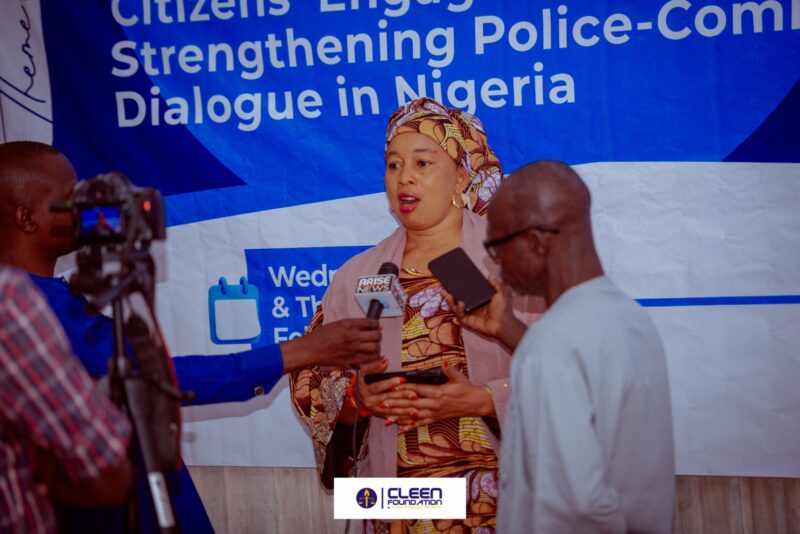

By Okoro Chigozirim
Introduction
The conversation around the State Police in Nigeria has reached a fever pitch in 2026. While the centralised model of the Nigeria Police Force (NPF) has long been criticised as “structurally exhausted,” the transition to a decentralised system remains one of the most contentious constitutional debates in the country’s history.
As of March 2026, the Senate has pledged to deliver the constitutional amendment required for state police by the end of the year.
Core Issues
The push for state police is driven by the failure of the current “Abuja-command” system to handle localised threats.
Operational Delay: State governors currently serve as “Chief Security Officers” in name only. They lack the authority to give operational orders to Commissioners of Police without clearance from the Inspector General in Abuja.
Personnel Shortage: The NPF is severely understaffed, with a large percentage of officers diverted to VIP protection rather than community policing.
Lack of Local Intelligence: Officers are often posted to regions where they do not speak the local language or understand the terrain, making them “outsiders” to the communities they serve.
Key Challenges
Implementing state police isn’t just about signing a bill; several “deal-breaker” hurdles exist:
Political Weaponisation: Critics fear that governors will use state police as a personal “army” to intimidate political rivals and suppress dissent, similar to how some state-controlled electoral commissions are perceived.
Fiscal Sustainability: With many states struggling to pay the minimum wage and manage debts (exceeding ₦5.75 trillion collectively), there are serious doubts about their ability to fund salaries, equipment, and training.
Operational Fragmentation: There is a risk of conflict between federal and state police over jurisdictions, especially regarding cross-border crimes like banditry and kidnapping.
Ethnic & Religious Tensions: In diverse states, a state-controlled force might be perceived as a tool for the dominant ethnic or religious group to oppress minorities.
Pathway for Implementation (2026 Roadmap)
The pathway for implementing state police in Nigeria has shifted from theoretical debate to a high-speed legislative and operational roadmap. As of March 2026, both the Presidency and the National Assembly have synchronised their clocks to deliver a framework by year-end.
Here are the specific, granular stages of the implementation pathway:
1. The “Sixth Alteration” Bill (2025–2026)
The National Assembly is processing a specific amendment—the Constitution of the Federal Republic of Nigeria (Sixth Alteration) Bill.
Dual System: It seeks to replace the “Nigeria Police Force” with a dual system: the Federal Police Service and State Police Services.
Legislative Concurrent List: Moving policing from the “Exclusive” to the “Concurrent” list, allowing states to legislate on security matters for the first time since the 1960s.
Zonal Public Hearings: In early 2026, the Senate Committee on Constitution Review concluded hearings across all six geopolitical zones to gather local input on safeguards.
2. The IGP’s Operational Steering Committee
On March 4, 2026, Inspector-General of Police Tunji Disu inaugurated a high-level committee to design the actual “how-to” guide for decentralisation. Their mandate includes:
Resource Sharing: Deciding how existing NPF assets (stations, vehicles, armouries) will be divided between federal and state units.
Uniformity of Standards: Creating a National Police Council to ensure that a state police officer in Kano meets the same training and ethical standards as one in Rivers.
Federal Aid & Grants: Developing a “Conditional Federal Grant Scheme” where the federal government provides funding only to states that meet human rights and professionalism benchmarks.
3. Fiscal Innovation: The “Lagos Model”
Because funding is the biggest “if,” the current pathway encourages states to adopt the Security Trust Fund model.
Private-Public Partnership (PPP): States are being urged to move beyond government budgets and create independent trust funds (managed by boards, not governors) to purchase hardware and provide insurance for officers.
Statutory First-Line Charge: Proposals are on the table to make state police funding a “first-line charge” from the federation account, ensuring salaries are paid directly and not hijacked by state political actors.
4. Integration of “Vigilante” Structures
The roadmap includes a transition plan for existing regional outfits like Amotekun (Southwest) and Ebube Agu (Southeast).
Formalisation: These groups will not be scrapped; instead, they are expected to be the “seed” for state police, provided their members undergo federal-standard vetting and training to move from “vigilantes” to “officers.”
Intelligence Continuity: A “National Data Coordination” hub is being designed so that even if the manpower is local, criminal databases remain national.
5. Institutional “Red Lines” (The Safeguards)
The 2026 pathway includes specific legal “kill-switches” to prevent abuse:
The Sunset Clause: Some advocates are pushing for a “Pilot Phase” where states undergo a 5-year evaluation. If a governor is found using force for political intimidation, the federal government retains the power to temporarily “federalise” that state’s force.
Cross-Border Jurisdictions: Clearly defining that while a State Police officer can arrest for local theft, Terrorism, Treason, and Interstate Kidnapping remain the exclusive domain of the Federal Police.
Current Status (March 2026)
6. Delineation of Powers
A “Managed Transition” model is being proposed where:
Federal Police: Focuses on terrorism, interstate crime, cybercrime, and national standards.
State Police: Handles community policing, neighbourhood patrols, and local rapid response.
7. De-risking Mechanisms
To prevent abuse, the 2026 draft bills include:
Federal Oversight: A federal body to set standardised entrance exams and training protocols.
Judicial Recourse: Giving Federal High Courts expedited jurisdiction over human rights abuses committed by state police.
Inter-State Postings: A proposal that State Commissioners should not serve in their state of origin for the first 10 years to reduce “ethnic capture.”
8. Regional Collaboration
Some experts suggest a “Regional Police” model (e.g., along the lines of Amotekun or Ebube Agu) where states in a geopolitical zone jointly fund a force, making it harder for a single governor to hijack the institution.
Would you like me to find the specific list of states that have already officially declared their financial readiness to support their own police force?
New IGP, Same Question: Is the Police Your Friend?
This video features a 2026 discussion with stakeholders who examine the deep-seated issues of trust, corruption, and the potential for reform within the Nigerian police structure as the country debates decentralisation.
Ms Okoro Chigozirim is Programme Manager, CLEEN Foundation