

By Okechukwu Nwanguma
Nearly five years after five Nigerian engineers disappeared while carrying out their professional duties in Ebonyi State, the country still has no credible answers. Their families remain trapped between hope and despair, while the justice system appears unable—or unwilling—to establish the truth.
This is no longer merely the story of five missing professionals. It has become a defining test of Nigeria’s commitment to human rights, the rule of law, and public accountability.
On 3 November 2021, Engr. Nelson Onyemeh, Engr. Ernest Edeani, Engr. Ikechukwu Ejiofor, Engr. Samuel Aneke, and Engr. Stanley Nwazulum left Enugu for Ebonyi State to supervise the construction of the Abakaliki Ring Road under a contract funded by the African Development Bank (AfDB). They never returned.
The engineers were employees of NELAN Consulting Limited, an independent engineering consultancy appointed through an international competitive bidding process to supervise the project in accordance with AfDB standards. Their role was not ceremonial. Independent supervision is central to ensuring that public infrastructure projects meet contractual specifications, maintain quality standards, and protect public resources from abuse.
Their disappearance would have been shocking under any circumstances. But the allegations that preceded it make the case especially disturbing.
According to the families, disagreements had arisen between NELAN and the Ebonyi State Government over project supervision, certification of completed work, and control of payments. They allege that the engineers refused to compromise their professional obligations by certifying work outside the procedures required under the AfDB-financed contract.
These allegations have been denied, and no court has established that they are connected to the disappearance. Yet they provide a context that any serious investigation cannot afford to ignore.
The rule of law demands neither blind acceptance of accusations nor premature dismissal of them. It demands an impartial investigation guided solely by evidence.
Instead, the public has been presented with a series of troubling contradictions.
The engineers disappeared without a trace. Government officials reportedly attributed the incident to communal violence. Later, public statements suggested they had been killed based on alleged confessions, even while investigations were reportedly still ongoing. Yet no bodies have been conclusively identified.
Perhaps the most disturbing aspect is the reported DNA evidence. According to the families, skeletal remains presented as belonging to the missing engineers were subjected to independent DNA analysis, which reportedly excluded them as belonging to the victims. One set of remains was reportedly identified as female.
If accurate, such findings raise fundamental questions. What became of the original investigation? Why were contradictory forensic findings not fully explained? What happened to the search for the missing engineers?
These are not political questions. They are questions of justice.
Equally troubling are reports that prosecutions proceeded while the fate of the victims remained uncertain and that the proceedings have since become stalled. Justice delayed is often justice denied—not only for defendants but also for victims and their families.
The wives of the missing engineers have refused to allow the case to disappear into official silence. Their petitions to the President, the National Assembly, the National Human Rights Commission, security agencies, and professional bodies reflect not merely personal grief but an insistence that the Nigerian state fulfil its constitutional obligations.
Their central demand is simple: tell us the truth.
The Constitution guarantees the right to life. International human rights law imposes on governments a positive obligation to conduct prompt, effective, impartial and transparent investigations whenever people disappear under suspicious circumstances. Families also have a right to know the truth about what happened to their loved ones.
These obligations do not expire with time.
Nor should they depend on the political status of those whose actions may come under scrutiny.
It is equally important to emphasise that allegations against any individual, including former Ebonyi State Governor and current Minister of Works, Senator David Umahi, remain allegations unless established through credible evidence and due process. Justice demands accountability, but it also demands fairness. The objective is not to convict people in newspaper headlines or on social media, but to establish the truth through lawful investigation.
Precisely because allegations and counter-allegations have persisted for years without resolution, there is now a compelling case for an independent federal-level review of the investigation. Such a review should involve investigators with no prior involvement in the matter, modern forensic expertise, and transparent public reporting.
Nigeria cannot afford unresolved disappearances involving professionals carrying out public duties on major infrastructure projects. If engineers, auditors, consultants, journalists, lawyers, or civil servants cannot discharge their professional responsibilities without fear, public accountability itself becomes endangered.
This case is therefore about far more than five missing engineers.
It is about whether public institutions inspire confidence or suspicion.
It is about whether forensic evidence is pursued wherever it leads.
It is about whether political influence can overshadow justice.
Above all, it is about whether every Nigerian life carries equal value before the law.
The families have waited for nearly five years. That is far too long.
Justice demands answers.
The rule of law demands accountability.
Nigeria demands the truth.
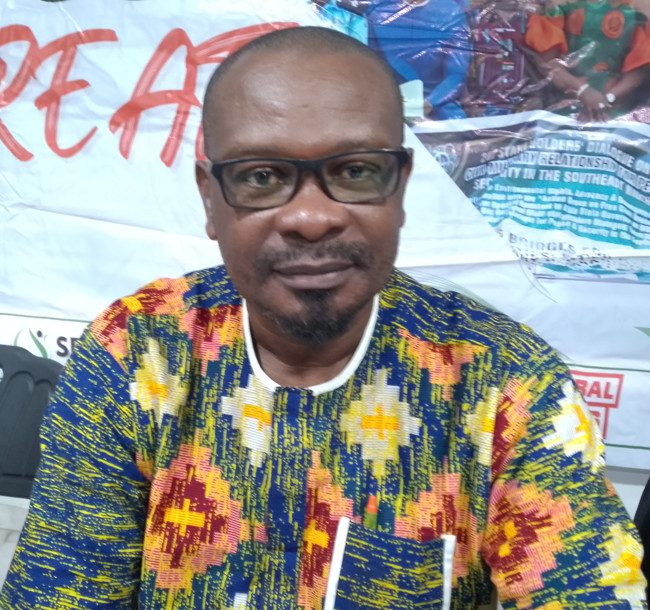
Mr Okechukwu Nwanguma is a human rights activist and Executive Director of RULAAC