

The Nigeria Police Force (NPF) and the Nigerian Financial Intelligence Unit (NFIU) have reaffirmed their commitment to strengthening intelligence sharing and collaboration to track illicit financial flows, dismantle criminal networks, and improve investigations into terrorism, kidnapping, cybercrime, corruption, human trafficking and other forms of organised crime.
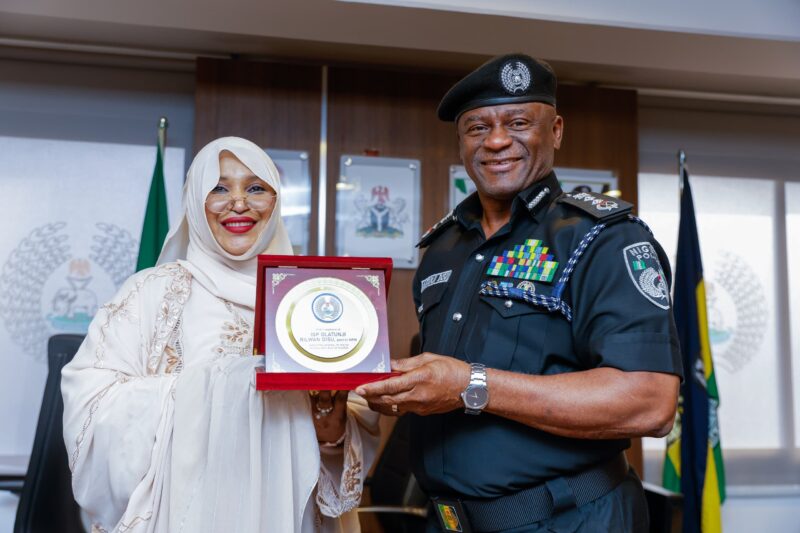
The commitment was made on Tuesday during a courtesy visit by the management of the NFIU, led by its Chief Executive Officer, Hafsat Abubakar Bakari, to the Inspector-General of Police (IGP), Olatunji Disu, at the Force Headquarters in Abuja.
Speaking during the visit, Bakari described the engagement as more than a routine courtesy call, saying it was an opportunity to deepen a strategic partnership that is critical to Nigeria’s national security, economic stability, and compliance with international anti-money laundering and counter-terrorism financing standards.
She identified the Nigeria Police Force as one of the NFIU’s key partners, noting that the Force plays a pivotal role in the detection, investigation and prosecution of financial crimes, as well as in disrupting the financial systems that sustain criminal enterprises.
According to her, financial intelligence has become an indispensable tool in identifying the individuals, networks and beneficiaries behind criminal activities, including terrorism, kidnapping, cybercrime, human trafficking, drug trafficking, corruption, illegal mining, arms trafficking and other organised crimes.
Bakari stressed that effective collaboration between the NFIU and the police was essential to ensure that criminals are not only apprehended but also stripped of the financial resources used to fund and sustain their operations.
She commended the leadership and personnel of the Nigeria Police Force for their contributions to Nigeria’s engagement with the Financial Action Task Force (FATF), stating that their support and expertise played a significant role in the successful implementation of the country’s action plan, which led to Nigeria’s removal from the FATF grey list.
The NFIU boss disclosed that Nigeria is preparing for its third-round Mutual Evaluation scheduled for 2027, explaining that the assessment will focus not only on the existence of legal and institutional frameworks but also on the effectiveness of government agencies in using financial intelligence, investigating and prosecuting money laundering and terrorism financing cases, and identifying and recovering criminal assets.
She revealed that a recent stocktaking exercise conducted across the Nigeria Police Force, with the approval of the Inspector-General of Police, highlighted significant institutional strengths while identifying areas requiring further attention, particularly in enhancing officers’ knowledge of money laundering, terrorism financing, financial intelligence and asset recovery across commands and formations.
Bakari emphasised that the forthcoming evaluation would assess institutional effectiveness rather than isolated successes, underscoring the need to improve the use of financial intelligence, strengthen data collection and statistics, and enhance asset tracing, freezing and confiscation through updated operational guidelines and standard procedures.
She further noted that criminals often leave financial footprints long before physical evidence emerges, adding that tracking the movement of funds can expose criminal networks, facilitators, beneficiaries and the command structures behind organised crime.
Bakari assured the Inspector-General of the NFIU’s continued support through intelligence sharing, strategic analysis, capacity building, operational assistance and collaboration with international partners.
Responding, the Inspector-General of Police described financial intelligence as an indispensable component of modern law enforcement and called for deeper collaboration and more effective intelligence sharing between the Nigeria Police Force and the NFIU.
Disu observed that the increasing complexity and speed of financial transactions require security agencies to strengthen their capacity to trace illicit funds and identify those responsible for criminal activities.
He said tracking financial transactions could significantly enhance investigations into terrorism, banditry, kidnapping, fraud and other crimes, adding that financial intelligence remains a vital tool for exposing criminal networks and solving complex cases.
The IGP assured the NFIU of the Nigeria Police Force’s commitment to sustaining the partnership, strengthening the capacity of officers in financial investigations and working closely with the agency to bolster Nigeria’s fight against money laundering, terrorism financing and organised crime. #Securitynewsalert.com