

By Juliana Francis
Ms Dasola Tewogbade, popularly known as Sisí Afrika, is a Nigerian feminist activist, writer, educator, and travel enthusiast.
She is the initiator and facilitator of Feminist Inspiring Gender Unity, Respect, and Equality (FIGUR).
Tewogbade, 30, said her abortion journey began in 2018 when she was 22. She has since undergone multiple abortions, experiences she says exposed her to stigma, poor healthcare, and systemic barriers to reproductive rights.
She said her first abortion was traumatic, not because of the procedure itself, but because of the humiliation and cruelty she experienced at the hands of healthcare workers.
Recalling an experience when she went for an abortion, she narrated: “At the Obafemi Awolowo University Teaching Hospitals Complex (OAUTHC) in Ife, Osun State, medical practitioners treated me with disdain. One male doctor refused me a bed even though I was close to passing out. I had attempted to terminate the pregnancy myself with medication, but later realised I hadn’t done it correctly. How could I have known? Abortion is shrouded in secrecy in Nigeria, and this silence is why women lose their lives.”
Recalling the ordeal, Tewogbade said her partner rushed her to the hospital after her condition deteriorated.
“No anaesthesia or painkillers were used. The same doctor who denied me a bed interrogated me about my private life, mocked me, and even forced me to look at the bloody suction, calling it my ‘sin.’ He demanded that I beg for forgiveness and repeat religious confessions. His cruelty was sadistic.”
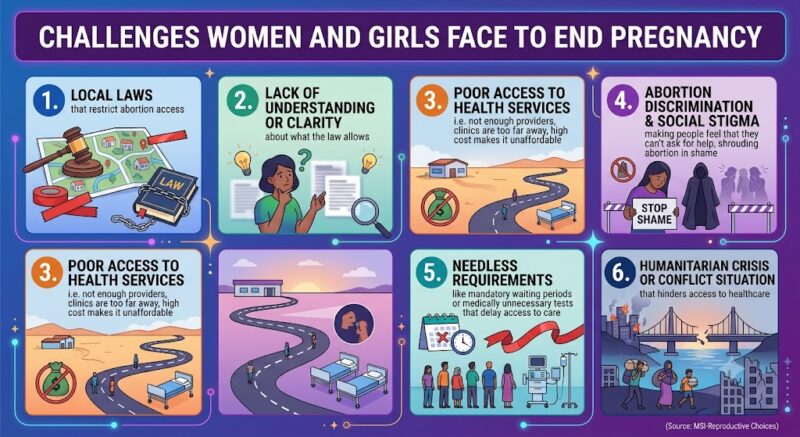
According to the Report, ‘Out of the Shadows: Saving Women’s Lives From Unsafe Abortion in Lagos State,’ “Restrictive abortion laws, prohibitive costs, poor access to safe health services, and intense social stigma are barriers that prevent women from accessing safe and legal abortion.
“Estimates show that unsafe abortions account for roughly 5,000 maternal deaths every year in Nigeria, or on average, 14 maternal deaths each day. Unsafe abortions are also costly to women and the health care system. Poorer women, less educated women, and rural women are particularly affected by these challenges.”
In 2019, after deciding to terminate another pregnancy, Tewogbade said she deliberately avoided a public hospital.
She said, “I paid an exorbitant fee at a private clinic. Even though I paid separately for anaesthesia and painkillers, the doctor withheld them until he realised I might not survive without intervention.”
Later that same year, she said she underwent a third abortion at another private clinic.
“I tried to discuss long-term contraceptives with the doctor. Instead of addressing me, he spoke to my partner, assuming he had authority over my body. My partner redirected him, saying, ‘It’s her body, talk to her.’ The doctor sneered, accused me of promiscuity, and refused to provide contraceptives,” she said.
By 2022, Tewogbade said she had become more informed about her reproductive rights and took steps to prevent pregnancy by using condoms.
However, she said the condom broke, and the emergency contraception also failed.
“Fake pills were circulating in the market,” she said. “This time, the doctor was kind, offering sex education and contraceptives afterwards. Yet, he still refused anaesthesia, dismissing my screams as weakness.”
Tewogbade criticised Nigeria’s abortion laws, describing them as unjust.
“Abortion in Nigeria is classified as a felony. I find this absurd. During my last abortion, I was so enraged that I publicly announced on Facebook the date of my procedure, daring the authorities to arrest me. I had done everything right. I used protection, took emergency contraception, yet I was betrayed by fake products and denied reliable healthcare.”
She argued that comprehensive sexuality education remains inadequate in Nigeria, while contraceptives are often inaccessible.
“Sex education in Nigeria is inadequate. Contraceptives are scarce, expensive, and often locked away illegally. Women are subjected to male authority over their bodies. Married women need their husbands’ consent, while single women are told to consider their ‘future husbands.’
She further argued: “I want a hysterectomy because I do not want children, but in Nigeria, that is virtually impossible. In France, where I migrated in 2024, I can openly discuss this with doctors. The Nigerian government has failed to prevent unplanned pregnancies, yet it criminalises abortion.”
Speaking further on Nigeria’s legal framework, Tewogbade said the law permits abortion only in limited circumstances, such as to save a woman’s life.
However, some advocates also cite rape and incest as grounds under limited legal interpretations.
Tewogbade stated: “This means abortion is technically acceptable only when women are violated or is dying. What other healthcare service is restricted until the patient is at death’s door? This is misogyny, plain and simple. A woman should be able to access abortion healthcare under any circumstances. Her body belongs to her, not to men, not to religious institutions, not to the government, and not to society at large.”
The Sustainable Development Goal 3 (SDG 3) on Good Health and Well-being, specifically Target 3.1, aims to reduce the global maternal mortality ratio to fewer than 70 deaths per 100,000 live births by 2030.
SDG Resource Centre states that achieving SDG3 requires systemic improvements in emergency post-abortion care, as well as universal access to comprehensive sexual and reproductive health services.
This report was facilitated by the Women Advocates Research and Documentation Centre (WARDC) as part of the Memorial Campaign on Ending Preventable Deaths from Unsafe Abortion in Lagos State. Series 2