
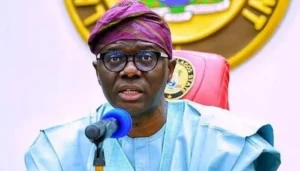

Governor Babajide Sanwo-Olu on Saturday issued a stern warning to vandals after an attempted attack on the Alakija Bridge, even as he moved to calm public anxiety over the safety of the structure.
The governor, who personally inspected the bridge following the incident, said the attempt to damage the infrastructure had been thwarted and that the bridge remained safe and fully usable. He credited a swift multi-agency security response involving the Police, the Rapid Response Squad (RRS), the Lagos State Task Force, KAI officials and the Neighbourhood Safety Corps for securing the area before the damage could escalate.
According to the governor, some suspects linked to the vandalism attempt have already been arrested, with security operatives pursuing others still at large. He vowed that anyone caught attempting to destroy public infrastructure in the state would face the full weight of the law.
Sanwo-Olu also used the update to reaffirm his administration’s commitment to the ongoing clean-up of the Lagos-Badagry Expressway corridor, saying the effort was already producing visible results and would continue. He called on residents to see themselves as stakeholders in protecting public assets across the state.
The governor’s post drew thousands of reactions, with many residents split between commending the quick security response and criticising what they described as recurring lapses in infrastructure protection and environmental sanitation across the state.
Several commenters pressed for more permanent, technology-driven solutions. One user suggested that surveillance cameras be installed around bridges and other vulnerable infrastructure across the state, linked directly to security units for faster response. Another proposed that physical barriers be installed under bridges to prevent scrap-metal theft, similar to measures used in Ghana.
Several residents linked the vandalism to the presence of homeless people and commercial motorcyclists (okada riders) living or operating under bridges, with one commenter arguing that many of those involved lack stable housing and called for a ban on okada operations in the state. Others went further, calling for the arrest of anyone found living under bridges along key corridors.
Some questioned the credibility of the governor’s safety assurance itself. One commenter pointed out that Sanwo-Olu’s professional background is in banking rather than structural engineering, arguing that intact reinforcement alone does not guarantee a bridge’s safety.
A similar concern was raised by another user, who insisted that only certified structural engineers, not political inspection visits, could properly verify the bridge’s load-bearing integrity.
Waste management emerged as a recurring complaint. Multiple users said they observed heaps of refuse and poor road conditions near the inspection site and along other major corridors, including the Costain-to-Iyana Oba stretch and Osborne Road in Victoria Island, and questioned why sanitation had not kept pace with the administration’s security response.
A few commenters took a harder line on the suspected vandals, describing the act as tantamount to sabotage of public infrastructure and calling for severe punishment. Others struck a more conciliatory tone, thanking the governor for acting proactively and urging citizens to treat public infrastructure as personal property worth protecting.
Not all reactions were critical. Several users praised the governor’s prompt visit to the site and the arrests already made, describing the response as a positive example of proactive governance, while urging that similar urgency be extended to other persistent problems in the state, particularly refuse collection and road maintenance.
As of Saturday evening, the governor’s office had not issued further details on the number of suspects in custody or the specific extent of damage caused before security teams intervened.