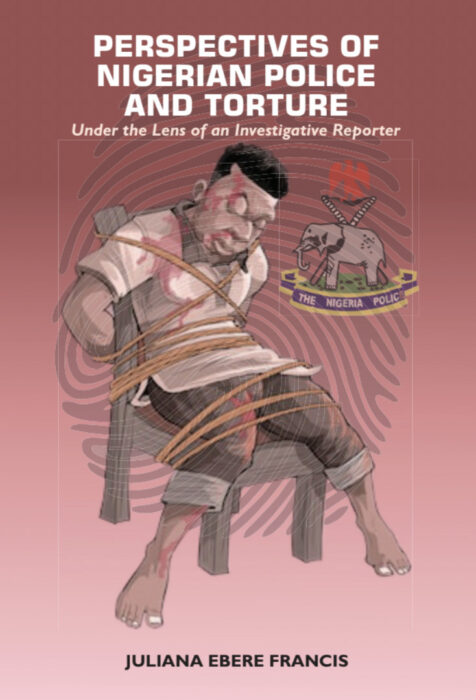


The CLEEN Foundation has called for a renewed national commitment to protecting human life, as the world marks the International Day of Peace, warning that peace remains an aspiration rather than an everyday reality for millions of Nigerians.
In a statement issued in Abuja, the Foundation’s Executive Director, Mr Peter Maduoma, said families across the country continue to bury loved ones killed in attacks, while communities live under the threat of kidnapping and armed violence.
Farmers, he noted, cannot safely access their fields, children face disrupted education, and displaced families struggle to rebuild their lives.
Citing figures from the Armed Conflict Location & Event Data Project (ACLED) as reported by the European Union, the statement said Nigeria recorded nearly 12,000 conflict-related deaths in 2025. About 3.7 million Nigerians are internally displaced, while 5.9 million people in the North-East alone require humanitarian assistance.
“These figures are not simply statistics,” Mr Maduoma said. “Behind every number is a family, a community, a livelihood interrupted and a future altered.”
The Foundation pointed to recent developments that it said should deepen national reflection. In August, armed men reportedly abducted hundreds of people in communities in Niger State, with local sources also reporting killings and mass displacement. The precise number of those abducted could not be independently verified.
The statement also referred to the reported deaths of 37 detainees in the custody of the Nigeria Security and Civil Defence Corps in Niger State.
According to Mr Maduoma, the incident has raised profound questions about detention conditions, the proportionality and accountability of enforcement, and the state’s responsibility to protect persons in its custody.
The Federal Government has ordered investigations, and senior officials have reportedly been suspended.
Mr Maduoma said the Foundation’s commitment to “everyone, everywhere” is programmatic, stressing that durable peace cannot simply be delivered to citizens but must be built with them.
He said the organisation has consistently advanced inclusive approaches to public safety that place communities at the centre of dialogue on security.
He cited the Foundation’s Citizens’ Engagement Programme, which runs recurring community–law enforcement engagement forums across several states. The forums, he explained, provide structured, non-adversarial spaces where citizens, law enforcement agencies, traditional and religious leaders, women, youth and civil society actors can speak candidly, share local intelligence and jointly identify solutions to safety concerns.
According to him, the forums rebuild trust where it has eroded, amplify voices often excluded from security conversations, and strengthen the community-level partnerships on which sustainable peace depends.
“Peace is invested in every day through consistent, patient engagement, not only in moments of crisis,” he said, adding that each forum, conversation and commitment between a citizen and a police officer contributes to a culture of shared responsibility for safety.
Mr Maduoma said peace is not built only in capitals or negotiated only in conference halls, but grows in neighbourhoods, markets, places of worship, schools and police posts, “one conversation and one relationship at a time.”
He called on every Nigerian, community leaders, security officers, civil society actors, development institutions and the government to join in deepening peace from the smallest corners of communities until the whole nation is embraced by it.
“Let us invest in peace, for everyone, everywhere, every day,” he said.