

During the COVID-19 lockdown in Nigeria, unbelievable hidden demons unfurled in many homes, baring fangs and claws. In this report, JULIANA FRANCIS takes a look at rape amidst the pandemic.
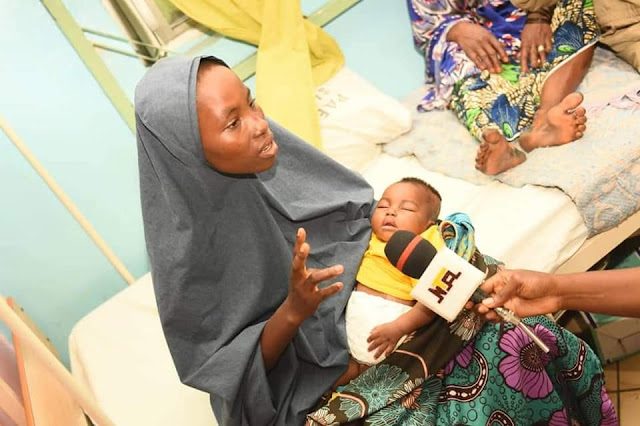
Maimuna Aliyu’s world was shattered after her three-month-old daughter, Rukaya, was raped, leaving the baby battling to stay alive. She had heard of children being raped in the Adogi Community in Lafia Local Government of Nasarawa State, where she lives with her husband, but Maimuna never imagined her baby would one day be among the growing number of victims.
She said: “I woke up on that fateful day of May 27, about 3 am and discovered that my daughter, who was sleeping beside me, had gone missing. I screamed and alerted my grandmother.” A search party was constituted, and Rukaya was soon found in an uncompleted building, with blood gushing out of her private part.
A member of the search party, Musa Yahaya, said it was the third time a child would be defiled in the community in less than two months. After the preliminary examination, we were advised to rush Rukaya to the hospital, where two surgeries were performed on her. On June 22, operatives of the Nigeria Security and Civil Defence Corps (NSCDC) arrested Ahmadu Yaro, 27, who confessed to raping Rukaya. He had, before then, raped three other children. The NCDC Commandant, Muhammad Mahmoud-Fari, said Yaro was arrested based on intelligence gathering.
“While Yaro was violating the baby, he heard the sound of a motorcycle, abandoned the baby and fled the village. He returned some days later but was arrested in his house,” Mahmoud-Fari added. According to Yaro, forces beyond his control made him violate babies.
He said: “Yes, I slept with the babies because I’m sick. My brain is not normal. Moreover, it is the devil’s handiwork. This is the third time I’m doing this. It has not been long since I started defiling children.” The rape of Rukaya is one of several sexually violent occurrences in Nigeria during the COVID-19 lockdown, which started on March 30, lasted for close to five months. These months also witnessed increases in domestic and gender-based violence, including the physical abuse of children.
Rape, especially of children, however, topped the scale. It spiralled out of control, forcing stakeholders, the Police and the government to confront these hidden demons, which seemed to have been lying latent in homes and communities. Reports came from different parts of Nigeria of fathers raping their children, men raping their neighbour’s children, and other victims being killed after being raped. There were also reports of pastors raping church members and husbands turning wives into punching bags. The period unleashed hidden monsters in human forms.
TSocialmedia became an outlet for many victims, who told their stories seeking justice, healing and closure, after maintaining a culture of silence for many years. The period also witnessed the arrest of Ikechukwu Ekenta, 43, who raped his three-year-old daughter while his wife went to the hospital to have their baby.
The child stated that her daddy put his ‘komkom’ inside her private part while she was asleep. The pain woke her. Ekenta did not deny the allegation but said he was pushed by an evil spirit to commit the act. He behaved abnormally whenever the spirit possessed him, Ekenta said, adding that he only inserted his finger into the girl. His wife, Uzoamaka, discovered the defilement after she returned from the hospital and noticed the girl flinching in pain while being bathed. When questioned, she said her dad put his ‘komkom’ into her.
The wife confronted her husband, who admitted to the crime, but insisted he only used his finger. But, following a medical examination, the doctor declared that there was penile penetration. When Uzoamaka reported to her in-laws, they threatened to deal with her if she didn’t maintain the culture of silence. Determined to protect her daughter, she escalated the matter until it got to the Anambra State Commissioner for Women and Children Affairs, Lady Ndidi Mezue. The commissioner, like most of the nongovernmental organisations which focus on rape and domestic violence issues, agreed that the period witnessed several victims stepping out of their closets to report their abuses. Glory, 24, was among those who came forward to tell her story.
Our reporter met her at the office of Advocates for Children and Vulnerable Persons Network (ACVPN), Oshodi, on June 15. Glory’s mother died when she was 119 years old, leaving three children for her husband, Pastor Olufemi, to cater for. The pastor, who is the general overseer of four churches in Ogun State, converted Glory, his oldest daughter, to his ‘wife.’ He got her pregnant three times and carried out abortions with the assistance of a matron at a general hospital in the state. The lockdown made sure that Glory, her father and siblings were together at home.
The siblings got used to hearing her cry in their dad’s room, but she couldn’t tell them why. When she finally summoned the courage to say no to her dad, he took to beating her. Glory ran away from home to stay with a friend in Lagos. She said: “I came forward to tell my story and report my dad because my younger sister and brother are all alone with him. I don’t want him to start sleeping with my sister. He told me I was his wife. He said I must not date anyone. I don’t have friends because he disapproves of everyone he sees with me.”
In Lagos State, a woman also went to ACVPN’s office to lodge a complaint against her blind father over his penchant for sexually violating his tenants’ children. Pa Oyewole, 70, was accused of defiling an 18-month-old baby, and two children aged three and six years -all victims are his tenants’ children. The old man, an HIV carrier, who infected his second wife in 2012, violated the children, knowing his status. Officials of ACVPN picked Oyewole and handed him over to the Gender Unit of the Lagos State Police Command.
Some stakeholders believe that the increase in rape was because perpetrators and victims were confined, while others argued that what Nigerians witnessed was more of victims breaking the culture of silence and reporting cases of rape. Tragically, according to rape focused organisations in Nigeria, most rape victims, either before or during the lockdown, are children between 0-10 years old. Dearth of data/statistics to support spike in rape Attempts. To analyse whether the spike occurred during the COVID-19 lockdown in Nigeria or its the rate of spread was futile, a t his reporter was confronted with a dearth of reliable data. Unfortunately, only such data can prove whether there was a spike in rape during the period.
Currently, all assumptions about the domestic and sexual violence spike during the period in question are only based on reported cases by victims at organisations, national dailies and social media. The Nigerian Police, in different formations, have no accurate data/ statistics on rape, yet the Inspector General of Police (IGP), Mohammed Adamu, told Nigerians that a total of 717 rape cases were reported nationwide between January and May this year. No figure was given for 2019, for researchers to compare and contrast. According to the Director General of the National Agency for the Prohibition of Trafficking in Persons (NAPTIP), Julie Okah-Donli, the total number of reported cases of rape in 2019 was 24, while they received 123 cases between January and June.
This proved there was a spike in cases received by the agency. She said: “The COVID-19 lockdown brought about an increase in reported cases of rape and other sexual violence, especially against women and children. NAPTIP was inundated with distress calls from victim, who desperately needed help from their predators.
This is because the Violence Against Persons Prohibition Act (VAAP) 2015 is domiciled in the Agency. We’re under strict obligation to respond to those calls, especially within the Federal Capital Territory where the Act is presently applicable.
“This prompted the Agency to take more proactive measures in dealing with this menace. We had no fewer than 54 cases during the period of the total lockdown, and many of them had been charged to the court, and the victims were under our protection.
Though the actual causes of the rise in the incidences of rape during the period under review remain unknown, b believe it may be connected with what I term ‘cabin fever.’ “Closely related to this is the erosion of our value system, and also the failure of some states in domesticating the VAAP Act. This gave room for sexual impunity across the country.” The President, Women Arise, Dr Joe Oke Odumakin, said that in 2019, her organisation recorded 12 specific cases of rape and sexual harassment.
“But between January and June, the number of cases increased. There were more cases of sexual harassment nd rape, as we received 34 cases within this period. “At least 21 of the cases were straight cases of sexual harassment and rape, while 11 were spousal harassment, emotional torture, and violation of conjugal rights and children abandonment,” she added. According to Odumakin, these statistics/ data clearly show a marked increase in rape cases, taking into account that in the whole of 2019, we registered 12 reported cases, while in the first six months of this year, we registered 34 complaints.
Before the year runs out, there will probably be more complaints, spiking the numbers. She said: “It is worrisome to note that eight of the rape cases were perpetrated against young girls and children. At Women Arise, we think the increase in these cases is a result of the current lockdown and the ravaging pandemic. Children are at home, and a lot of men and young boys are also on lockdown without anything to do. They just mill around and take advantage of the children.
“There is frustration everywhere as a result of the pandemic, and young men transfer this onto innocent young girls. There is also an increase in substance abuse, a lot of young men are on drugs, and when they are high on cheap drugs, they commit different kinds of crime, including rape and sexual harassment.”
Also, the Kano State Commissioner for Women Affairs, Dr Zaharau Muhammad Umar, attributed the rise of rape cases in Kano to the COVID-19 lockdown and the itching poverty levels among the residents.
Umar argued that in the few days of the lockdown in Kano, the state officially recorded 60 cases of rape at Murtala Muhammad Hospital Waraka Centre, mostly among minors. She worries that most rape cases are still unreported due to stigmatisation and poverty. However, the founder of Esther’s Foundation, Mrs Esther Ogwu, said: “It goes without saying that women and children are in more vulnerable positions due to the lockdown. Anyone active on social media can see the increased rate of domestic violence, rape and child abuse cases being reported.”
“Based on research conducted in 2019, the polls revealed more than 82 per cent of Nigerians are suffering from domestic violence, 85 per cent suffer from rape, nd 60 per cent were victims of child abuse. Pending when the lockdown in Nigeria is fully relaxed, women and children battling these vices have to bear such abuse in their homes. It is safe to say that domestic and sexual violence experts in Nigeria have seen an increase in the number of cases. “Victims of such always considered work or school as their escape route, but now they are stuck.
It is also difficult for us to ascertain the exact statistics as most victims hardly come forward due to fear of being shut down, and even the ones that do report, don’t get the justice they deserve.” The National Human Rights Commission (NHRC) in Borno recorded about 500 cases of sexual abuse and Gender-Based Violence (GBV) in the past five months. Mrs Jummai Mshelia, NHRC’s Coordinator in the state, said that the commission recorded at least three cases of rape daily, while dozens of such cases were not reported in the state. Mshelia urged the state government to provide funding to support the welfare of victims of sexual violence, stressing that “We need a shelter in the state because some of the victims come and do not have a place to stay.”
For the Director of Women Aid Collective (WACOL), Professor Joy Ezeilo, a total of 153 cases of violence against women and girls were recorded in April and May. “Since the advent of COVID-19, there has been a spike in VAWG/SGBV when in reality, one expected a decrease because of the disruptions caused by the pandemic.
“On the contrary, the world has witnessed a steady rise, and Nigeria is no different. It has been tales of woes for women and girls caught up in the web of the pervasive violence in public and private spaces, especially during this COVID-19 pandemic,” she added.
Ezeilo argued that there was no safe space for women and girls anymore in Nigeria. She said that of WACOL’s registered cases, there were 81 complaints of violence against women and girls in April, and 72 cases in May. She said there was a spike in domestic violence as a result of the global COVID-19 pandemic and its consequent economic meltdown experienced by families.
Challenges, solutions in tackling domestic, sexual violence
The National Human Rights Commission, Ebonyi State Coordinator, Christopher Okorie, acknowledged corruption among some security agents as an impediment to pursuing justice by rape victims in Nigeria. He identified other challenges confronting the fight against rape and defilement of minors as ignorance and harmful cultural practices, which tended to objectify the woman.
He said: “Sometimes rape and gender- based violence continues because victims lack the knowledge of where to seek help and immediate intervention, and if anybody or agency intervenes, it becomes a free ride for the violator, while the victim suffers in silence. Corruption, among a few unscrupulous elements, law enforcement agents, who, through high-profile or subtle financial extortion, discourage victims of rape from pursuing their cases to their logical conclusions.”
Suggesting ways to check domestic and sexual violence, Okah-Donli said: “It is for all states to domesticate the VAAP Act, as well as the Child Rights Act. At the moment, only three states, Oyo, Ebonyi and Anambra states, have domesticated the VAAP Act, while 21 states have domesticated the Child Rights Act. These are vital legal tools that will assist us in checking the menace of rape and other sexual violence in the country. The two legal instruments contain provisions that prevent children from being exploited, pointing out the offences, prescribing punishment and also suggesting remedies for the victims.
“Secondly, the entire nation must embrace the Sexual Offender Register that was launched in 2019 by the Federal Government with the support of the Rule of Law and Anti-Corruption (RoLAC). It is a national response to the fight against the scourge of rape, sexual violence and other gender issues. It is a mechanism designed to end SGBV in the country and bring perpetrators to book through its name and shame application. This register is domiciled in NAPT, and it is expected that all partners and other Law Enforcement Agencies should cooperate and provide ceaseless exchange of information and data to be fed into the register. The fight to end rape and sexual violence in Nigeria is a holistic one that requires the full support of all stakeholders.”
Also, the founder of the Mirabel Centre, LASUTH, Itoro Eze-Anaba, stated that the culture of blaming rape on the way women dress should be stopped. She said it is not a justification for rape.
Eze-Anaba asked what sort of dress is worn by a three-month-old baby or 7a 0-year-old woman, which would make them targets for rapists. “We need to understand that rape is not about sex, it’s about power. We also need to learn that rape is a crime. People think that victims are statistics and get on with their lives, saying, ‘God will judge.’ They don’t realise that rape does something to the survivor. It takes away your humanity; it touches the core such that you are left feeling empty and shallow,” she said. In like manner, the Executive Director of Project Alert on Violence Against Women, Josephine Effah-Chukwuma, told Saturday Telegraph that although compilations of data on SGBV cases for 2020 are still in progress, her organisation, however, recorded 285 complaints in 2019.
She said: “Before we closed our office on March 24, we received an average of seven cases weekly, and an average of 28 cases monthly. Not all the cases got to the stage of the police and the court. Some, about 50 per cent, did counselling and ADR at the office and achieved the desired results. But when we shut down, within 10 days, we got 26 cases. “By the end of April, we had 49 cases – about 8an 5per pcentincrease. Most of the cases we got were of domestic violence, physical and verbal abuse, as well as threats to life. There was also pushing out of the home during that lockdown. I tell people that the increase is more from people reporting than an increase in the occurrence rate. More people are reporting and seeking help.”
The Executive Director of Media Concern for Women and Children Initiative (MEDIACON), Dr Princess Olufemi-Kayode, also said in 2019, MediaCon received over 635 complaints. At least 244 were from adult females, 15 from adult men, while 356 complaints were from young girls and 20 from young boys. According to her, between January and March, the centre received 50 domestic violence cases against women and between April and May, it jumped to 78, while sexual violence was 121.
“There’s a spike, and it’s because anytime there is a pandemic, there are always extra issues that come up. People are locked up with their perpetrators. Before, victims used to step out, go to work or somewhere, but now, they are coped up with the perpetrators, who take out every little thing on the victims. When plans were made for the COVID-19 lockdown, no plans were made for domestic and sexual violence victims,” Olufemi-Kayode noted.
She explained that rape, which is a global epidemic, was not peculiar to Nigeria. “Rape was already an epidemic before this pandemic; COVID-19 only fuelled it. As a country, we need to have what we call a holistic approach to rape. All over the world, there have always been low conviction rates when it comes to rape, including countries that have developed beyond us. It’s not enough to focus on justice, since justice is important. But we are not researching to find out what is fuelling rape. We have all the academicians that can do research, but funding is a problem, and there’s no political will from the Federal Government,” she said.
She further said that policemen should be trained to know the basic rules in handling victims, arguing that the government and corporate organisations should begin to support with funding for rape victims, shelter and research.
Olufemi-Kayode said, “We should look at what other countries are doing. Our lawmakers also need to do research, so that when they speak on the subject, they do so with facts and understand the issue. It is time we begin to realise it is our problem as a country and begin to use our resources to solve it.
It’s a pandemic and it needs primary, secondary and tertiary solutions. People are too concerned with sending perpetrators to jail, without worrying about the victims.”
For Petra Akinti Onyegbule, a sociologist, the situation on rape, during the COVID-19 lockdown, from a sociologist’s perspective, could be viewed on different levels: technology and victims beginning to feel comfortable in reporting such cases. According to her, domestic and sexual violence had always happened, but most times are swept under the carpet due to the patriarchal nature of tigerian society.
She said: “Our society and culture see rape victims as people who have done something wrong, and women continue to help the society perpetrate this belief. The stories we read during lockdown showed more people are now confident to speak about being raped. The confidence is because of technology. People who ordinarily don’t dare to face the world now sit behind a computer or phone and narrate what happened to them. “Again, it’s possible these incidents occurred more because people had been enclosed in a place for a long time. Let’s also not forget that the spike could be because of copycats. These days, everyone wants to trend, even for the wrong reasons. You read stories and realise these stories do not add up. Do we have to talk about rape on social media and mention names? We need to review our advocacy towards rape. If we want to name and shame, it becomes a media trial. You want to name and shame without evidence. Why not tell your story without mentioning names? “However, the best bet is to go to the police and report. If you don’t have the money to get a lawyer and pursue the case, then go to a non-governmental organisation.
“There are consequences for the person accused of rape on social media, especially when the person is not guilty. The accused’s reputation is ruined, and some end up committing suicide. The question should be, do we want to make noise about rape, or do we want to achieve a certain goal, which is to reduce rape to its barest minimum? If you’ve not been raped, don’t come out to say you’ve been raped. These days, we have women who molest young boys and women who are interested in young girls. Let’s not forget boys are not left out in rape, too. There are different sides to rape,” she said.
A psychologist, Dr. Damilola Oladele, said spikes in domestic and sexual violence during the COVID-19 lockdown were because most people come from dysfunctional families. Before, spouses went out to other relationships, but the lockdown meant spouses venting their anger on their wives and children.
He said, “Many of the oppressors had reduced access to their mistresses. Thus, they transfer their aggression and frustrations to their partners and children, who are within reach. Another problem I noticed is the African setting, where the man is given power by the society to do whatever he likes because he’s the breadwinner or has paid his wife’s bride price. These things make some men believe a woman’s body belongs to them, to do as they wish with it. “They get angry when their wives say no to sex, telling themselves she had no right because they had paid her bride price.
These beliefs have psychologically empowered most men to do whatever they want in exerting their power and will over women. The man believes what he’s doing is right; he thinks he’s correcting his wife. “Also, rape is due to the upbringing and impact of the societal beliefs or norms on perpetrators.
The rapist dad is usually domineering and believes that he can get whatever he wants from a woman. Others are from dysfunctional homes, where the fathers beat their mothers. It could also be because the perpetrator during childhood was sexually molested.” Oladele said that one ays to check rape is to start with simple sex education for children in different homes and communities.
“Members of communities, especially rural areas, who prefer to bury these issues rather than tackle them should be educated. Children should be properly educated, particularly the male species. They should, right from their childhood, be made to see women as special, potential sisters and mothers, not objects.
“The kind of moral education given to girls from childhood, in a bid to make them upright, should also be given to boys. It has been discovered that right from childhood, moral training is given to the girl-child, while the boy-child is neglected. These moral training should be given to boys, so that they can understand the value system,” he said.
This report was facilitated by the Wole Soyinka Centre for Investigative Journalism (WSCIJ) under its COVID-19 Reality Check project.