
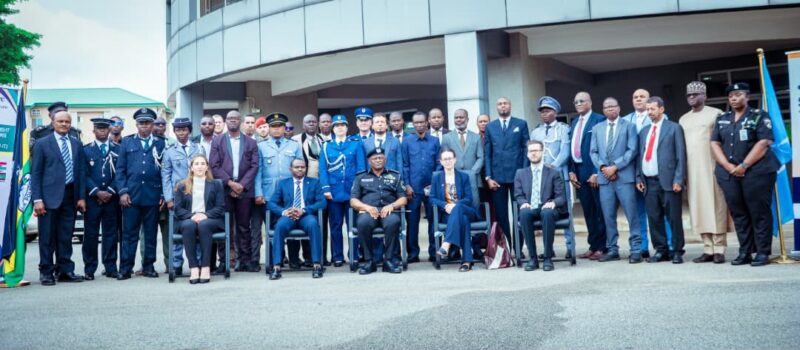

The Inspector-General of Police, IGP Olatunji Rilwan Disu, on Monday, October 12, 2026, officially declared open the Small Arms and Light Weapons Identification and Tracing (SALW-IT) Simulation Programme in Abuja.
The five-day training, which runs until October 16, is aimed at equipping participants with the skills to identify, mark, register, and trace small arms, light weapons, and ammunition.
Participants at the programme include representatives from Nigeria and 11 other African countries: Chad, the Central African Republic, Mali, Algeria, Côte d’Ivoire, Burkina Faso, Cameroon, Niger, Libya, Benin, and the Republic of the Congo. The training combines technical instruction with practical simulations at the Nigeria Police Simulation Centre.
Speaking at the opening ceremony, IGP Disu described the proliferation of illicit arms as “a major threat to peace and security across Africa, fuelling terrorism, banditry, kidnapping and organised crime.”
He emphasised that effective tracing of weapons “helps investigators uncover trafficking networks, financiers and supply routes, enabling targeted action against illicit arms trafficking.”
The Inspector-General linked the programme directly to Nigeria’s upcoming elections, stressing that curbing the flow of illegal arms would be vital to ensuring peaceful polls. “Disrupting illicit arms supply will help prevent electoral violence and intimidation, protect voters and electoral personnel, and support the security conditions necessary for peaceful, free and fair elections,” he said.
IGP Disu also underscored the importance of regional cooperation, calling for “closer sub-regional and continental collaboration through timely intelligence sharing, coordinated investigations and mutual assistance in locating and lawfully apprehending suspects involved in transborder crimes.” He revealed that Inspectors-General of Police from West and East African countries would soon convene to deliberate on modalities for tackling cross-border crime.
Commending the support of AFRIPOL, the Bonn International Centre for Conflict Studies (BICC), INTERPOL, relevant African Union entities, and experts from the German Armed Forces Verification Centre, the IGP urged participants to “share operational experiences, build lasting professional relationships and apply the knowledge gained in their respective countries.”
He concluded by reaffirming the Nigeria Police Force’s commitment to regional and continental arms-control efforts, pledging “sustained institutional support and operational cooperation to translate the training into improved public safety and election security.”