

The newly published 2026 HIV estimates show that children and adolescents continue to be disproportionately affected by gaps in the global HIV response, at a time when reductions in international financing and service disruptions are creating additional risks.
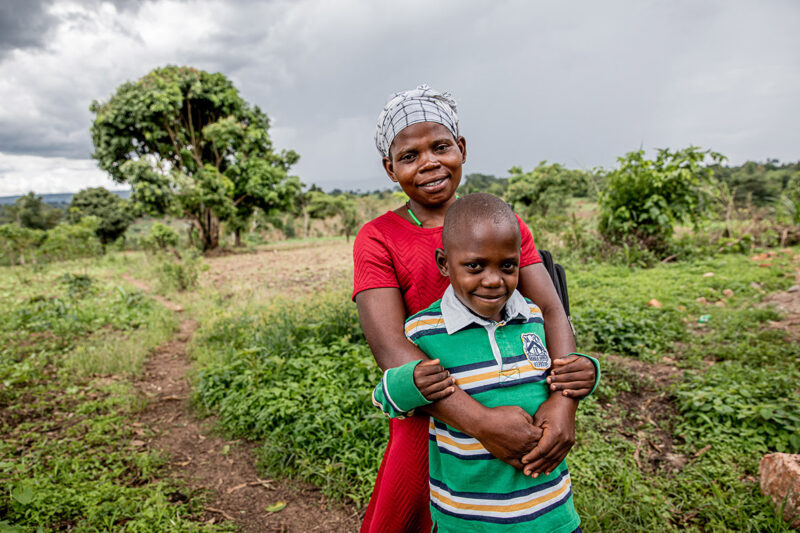
Margaret and her son Ronald (9 years old) attend a health screening at the Madudu Health Facility in Mubende, Uganda. Ronald, who is living with HIV, recently became ill after struggling to adhere to his antiretroviral treatment. With support from health workers at the facility, his adherence improved, and he is now virally suppressed.
CHECK THE DASHBOARD: HIV estimates for children dashboard (global/regional level)
In 2025, an estimated 2.27 million children and adolescents aged 0–19 were living with HIV worldwide. Approximately 240,000 acquired HIV during the year and 74,000 died from AIDS-related causes.
CHECK: HIV estimates for children dashboard (country level)
The gaps are particularly stark among younger children. Among children aged 0–14, an estimated 1.26 million were living with HIV, 93,000 acquired HIV and 61,000 died from AIDS-related causes in 2025. This is equivalent to approximately 255 children acquiring HIV and 167 dying from AIDS-related causes every day.
Significant gaps in diagnosis, treatment and viral suppression also persist. Globally, only 65 per cent of children aged 0–14 living with HIV knew their status and 55 per cent were receiving antiretroviral treatment, compared with 89 per cent and 79 per cent among adults, respectively. Only 47 per cent of children living with HIV had a suppressed viral load.
These estimates come at a critical point for the global HIV response. The UNAIDS Special Report for AIDS 2026, released at the International AIDS Conference in Rio de Janeiro, highlights how reductions in international financing and disruptions to prevention and community-based services could undermine recent progress. For children and adolescents, who already experience some of the largest diagnosis and treatment gaps, timely monitoring of these disruptions will be increasingly important.
The 2026 estimates reinforce four priorities:
Eliminate vertical transmission of HIV and accelerate progress towards the triple elimination of HIV, syphilis and hepatitis B.
Close treatment gaps for children and adolescents, including through earlier diagnosis, optimised paediatric treatment and stronger continuity of care.
Prevent new HIV infections among adolescents, particularly adolescent girls, while expanding equitable access to effective prevention and sexual and reproductive health services.
Protect progress in a changing financing landscape by using timely, high-quality data to identify emerging service gaps and target increasingly constrained resources where they can have the greatest impact.
The 2026 estimates provide an important evidence base for tracking progress, identifying persistent gaps and detecting emerging disruptions. As the HIV response evolves, strong national data systems and timely, high-quality data will be essential to understand where needs are changing and ensure that increasingly limited resources reach the children and communities who need them most.