

Juliana Francis
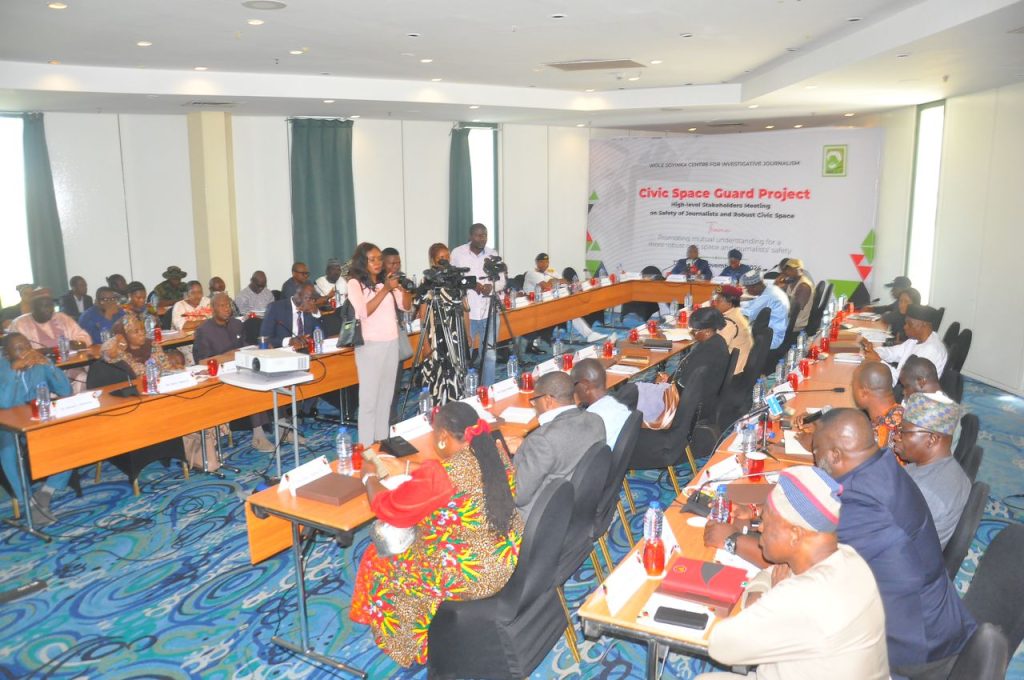
The date is November 21st, 2024 and the meeting venue is Transcorp Hilton FCT, Abuja. The guests and participants were of premium quality and influential in their respective offices. They are media and security management members.
They gathered this fateful day for an important burning issue; the protection of Nigerian journalists and the continually shrinking civic space.
Another major point of the meeting was convened to find engagement solutions, with the end goal of committing to proactive protection of the journalist and the civic space.
It was certainly not your everyday run-off-the-mill kind of meeting, where guests get to cherry-pick subjects to discuss amidst shy smiles.
It was an intense high-level meeting, during which media executives, journalists and security agencies opened their hearts. It was a no-holds-barred meeting, with journalists sharing their nasty encounters with security agents in the course of their work.
The security agencies also did not shy away from stating their positions on the discussion.
This high-level meeting was organised by the Wole Soyinka Centre for Investigative Journalism (WSCIJ) and supported by the Kingdom of the Netherlands.
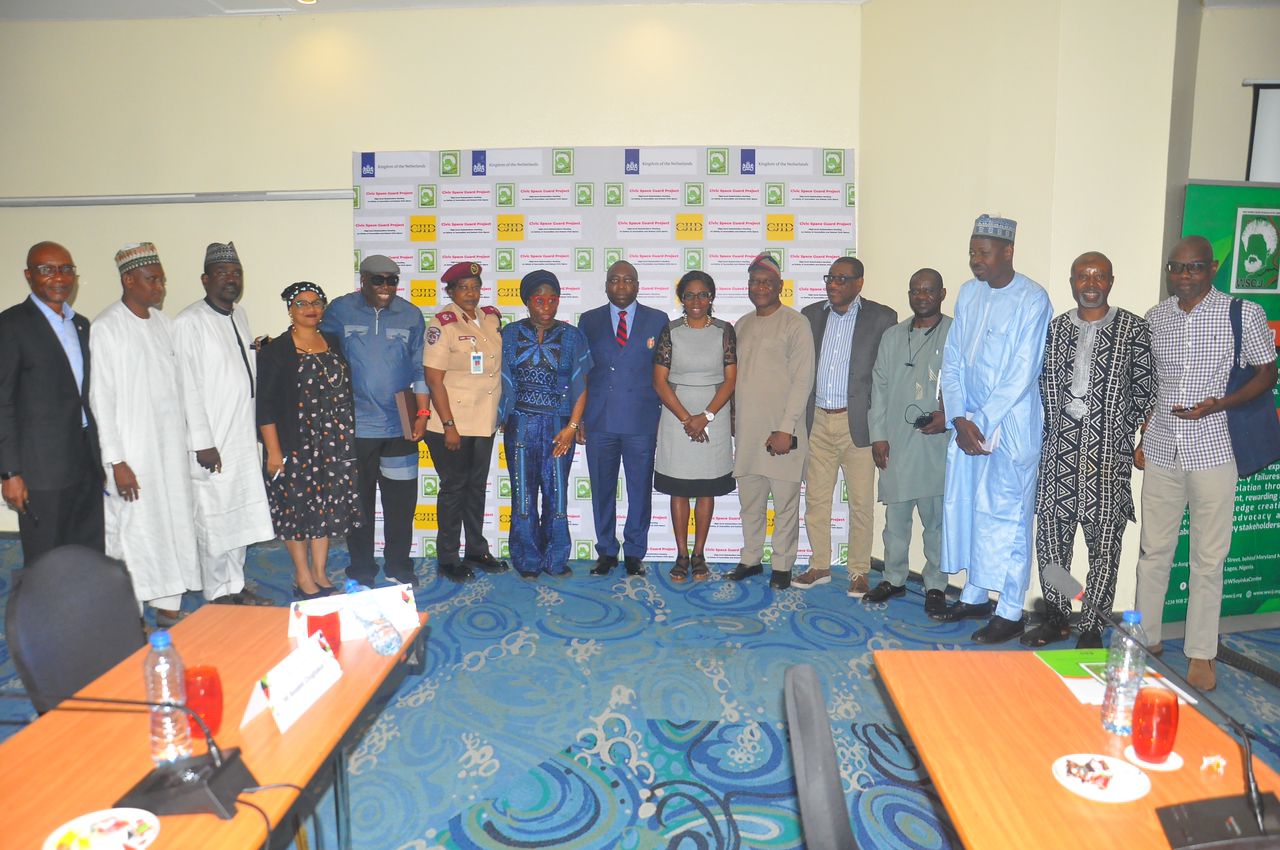
In attendance were the National Security Adviser, Mallam Nuhu Ribadu, management teams of security agencies in Nigeria, members of the Nigerian Bar Association (NBA), members of the Civil Society Organisations (CSOs), academia, media executives, journalists, and other stakeholders.
Ribadu, represented by Major General Samad Akesode, the Director of Communications, Office of the National Security Adviser, gave the keynote speech on the theme: “Promoting Mutual Understanding For A More Robust Civic Space And Journalists’ Safety.”
The no-holds-barred event witnessed intense and candid interactions as participants gave opinions and perceived reasons behind the continual and recurring skirmishes between security agents and journalists.
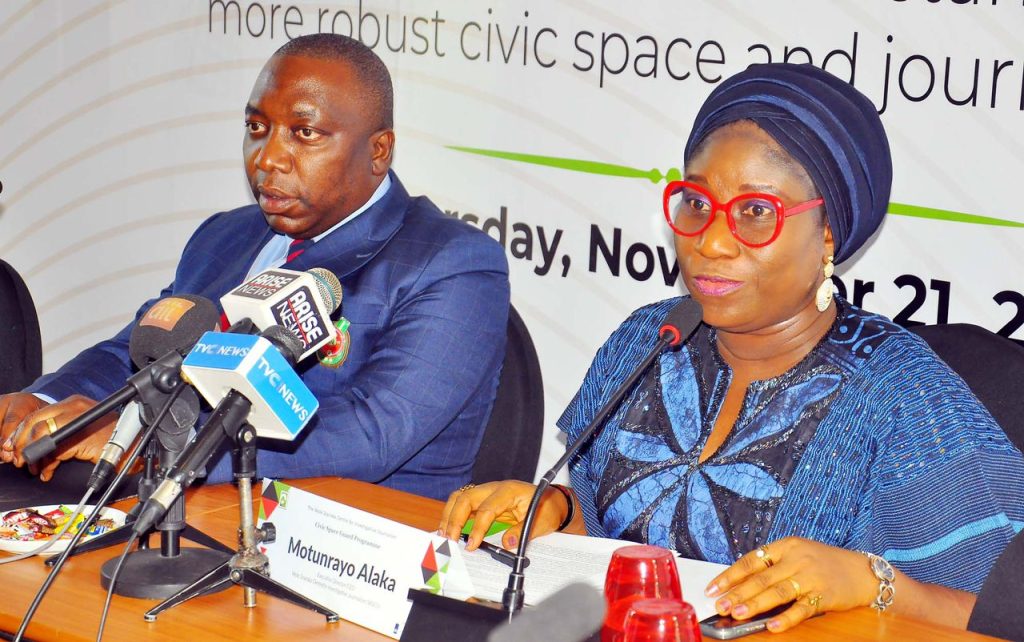
The Executive Director of WSCIJ, Mrs Motunrayo Alaka, kicked off the event by giving an opening remark.
While giving her remark, she said that Nigeria as a country can fall or rise depending on the actions or inactions of the stakeholders.
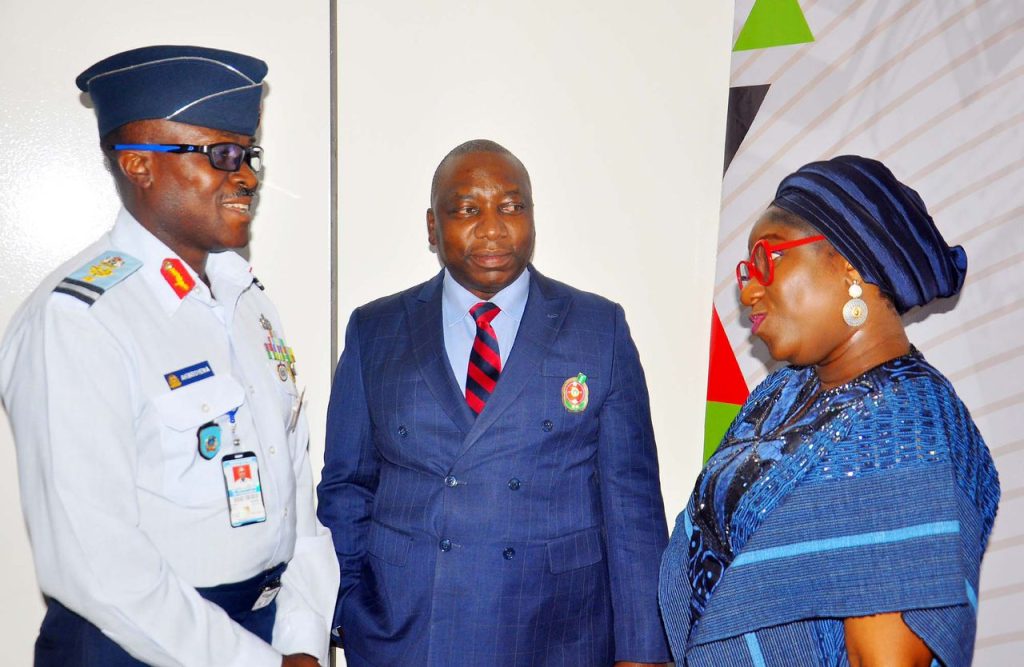
She also noted that democracy works on checks and balances between the executive, legislature and the judiciary, stressing that the news media is constitutionally empowered to make all the authorities and dynamics of power in public and private spaces accountable to their functions.
She added: “All the components of the leadership of our society can only thrive where civic freedoms are protected. However, WSCIJ recently published a Journalism and Civic Space Status Report, Hushed Voices In An Election Year, which paints a stark picture.
“Freedom of expression, peaceful assembly, and participation are under siege. Worryingly, 90% of attacks on journalists occur while they are on duty, polling units and protest grounds have become the most dangerous locations. These findings demand action. We cannot afford to be aloof.
“In recent times, we have witnessed disturbing incidents especially during last year’s election and during the recent #EndBadGovernance protest that necessitates the urgency of this issue. Last year, Haruna Mohammed Salisu of WikkiTimes was arrested in Duguri, Bauchi State, after being attacked by supporters of the state governor while interviewing protesting women.
“Despite claiming the arrest was for his protection, police accused him of ‘inciting the electorate’ and held him without charge. During the #End Bad Governance protests on the 3rd of August, masked security forces in Abuja fired bullets and tear gas at 18 journalists covering events at the national stadium.
“Several were injured, including Premium Times’ Popoola Ademola, who cut his knees and broke his phone while fleeing. Besides physical attacks, the misuse of the Cybercrime Act in Nigeria has left journalists feeling more exposed and vulnerable than ever before.
“What was once a profession driven by the pursuit of truth has now become a dangerous game, where reporters like Daniel Ojukwu of the Foundation for Investigative Journalism find themselves at the mercy of laws that seem to have been designed to silence them.”
Alaka, who maintained that security agencies were a central part of this conversation, added: “The police are central to our domestic safety – the police are designed to be our friend. The army, navy and air force secure our borders and are often brought in when things get out of hand in domestic security.
“The Department of State Security, and others are a vital part of the intelligence that keeps us all safe. We acknowledge and honour you all but we must admit that a society where journalists and other citizens often look over their shoulders in fear is not the dream. Nigeria and Nigerians deserve better.”
She told the gathering that journalists, who play vital roles in informing the public, holding power to account, and safeguarding democratic values, were increasingly targeted while performing their professional duties.
The fact that these attacks, said Alaka, occurred in spaces that should symbolise democracy’s strength units, protest grounds, government houses, news media house premises, and even court premises- which therefore highlights the fragility of the civic space.
She further noted: “When journalists are unsafe, the flow of accurate information is disrupted. This creates a ripple effect, weakening public trust in democratic institutions, reducing transparency, and fostering an environment where misinformation and impunity can thrive.
“If these infringements remain unchecked, the press may resort to self-censorship, limiting the public’s access to critical information and undermining their ability to make informed decisions.”
She also said that freedom of expression, assembly, and participation, which are the cornerstones of a thriving civic space, were increasingly under threat.
She argued that State actors accounted for 68% of violations, with security forces like the police leading this record.
“On the other hand, non-state actors, including hoodlums and mobs, contribute significantly to the hostility, demonstrating the multi-faceted nature of these challenges. Our aim here is not to merely reel out numbers or point accusing fingers. We are here to act. This is what leaders do,” Alaka emphasised.
She explained that the event’s theme, ‘Promoting Mutual Understanding For Journalists’ Safety And Robust Civic Space,’ could not be more urgent.
She added, “Nigeria’s realities demand urgent and collective action, to chart a new course and forge a sustainable way forward. The challenges facing our civic space and the safety of journalists cannot be addressed in isolation; they require a concerted and collaborative effort from all stakeholders.
“Together, we will identify actionable solutions that will improve mutual respect between the news media, security agencies, civil society organisations, judiciary and other stakeholders, strengthen protection for journalists, safeguard civic freedoms, and rebuild public trust in institutions meant to serve the good of the people.”
Ribadu, while admitting the critical role of the media in national security and development, stressed that a collaborative approach was essential for addressing the challenges.
He said that as stakeholders continue to strive for a more inclusive society, it is essential to foster mutual understanding and respect between the media, civil society, and the government.
He also said: “A free press is the backbone of democracy, providing a platform for diverse voices and holding those in power accountable. It is important to note that, the media and government are working from different directions to advance society.
“However, there have been occasional misunderstandings between journalists and some security agencies tasked with the huge responsibility of securing our country and its people. Some people have mischaracterised this occasional disagreement to mean that the government is deliberately undermining the robust civic space in our dear country.
“I admit journalists worldwide face numerous challenges, including harassment, intimidation, and sometimes even violence. As far as this government is concerned, we are committed to supporting journalists and the media in protecting the civic space in line with extant laws.”
While highlighting some critical ingredients for promoting mutual understanding for a more robust civic space and journalists’ safety, the NSA noted: “The media plays a vital role in shaping public perception and influencing national discourse. Media platforms have the power to either fan the flames of conflict or foster peace and unity.”
He continued: “As gatekeepers of information, the media has a critical role to play in national security. Your reporting can either promote national interest and security or compromise it. I urge you to use this influence wisely, prioritizing responsible reporting that promotes national cohesion and stability.”
The NSA urged the media to prioritize fact-based reporting and avoid sensationalism and speculation.
He also wants the media to avoid reporting that could compromise national security or fuel conflict, focus on solutions-driven reporting, highlight success stories and promote national unity.
While agreeing that a free and independent press was crucial for holding leaders and institutions accountable, the NSA stated: “investigative journalism and reporting can help uncover corruption, ensure transparency, and promote good governance. I assure you that our administration is committed to protecting press freedom and promoting a culture of openness.”
He seized the occasion to invite journalists to partner with the office of the NSA, and security agencies in promoting a narrative of hope, unity, and progress.
“In this regard, let us focus on solutions-driven reporting, highlighting success stories, and amplifying the voices of Nigerians working towards a better future,” he said.
According to him, a thriving civic space was necessary for Nigeria’s progress and development. He noted that by working together, stakeholders could create an environment where information flows freely, and safety is prioritised.
He opined that the best way to promote mutual understanding between media and security agencies was to foster a culture of mutual understanding and respect. This, he said, includes, regular interactions between the media, civil society, and government agencies to address concerns and promote collaboration.
Others are: “Providing regular training and resources for journalists to enhance their competencies and professionalism, encouraging media organisations to establish mechanisms for checks and balances, such as the Ombudsman mechanism implemented by the Newspapers Proprietors Association of Nigeria (NPAN).”
The NSA explained that fostering a culture of respect and collaboration starts with recognising that both journalists and security personnel share a common goal, which is the safety and well-being of the public.
His words: “By working together, we can create an environment where information flows timely and freely, and safety is prioritized. Furthermore, the challenges facing journalists and security personnel are complex and multifaceted.
“However, by prioritizing education, communication, legal protections, technological integration, and collaboration, we can start to address these challenges frontally. The role of journalism in a democratic society is paramount, and it is our collective responsibility to ensure that journalists can operate safely and freely, holding power to account and serving the public interest.
“In the same way, we must realise that security personnel are mission enablers that give meaning and coherence to the steadfast workings of an orderly and democratic state. Let us commit to working together, listening, learning, and fostering an environment where both journalists and security personnel can thrive.”
A Senior Advocate of Nigeria (SAN), Femi Falana, said that the NSA should educate security agencies not to use repealed sections of the Cybercrime Act to harass any Nigerian. He also urged that the government should desist from using state actors to harass the media.
He added: “Security and law enforcement agencies should desist from charging journalists for terrorism and treasonable felony. Under the Administration of Criminal Justice Act, 2015, civil disputes cannot be criminalized and the illegal practice of arresting relatives, friends or colleagues instead of suspects has been expressly abolished.
“There is a serious threat to freedom of expression around the country, as only Lagos and Edo States have decriminalized freedom of expression. Journalists must also familiarize themselves with the laws governing the media space.”
The Project Manager, Media Freedom, Centre for Journalism Innovation and Development (CJID), Ms. Christiana Longe said there have been 128 attacks on journalists in Nigeria in 2024 alone. She stressed that the freedom of expression of Nigerians was being trampled on.
She suggested that specific laws should be enacted to protect journalists.