

Fears are mounting for the safety of 176 residents of the Woro community in Kaiama Local Government Area of Kwara State, as Boko Haram terrorists have reportedly demanded a staggering N3.52 billion ransom for their release.
Community sources confirmed to SaharaReporters that negotiations between the captors and local representatives have reached a deadlock following the astronomical demand.
The abduction, which occurred during a brutal raid on the community, has left the region in a state of high tension.
According to local sources, the terrorists are insisting on the full payment before any of the victims, many of whom are women and children, are set free.
The stall in negotiations has heightened anxieties among family members who claim the government’s response has been insufficient.
The Woro massacre and subsequent mass kidnapping represent a significant escalation of insurgent activity in Kwara State, a region previously considered relatively stable compared to the core North-East.
On February 4, 2026, armed militants believed to be linked to Boko Haram or Islamic State-affiliated groups invaded Woro and the neighbouring village of Nuku.
The attackers reportedly killed over 200 people and set fire to numerous homes and the palace of the traditional ruler, Alhaji Salihu Umar, after residents rejected demands to adopt a radical version of Sharia law.
While the Kwara State Government and security agencies initially deployed personnel to the area, the sheer scale of the N3.52 billion ransom has shifted the crisis from a tactical military challenge to a complex humanitarian and political standoff.
Critics point out that the logistics of holding 176 people in the forest without detection raises serious questions about the effectiveness of regional surveillance and intelligence gathering.
The news has caused a wave of indignation across social media, with many Nigerians expressing frustration over the perceived disconnect between the government’s focus on political campaigning and the reality of citizens in captivity.
Femi Obaf questioned the government’s priorities, asking how many Nigerians remain in captivity while officials are busy with “political campaigns and rhetoric.”
This sentiment was echoed by Michael, who noted that while the 2014 Chibok kidnapping drew global outrage, mass abductions have now become “normal headlines” that the public and government seem increasingly desensitised to.
Other observers, such as Black Today and Tzalmon, characterised the kidnapping surge as a “lucrative business” fueled by previous ransom payments, suggesting that the industry is supported by “pillars in authority.”
Meanwhile, some users focused on the sheer logistics of the crime; SIDA ACUTA and WaGmI questioned how nearly 200 people are being fed and housed in the bush without security agencies tracking their location.
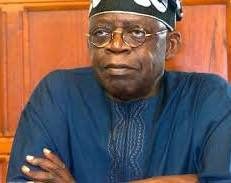
The demand for N3.52 billion has also been contrasted with recent government initiatives. Johnson Agiriga and others pointed to President Tinubu’s recent directive for free rice distribution during Ramadan and Lent, arguing that “rice strategy” is a poor substitute for the “practical solutions” needed to end the kidnapping franchise.