

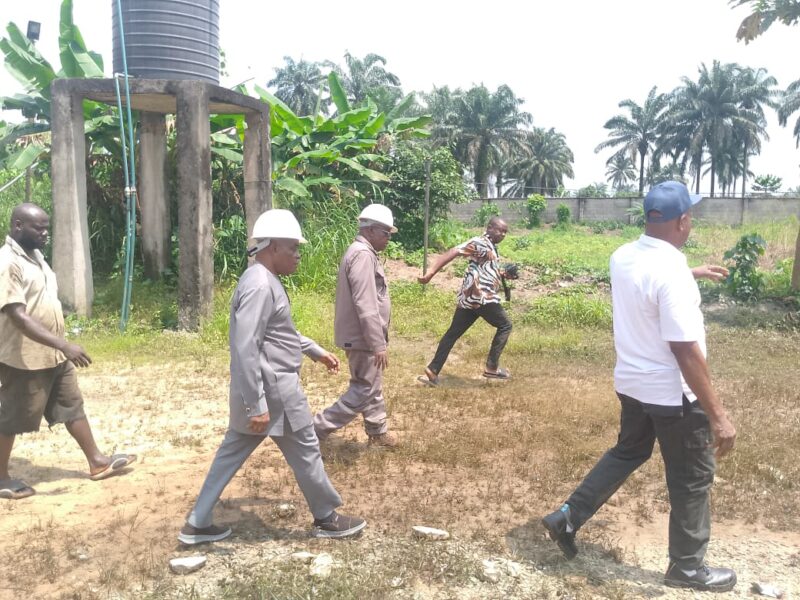

The Foundation for Environmental Rights Advocacy and Development (FENRAD) has called for an independent joint investigation into the recent crude oil pipeline explosion in Owaza, Ukwa West Local Government Area of Abia State, urging authorities to conduct a comprehensive assessment of pipeline integrity and replace obsolete oil infrastructure.
In a statement issued on Saturday, the Executive Director of FENRAD, Comrade Nelson Nnanna Nwafor, expressed concern over the environmental, public health and safety implications of the explosion, describing the incident as another indication of the risks posed by Nigeria’s ageing oil and gas infrastructure.
The Abia State Government had attributed the explosion to the failure of an ageing pipeline reportedly installed in the late 1950s. However, FENRAD maintained that a transparent, scientific and independent investigation was necessary to establish the exact cause of the incident.
“The recurring incidence of pipeline failures across the Niger Delta underscores the urgent need for evidence-based investigations and systemic infrastructure renewal,” Nwafor said.
The environmental advocacy group called for the immediate constitution of a Joint Investigation Visit (JIV) comprising representatives of the Federal Ministry of Environment, the National Oil Spill Detection and Response Agency (NOSDRA), the Nigerian Upstream Petroleum Regulatory Commission (NUPRC), the Abia State Ministry of Environment, the pipeline operator, affected community representatives, independent environmental experts and environmental civil society organisations.
According to FENRAD, the joint investigation would help determine the precise cause of the explosion, assess the extent of environmental contamination and socio-economic impacts on affected communities, and recommend appropriate remediation and compensation measures.
“As an environmental justice campaigner, FENRAD maintains that communities should not continue to bear the disproportionate burden of environmental degradation resulting from aging energy infrastructure,” Nwafor said.
He added that resilient, safe and environmentally sustainable energy infrastructure was essential to Nigeria’s climate adaptation, pollution prevention and sustainable development goals.
Beyond the immediate investigation, the organisation urged authorities to conduct a comprehensive Pipeline Integrity Assessment (PIA) along the entire pipeline corridor that traverses Owaza and neighbouring communities.
The assessment, it said, should include corrosion evaluation, wall thickness testing, hydrostatic pressure testing where appropriate, leak detection system evaluation, geotechnical stability assessment and a detailed risk analysis to determine whether the pipeline remains safe for operation.
FENRAD further recommended that any pipeline found to have exceeded its operational lifespan or failed to meet modern engineering and safety standards should be decommissioned and replaced with modern infrastructure built in accordance with Nigerian regulations and international best practices.
“Environmental protection cannot be achieved through emergency responses alone. Preventive asset integrity management, routine maintenance, continuous monitoring and timely replacement of obsolete facilities remain fundamental obligations of pipeline operators under responsible environmental stewardship,” the statement added.
The group also called for immediate environmental sampling and laboratory analysis of affected soil, groundwater, surface water, sediments and ambient air to determine the level of contamination and guide remediation efforts.
It stressed that affected communities deserve prompt environmental restoration, transparent disclosure of investigation findings and adequate compensation for verified losses.
FENRAD further urged regulatory agencies to strengthen oversight of pipeline integrity management programmes across the Niger Delta, warning that preventable infrastructure failures continue to threaten biodiversity, livelihoods, food security, ecosystem services and citizens’ right to a clean and healthy environment.
“The Owaza incident must serve as a catalyst for comprehensive reforms in pipeline asset management rather than another addition to the long history of avoidable environmental degradation in the Niger Delta,” Nwafor said.


