
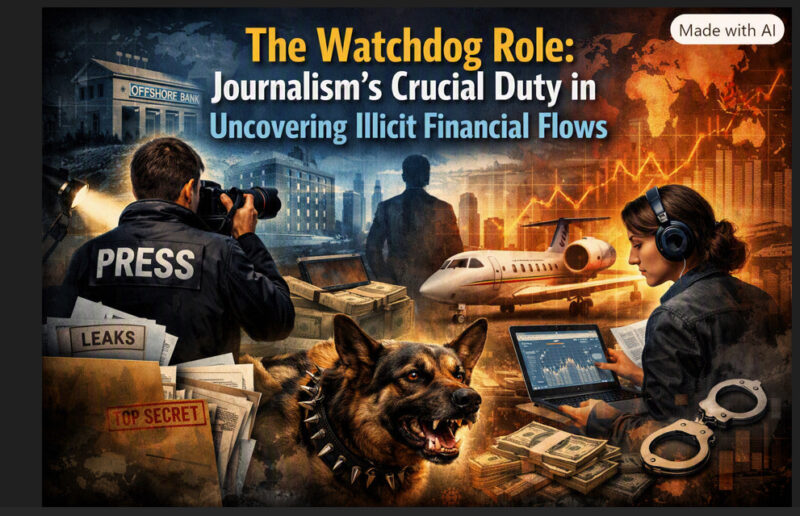

In this session, I explained the different invoicing methods used to generate illicit financial flows.
One common method is under-invoicing exports, such as oil, where the quantity exported is under-declared to foreign buyers.
Another is over-invoicing imports, where the value of goods brought in is exaggerated.
There is also multiple invoicing of the same shipment, with fewer shipments than declared, and false descriptions or misreporting of quantities, such as claiming 500,000 barrels were exported when, in reality, one million barrels were shipped.
I highlighted tax evasion as another major source of illicit flows. Companies may conceal taxable income, declare less profit than they actually make, or maintain undeclared offshore accounts.
Profit shifting through artificial transfer pricing and intellectual property royalty schemes is also common, especially in sectors like oil and gas, telecommunications, manufacturing, and extractives.
The most damaging area is public sector corruption. Diversion of public funds, inflated contracts, procurement fraud, unexecuted projects, and bid rigging all generate illicit flows.
Kickbacks and diversion of state assets, including manipulation of privatisation processes, are widespread. In extractive industries, crude oil theft through pipeline cutting and oil bunkering is rampant. Licensing abuse in narcotics production also contributes.
Within the criminal economy, fraud, cybercrime, online scams, trafficking, kidnapping, and extortion all generate illicit funds. Financial institutions also play a role, as they sometimes fail to report suspicious transactions.
Real estate is another channel, with luxury properties bought through proxies. The informal economy also facilitates illicit flows, with large sums of cash moved through informal networks.
The impacts are severe. Illicit financial flows reduce government revenue, leading to underfunded social services like education, health, and infrastructure.
They increase budget deficits, force reliance on loans, and worsen poverty and inequality. They slow economic growth, weaken institutions, and fuel corruption.
Capital flight reduces domestic investment, pressures foreign exchange, destabilises currency, and undermines development plans.
Crime and insecurity rise, investor confidence falls, and social tension grows. Ultimately, illicit flows erode democracy, as only the wealthy can afford political participation.
I emphasised that illicit financial flows directly undermine the Sustainable Development Goals (SDGs), particularly those related to health, education, decent work, economic growth, and infrastructure. Combating them is essential for development.
In conclusion, I stressed that fighting illicit financial flows requires legal, institutional, technological, and international measures.
We must strengthen anti-money laundering (AML) and counter-financing of terrorism (CFT) frameworks, enforce compliance, and apply strict penalties. Transparency in public finance is vital, with budgets, procurement contracts, and audits published and followed up.
Tax administration must be digitised to reduce evasion, and beneficial ownership transparency must be enforced, with accurate registers of land, oil licenses, and company ownership accessible to the public.
Finally, I reminded participants that combating illicit financial flows is a collective responsibility. The media, civil society, and international partners all have critical roles to play in ensuring accountability, transparency, and the protection of democracy.
During A Training By The Africa Network For Environment And Economic Justice (ANEEJ) In Partnership With The European Union And The Nigerian Financial Intelligence Unit (NFIU).