

… BVAS Audits, Electoral Reforms Cannot Wait
The conduct of security personnel during the 2026 Osun State governorship election offers a viable blueprint for the upcoming 2027 General Election, but urgent technical audits of the Bimodal Voter Accreditation System (BVAS) and deeper electoral reforms cannot wait, civil society group CLEEN Foundation warned in its close-of-polls statement.
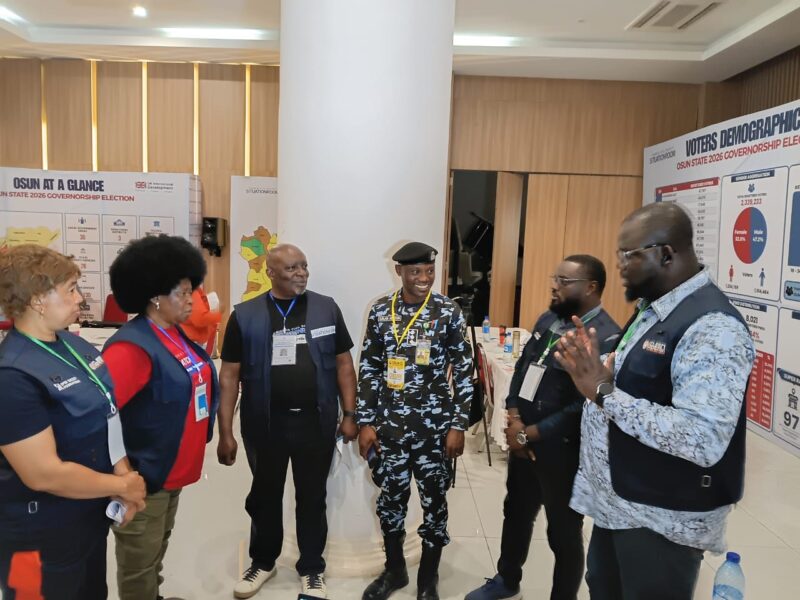
Deploying accredited observers across all 30 Local Government Areas (LGAs) of Osun State, the Foundation monitored security conduct during the critical post-voting window, evaluating officer presence, orderliness, use of force, and ballot box transmission. While praising security personnel for high levels of professionalism, CLEEN Foundation stressed that post-voting safeguards and technological reliability remain crucial to public trust in the results.
According to CLEEN Foundation’s findings, security presence was sustained through the close of polls in the vast majority of monitored polling units, with 100% of observer reports rating officer numbers as adequate or better. Assessments of overall professionalism were strongly positive, with officers rated approachable in 100% of reports and impartial in 97% of cases. Crucially, in 100% of monitored units, security officials deferred to the authority of Independent National Electoral Commission (INEC) Presiding Officers.
“Continuity of presence through to the close of polls matters as much as, if not more than, presence at the opening: it is in the final hours of voting and the immediate post-close period when queues are cleared, results are collated at the unit level, and the ballot box is prepared for movement that opportunistic interference is most likely,” the statement noted.
Despite these positive metrics, the report identified several operational lapses. Officers left their posts temporarily in 6% of reported locations, while 2% of polling units were left completely unattended by security at some point during the day. Additionally, threat incidents were reported at 12% of locations, and security officials used force at 2% of monitored units. Furthermore, security personnel protected ballot box transportation in 86% of locations, leaving 14% where observers could not directly confirm chain-of-custody protocols during transit to collation centres.
CLEEN Foundation observers also highlighted technical challenges involving the BVAS devices, noting instances where facial and fingerprint verification failures caused delays and brief unrest among waiting voters. The Foundation also pointed out structural bottlenecks caused by device distribution in high-density areas.
“It is also worth noting that at several of the polling units observed with large numbers of accredited voters, INEC had provided only a single BVAS unit, which slowed accreditation independently of any device fault,” the report stated.
To safeguard future elections, CLEEN Foundation recommended that INEC publicly clarify its technical fallback protocols, conduct a thorough technical audit of malfunctioning units, and deploy multiple BVAS devices to high-population polling units ahead of 2027.
Overall conduct across polling units was rated “Very Good” in 63% of reports and “Good” in 26%, with only 4% rated “Poor” or “Condemnable.” Particular concerns were flagged at 12 specific polling units—including locations in Atakumosa West, Osogbo, Ede North, Irewole, and Ifelodun—due to low conduct scores, threat incidents, or the use of force.
CLEEN Foundation’s internal log recorded 7 verified low-severity incidents involving verbal or physical intimidation or vote-buying, with voting disrupted at only two sites in Ede South and Modakeke. Separately, unconfirmed media and party reports flagged localised violence or disruption across 6 LGAs, including an independently confirmed incident at the traditional ruler’s palace in Iree (Boripe) and disruption near a prominent politician’s polling unit in Ilesa East.
To build on the progress observed in Osun, CLEEN Foundation outlined critical recommendations across all sectors. The Foundation called on federal and state governments to expedite legislation establishing special courts to prosecute electoral offenders, set statutory timeframes for resolving pre-election disputes, and invest in public communication systems to counter election disinformation.
For law enforcement agencies, the report advised investigating all flagged incidents transparently, maintaining vigilance during collation, establishing dedicated complaint hotlines through the Police Complaints Response Unit (CRU), and partnering with the judiciary to deploy mobile courts for same-day prosecution of vote-buying and electoral offences.
Regarding the electoral umpire, CLEEN Foundation urged INEC to ensure the full functionality of the IReV portal, perform a structured post-election audit of BVAS devices well ahead of the 2027 elections, and provide transparent chain-of-custody documentation for ballot transit. Finally, members of the public were advised to exercise caution against spreading unverified casualty figures or security claims that trigger panic, while actively supporting peaceful democratic processes.
“Ultimately, the Osun State Governorship Election underscored the critical distinction between peaceful voting processes and genuine electoral credibility,” the Foundation concluded. “Addressing this divide requires comprehensive structural reforms, specifically bolstering security agencies to tackle vote-trading and financial inducements, enforcing campaign finance transparency, and strengthening independent oversight.”