

…When a farmer cannot go to his farm, the nation gets hungry, says Sanwo-Olu
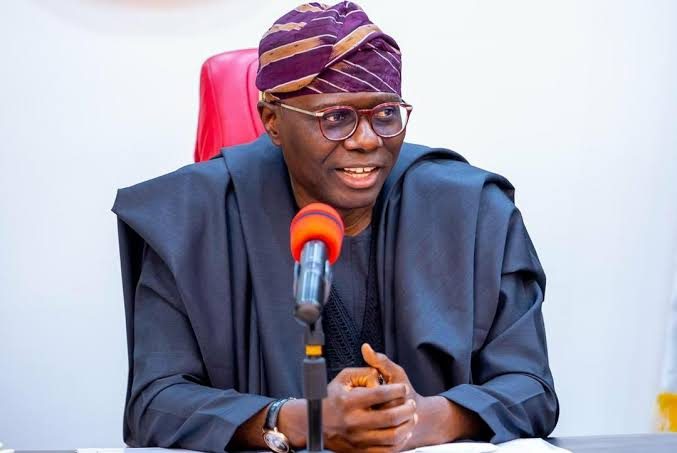
At the Freedom Online 7th annual lecture in Ikeja, Lagos State Governor Babajide Sanwo-Olu delivered a keynote address that placed insecurity at the heart of Nigeria’s democratic and economic future.
Speaking on the theme “2027 Elections, Economy, Security and Nigeria’s Future”, he argued that security is not just about military strength but about the everyday lives of Nigerians.
“Poverty feeds insecurity. And insecurity strangles the very economy that would cure poverty,” Sanwo-Olu said. “When a farmer can no longer go to the farm, the nation gets hungry. When a school is not safe, the country gets another cohort of children who will never learn to read.”
He warned that insecurity could directly undermine the credibility of the 2027 elections. “In the communities where barbarism and insolence persist, insecurity touches everything: whether candidates can campaign, whether INEC can move its material and its people safely, whether voters will come out to vote at all,” he told the audience of journalists, politicians, and civil society leaders.
Sanwo-Olu praised recent federal efforts to strengthen security, including the expansion of the Nigerian Army from eight to twelve divisions, recruitment of 28,000 additional personnel, and decentralisation of police training.
He also highlighted the creation of forest guards, mining marshals, and a new presidential office coordinating homeland security.
Drawing from Lagos’ own experience, he pointed to the Lagos State Security Trust Fund, established in 2007, and the network of nearly 9,000 community watch officers. “Security works best when people who pay for it and people who depend on it can see it and hold it accountable,” he said, stressing that state policing must be rooted in community trust.
Sanwo-Olu linked insecurity to Nigeria’s youth population, describing them as either the country’s greatest asset or its greatest risk.
He cited initiatives such as the Nigerian Education Loan Fund, the Consumer Credit Corporation, and the three million technical talent programme as examples of how government is trying to keep young people engaged and away from the dangers of unemployment and violence.
“The most effective and efficient policy is a job. And the surest guarantee of a job is a country safe enough to invest in one,” he noted.
Turning to elections, Sanwo-Olu urged vigilance to ensure credibility. “A mandate is only as strong as the process that produces it. No office in this land is worth the life of a single Nigerian. No country won by wrong means is a victory at all,” he declared, recalling recent state elections where opposition victories were peacefully accepted as proof of democratic maturity.
He also reminded the audience that Nigeria’s democracy, now 28 years old, has outlasted previous republics and must be protected against the wave of military coups in West Africa.
“We live in a neighbourhood where the ballot box is under siege. Nigeria’s broken rule of election is uncovered, and we should say so,” he said.
Sanwo-Olu concluded with optimism, pointing to the president’s vision of a $1 trillion economy by 2030 and Lagos’ ambition to become an international financial hub. “There is a future beyond 2027, and it will be bright. That confidence which our parents never had is in itself an achievement of this democracy,” he said.