

By Innocent Edemhanria
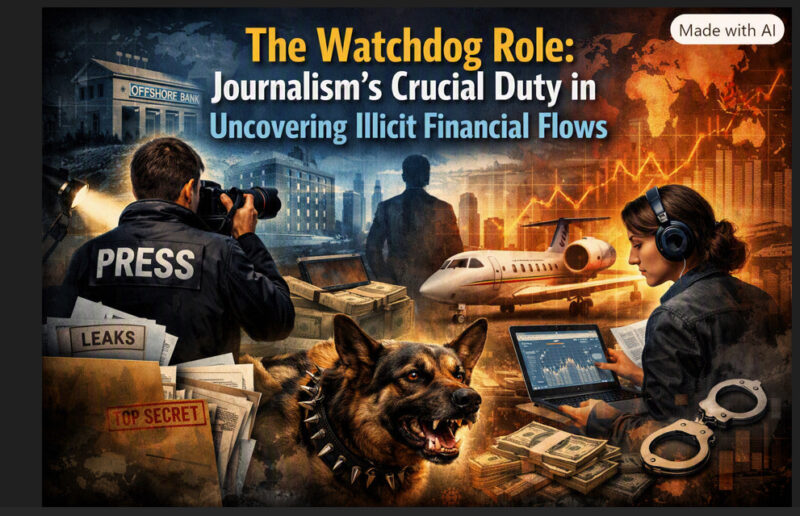
Illicit financial flows (IFFs) are not an abstract risk for Nigeria. They are money illegally earned, transferred or used across borders through corruption, tax abuse, trade manipulation, fraud, money laundering and Illegal markets like trafficking in drugs, arms, persons, etc, smuggling or cybercrime.
Court records show that such flows have occurred, while official estimates indicate a loss large enough to constrain national development. Nigeria has strengthened its laws and institutions, but the channels that move and conceal illicit wealth remain resilient.
The Siemens telecommunications case provides a concrete example. In December 2008, a U.S. court entered final judgment in the SEC’s settled Foreign Corrupt Practices Act action against Siemens AG; Siemens and three subsidiaries also pleaded guilty in related criminal cases. The SEC complaint documented about US$12.7 million in suspicious payments linked to Nigerian projects, including at least US$4.5 million in bribes for four government telecommunications contracts worth approximately US$130 million.
It described fictitious consultancy agreements, cash withdrawals and cross-border transfers used to conceal the payments. Siemens agreed to US$350 million in disgorgement and US$450 million in U.S. criminal fines, alongside further German penalties. The case shows how weak controls, intermediaries and false documentation can facilitate IFFs.
The Bonny Island liquefied natural gas bribery case reinforces the point. In 2009, Kellogg Brown & Root LLC pleaded guilty in the United States to Foreign Corrupt Practices Act offences arising from a decade-long scheme to bribe Nigerian officials for contracts worth more than US$6 billion.
The joint venture paid about US$132 million to one intermediary and more than US$50 million to another. KBR received a US$402 million criminal fine, while KBR and Halliburton agreed to US$177 million in related disgorgement. This concluded case shows how consultancy payments, intermediaries and several jurisdictions can disguise corrupt transfers.
IFFs are inherently hidden, so estimates should be treated as ranges rather than precise accounts. Even so, the scale is unmistakable. UN Trade and Development estimated that Africa loses about US$88.6 billion annually through IFFs.
In May 2025, Nigeria’s Minister of State for Finance, Dr Doris Uzoka Anita, while addressing key stakeholders at the UN Headquarters in New York, said Nigeria accounts for roughly 20 per cent of that loss – about US$17.72 billion a year.
The losses matter because every naira lost reduces the fiscal space for schools, hospitals, clean water, roads, security and social protection. IFFs weaken domestic revenue mobilisation and can increase pressure for borrowing or heavier taxation of citizens and businesses who are already struggling to survive.
They distort competition because firms that evade tax or use corrupt access gain an advantage over honest enterprises. They also deepen inequality, erode trust in government and weaken the legitimacy of institutions. In the extractive sector, theft, under-reporting and opaque transactions can combine revenue loss with environmental damage and insecurity. More broadly, money laundering exposes Nigeria’s financial system to reputational and compliance risks, potentially raising the cost of legitimate cross-border business.
One of the reasons why IFFs persist is because they are enabled by incentives and opportunities within the wider governance environment. Corruption can flourish where public procurement, licensing, taxation and regulation lack effective oversight. Weak accountability can make illicit enrichment attractive, while economic informality and limited institutional capacity make monitoring more difficult.
Second, following ownership remains difficult. Shell companies, nominees, trusts, professional intermediaries and multi-jurisdiction transactions can separate an asset from its true controller. Beneficial-ownership disclosure is therefore only useful when records are accurate, verified, searchable and promptly available to investigators, tax officials, procurement authorities and the public where legally appropriate.
Third, trade, taxation and extractives provide high-value opportunities. False invoices, manipulated prices, abusive profit shifting, undeclared exports and opaque licence or procurement arrangements are hard to detect without transaction-level data. Weak reconciliation among companies, customs, tax, banking, production and export records allows discrepancies to survive.
Fourth, enforcement is uneven. Nigeria has important laws, including the Proceeds of Crime (Recovery and Management) Act 2022, but deterrence depends on timely investigation, well-prepared prosecution, final sanctions and transparent asset management. Long cases, capacity constraints and weak protection from political interference reduce the perceived risk of wrongdoing. Cross-border evidence and asset recovery add delays because legal powers remain national while funds move internationally. Finally, corruption, informality and limited public scrutiny sustain the incentives and opportunities behind IFFs.
Going forward, Nigeria should implement a single, risk-based national IFF strategy with measurable targets and clear agency ownership. Priority actions are to make secure data-sharing routine across tax, customs, corporate, financial-intelligence, procurement and law-enforcement systems, verify beneficial-ownership records and apply penalties for false filings, and deploy joint analytics to flag mismatches in invoices, declared values, production, exports, taxes and payments.
Government should concentrate specialist investigators, prosecutors, forensic accountants and judges on complex financial cases, while publishing case-duration, conviction, confiscation and asset-return statistics. The asset-recovery chain should include early tracing and freezing, professional preservation of seized assets, transparent disposal, and public reporting on the final use of recovered funds. Tax and customs authorities should strengthen transfer-pricing audits, exchange information automatically with foreign counterparts and review treaty or incentive provisions that enable profit shifting.
Procurement, licensing and extractive-sector disclosures should use common identifiers so citizens and oversight bodies can connect companies, beneficial owners, contracts, payments, production and revenues. Civil society and investigative journalists need timely access to non-sensitive data and protection when exposing wrongdoing. Internationally, Nigeria should pursue faster mutual legal assistance, joint investigations and return agreements that guarantee public monitoring.
The central lesson is simple. Concluded cases prove that IFFs happen, while billion-dollar estimates show that prosecution after the event cannot be the whole strategy. Nigeria must make illicit value harder to create, easier to detect and trace, faster to restrain, and certain to confiscate. Sustained political commitment, interoperable data and visible accountability can turn the fight against IFFs into a practical programme for protecting public resources and financing development.
- Edemhanria, ANEEJ Programme Manager, writes from Benin City
- #Securitynewsalert.com
- #IllicitFinancialFlows #Nigeria #EFCC #ICPC #ANEEJ #IFFs