

Juliana Francis
Determined to ensure that the forthcoming 2023 Election will be done without hitches, the Lagos State Commissioner of Police Abiodun Alabi, approved the training of almost 90 police personnel under his watch.
The police personnel were trained on Human Rights and Rule of Law and the Code of Conduct for Nigeria Police at election time. The training, which took place on the the15th of September 2022, was organized by the Executive Director of Crime Victim Foundation (CRIVIFON), barrister Gloria Egbuji.
They were over 90 police personnel that participated in the training and they each received certificates for graduation.
This present set of police graduates was not the first that CRIVIFON had trained on courses relating to Human Rights Foundation.
This group was the 41st graduands since CRIVIFON started training police personnel on Human Rights and the Rule of Law.
Egbuji, while speaking at the graduation ceremony, said the graduation was for police officers trained on human rights and rule of law code of conduct for NPF at the election and election security.
She added: “This graduation which is done quarterly every year with the approval of the IGP is one of the occasions to showcase the good things NPF are doing to meet up with the dynamics of policing that must operate in a democratic society. It is also a way of complying with the president and IGP’s objectives of policing the community in accordance with international best practices for a better safe and secured Nigeria. Human Rights are at the core of community policing and without police respecting the Human Rights of Nigerians, it will be very difficult for them to achieve the benefits of community policing because all the tenets of human rights as contained in the National and international human rights documents must be respected by the police for the populace to truly come closer to them for genuine partnership in intelligence sharing, community support and truly being police friends.”
She explained that it was against this backdrop that her organisation, CRIVIFON, with the approval of the Inspector General of Police (IGP) commenced the training for the first time in 2006, starting from Lagos State Command as a pilot. According to her, the training has so far spread across states in Nigeria.
She explained that CRIVIFON was the first nongovernmental organisation (NGO) that commenced the setting up of Human Rights and Gender Desks in all Police Stations in Lagos State as a pilot in 2006. Today, Human Rights and Gender Desks are now all-over other Police Formations, she said.
She added: “I will not overemphasise the benefits of these projects to the victims of crime, suspects, witnesses, child offenders and victims of domestic violence of all genders. Having set up those projects in place CRIVIFON conducted evidence-based research with funds from UNICRI to ascertain the level of knowledge of human rights by police officers and results showed that the majority of officers lack knowledge of the basic fundamental Rights of Citizens as provided under our Chapter 4 of the 1999 Constitution as amended. Therefore, based on this research, we embarked on massive Human Rights Education and Awareness for the NPF from all ranks starting from Deputy Commissioners of Police (DCP) to Constables. As of today, we have trained on our record 20,000 policemen and women from ranks of DCPs, down to Constables, more from Lagos Command and others from Airport Command, Zone 2, FCIID Alagbon, Railway, Enugu, Anambra, Imo, Abia, Akwa Ibom as the training continues till date.”
She explained that in Lagos Command her organisation collaborated with the training department with the goal to train all officers, “today we are in course 41. Our method is not to do one-off training. The training is in-depth and usually, three months once a week after which an exam is given to them and a certificate of merit issued to those who passed the exam. Continuous mentoring and evaluation are also put in place.”
Egbuji is pleased with the resultant effect of the training and she firmly believed that there is awareness of human rights in the 120 police divisions in Lagos and the trainers are mainly lawyers on pro-bono support.
Egbuji said that CRIVIFON was not funded for the training but she used the benevolent expertise and support from lawyers concerned in making a change within the NPF.
She noted that the training contents were enriching ranging from the whole Chapter 4 of the 1999 Constitution with a thorough explanation of all sections 33 to 45 particularly key areas that concern the police and where the public cry out most like bail, right to silence, rights to a fair hearing, permissible use of firearms, limit of police powers, child rights, domestic violence law, ADR mechanism, Humanitarian laws, interrogation, interviewing skills, among others.
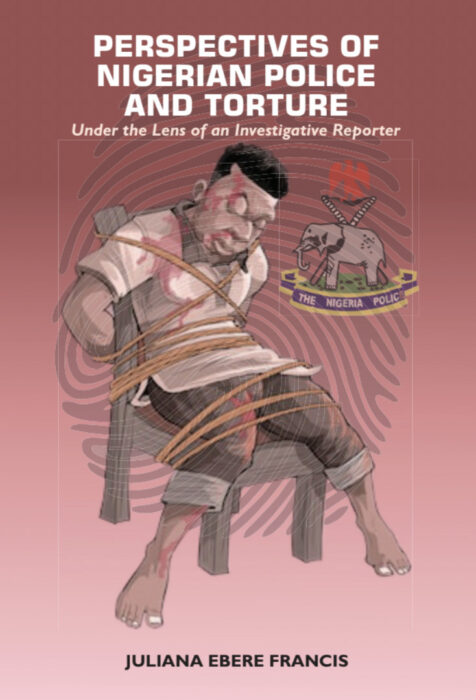
“For this course 41 IGP requested that we include a code of conduct for police officers at election time and election security for NPF. The training is interactive with role plays, group discussions and assignments questions and answers. This training is still ongoing even after today’s graduation, every Thursday at Lagos Command with the training department coordinating the police. Our objectives are to change the narrative and have friendly police officers who respect people, human rights improve the image of the police for the public to be closer to them and share intelligence and assist them to make their work easier after all even the most sophisticated police in the world needs information to make the best of policing and provide safer cities and higher quality of life where fear of crime is non-existent. It is also to make police who are law enforcers not be lawbreakers and help them carry out diligent investigations and interrogation without torture. It will also make the working of community policing a lot easier and attract more support from the people to help them in their needs,” said Egbuji.
The Executive Director of Rule of Law and Accountability Advocacy Centre (RULAAC), Mr. Okechukwu Nwanguma, who is also the organiser of the Lagos State Police Stakeholders Accountability Forum (The Forum), commended the Lagos State Police Command for embracing human rights training for its personnel.
Nwanguma said that it was a clear testimony to the recognition by the Lagos State Police Command of the importance of human rights as an essential and integral component of policing.
He said: “It has, in fact, been recommended by many policing and human rights experts that human rights education should, not only be given at all police training colleges nationwide to all officers and men of the Force but that it should also be a condition precedent for promotion to any higher rank at every stage. In the introduction to the Commonwealth Manual on Human Rights Training for Police, it was pointed out that ‘A human rights-based approach to policing for communities begins with knowledge and awareness on the part of police officers as to the limits of lawful police authority and conduct. Many of these limits are premised on fundamental rights. This knowledge and awareness requires attention to be given to human rights elements of policing during initial, continuation and refresher training for police.’ By definition, law enforcement requires that some coercive or forceful capability exists to ensure compliance with the law. Police are authorized to use force in certain circumstances, such as in effecting certain arrests, or in self-defence. From a human rights perspective, when police have the authority to use force, including firearms, the most important principle is of proportionality using minimum force. This means that if no force is needed, for example, to arrest a person, an officer should not use any force at all; if any force is used, it should be only so much as is strictly necessary to effect the arrest of that person.”
Nwanguma said that the new Police 2020 is emphatic on the principle of human rights and principle of proportionality using minimum force. He explained that the Police Act also provided safeguards to regulate the exercise of police powers. It also stated that no junior police officer will be punished for refusing to obey unlawful orders by their superiors.
The human rights activist further said that the preamble to the Universal Declaration of Human Rights recognises the logical link between a lack of respect for human rights and the likelihood of disruption to the peace. He also said that viewed in this way, the day-to-day conduct of police in protecting and ensuring the human rights of all persons contributes to safe, stable and peaceful communities, thus violation of rights only undermines, rather than enables, the possibility of real security and stability.
He mentioned that successive leaderships of the NPF have acknowledged the principle that the Police is created and regulated by law.
Nwanguma said that the duty of police officers is to serve and protect their communities, but for them to be able to effectively carry out this vital duty they must, of necessity, be aware of the source, nature, content and limits of the rights of all individuals with whom they come into contact.
He also said: “Human rights training for police officers- such as the one being organised by CRIVIFON- is an essential means of promoting human rights-based approaches to policing. Police powers and Human Rights in Nigeria. The powers, functions and procedures of the NPF are founded on Nigeria’s 1999 Constitution and regulated by law. As the principal law enforcement agency in Nigeria, the Police ordinarily exist to apply and enforce laws. In a very general sense, therefore, it may be said that all laws in Nigeria are applicable to the Police. As an institution established by law within the public service, the NPF is also governed institutionally by the Civil Service Rules and Financial Regulations applicable to all federal institutions. To direct the operations and management of the NPF, the Police Act empowers the Inspector-General of Police to issue subsidiary legislation through regulations, Standing Orders, administrative instructions and circulars. All staff of the NPF ought to be conversant with and have (access to) these applicable laws and standards.”
Nwanguma said it was tragic that to date, most police personnel still do not conversant with laws pertaining to their job, to the detriment of their professional competence. He said that it was based on that realization that his organization decided to commission the production of concise summaries of the Police Act 2020 and the Police Trust Fund Act 2019, with support from the McArthur Foundation.
“We are donating 120 copies, of each of the laws as part of CSO’s contribution to enhancing access to and knowledge of the laws by police officers,” said Nwanguma.
The guest speaker of the occasion, Barrister Olasupo Ojo, a Civil Rights Activist and Director, National Human Rights Commission, Southwest, admonished the graduating officers to imbibe and inculcate all they have learnt in the course in the discharge of their official duties. He enjoined them to eschew vices like bribery, corruption, injustice and human rights violations that can tarnish their image and that of the Police Force.
One of the graduating officers, Inspector Ogunkola said: “This training has let me know how to relate with people, members of the public, suspects, their rights, and our rights as police officers. No matter the offence someone committed, he or she should be regarded and treated as a human being.”