


By Mr Patrick OGBO
The an urgent need to establish dry inland ports in Nigeria as strategic points of both destination and origin for goods.
I vividly recall a discussion in 2019, in China, with senior officials from NIMASA, the Central Bank of Nigeria (CBN), the Ministry of Finance, NPA and NAFDAC, just before the onset of the COVID-19 pandemic. The concept of dry inland ports is not only innovative but also timely, particularly as Nigeria seeks to enhance its trade infrastructure, reduce port congestion, and create opportunities for hinterland economic growth.
International precedents further underscore the significance of dry inland ports in optimizing supply chains and boosting regional development.
The Inland Port Greer in South Carolina, USA, offers a compelling case of how inland ports can relieve congestion at coastal ports and facilitate more efficient cargo transport to interior regions.
Linked to the Port of Charleston, this inland port has become a critical mode in South Carolina’s logistics network, extending its global trade reach far inland.
As Rodrigue, Slack, and Notteboom (2020) note, “inland ports serve as vital extensions of supply chains, improving both the accessibility and operational capacity of coastal ports by decentralizing the storage and handling of goods.”
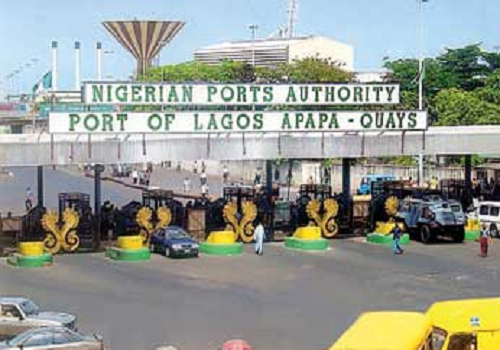
This mirrors the logistical potential dry inland ports could offer Nigeria by distributing traffic from overstretched seaports like Apapa to interior regions.
China’s Zhengzhou International Inland Port offers an even more illustrative example. The port has successfully connected inland provinces to global markets via an intricate rail and road network.
The World Bank (2019) reports that the establishment of inland ports in China has drastically reduced both transportation costs and delivery times, particularly for industries located far from the coastal hubs.
“The success of China’s inland port system shows that integrating hinterland regions into global trade networks can significantly boost regional development,” the report states, emphasizing the critical role such infrastructure plays in promoting economic diversification and reducing regional inequalities. Nigeria, with its vast hinterland regions, stands to benefit similarly by leveraging dry inland ports as gateways to international markets.
However, despite these clear benefits, a critical operational question remains: Who is responsible for the transportation of goods from the primary seaports to these inland dry ports?
Should the responsibility lie with shipping agents, shipping companies, or the proprietors of the dry ports themselves? International best practices suggest a collaborative approach.
In the European context, the Barcelona Inland Port in Spain offers a multi-stakeholder governance framework, where the burden of goods transfer is shared between shipping companies, port authorities, and private sector operators.
Bask et al. (2014) highlight the success of this model, stating that “effective management of inland ports requires a coordinated approach among multiple actors, ensuring the smooth movement of goods from seaports to inland facilities.”
This collaborative framework could serve as a model for Nigeria, where a clear delineation of roles and responsibilities is essential to prevent bottlenecks in the transportation chain.
Moreover, utilizing Nigeria’s existing transire procedure to transfer goods between seaports and inland dry ports might negate many of the logistical advantages such inland ports are designed to provide. As Baird and Dubourg (2021) argue, “inflexible or outdated regulatory frameworks can transform what should be an efficient logistical process into a source of delay and inefficiency.”
The transire process, designed for clearing goods between Nigerian ports, may not accommodate the complex demands of modern inland port operations. Instead, adopting streamlined procedures that prioritize efficiency and minimize bureaucratic delays will be crucial to ensuring that dry inland ports in Nigeria can function as effective hubs of both origin and destination.
In summary, the global success stories of inland ports illustrate the transformative potential they hold for Nigeria’s trade infrastructure. Yet, for these inland ports to realize their full potential, it is imperative to address the operational and regulatory challenges, particularly regarding the responsibility for transporting goods from coastal ports to the hinterland.
A collaborative, multi-stakeholder approach and a reformed regulatory framework would be key to achieving this objective.
It is my hope that the ongoing modernisation effort of the Nigeria customs service shall see the need to coordinate this laudable concept of the national association of government approved freight forwarders to enhance logistical needs of trade development in Nigeria.
Indeed Dr aniebonam you have paid your dues and it’s my hope that the federal government of Nigeria should take up this great idea to leverage trade infrastructure and logistics in our international trade noting that the inherent advantage are limitless
This open letter is being forwarded to the Comptroller General of customs, Transportation minister, Secretary to the federal government, Finance, chief of staff to Mr president etc for their records under the agenda of renewed hope for Nigeria greatness
Mr Patrick OGBO
Head of Tech Committee nagaff hqrs. Rtd senior citizen Nigeria ports authority
#NigerianPortsAuthority