

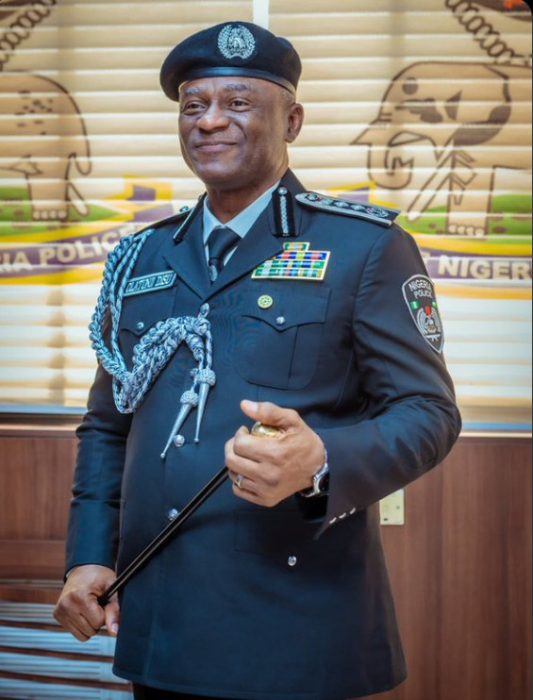

By Juliana Francis
The 23rd Inspector General of Police, Olatunji Disu, has called for closer collaboration between the media and the Nigeria Police Force, stressing that such synergy is crucial for tackling insecurity and advancing police reforms.
Speaking during a meeting with media executives in Ikeja, Lagos, Disu underscored the indispensable role of the media in amplifying police efforts and shaping public perception.
According to him, policing efforts without media visibility would be ineffective.
“Police work without the media is like winking in the dark, no one sees the impact,” he said, while appealing for sustained support from journalists.
He described the relationship between the police and the media under his leadership as a partnership built on mutual trust.
The IGP also urged police personnel nationwide to conduct themselves professionally, noting that officers should always leave positive impressions wherever they serve.
Reflecting on his career, Disu said he has never felt uneasy returning to previous postings because he maintained good relationships and upheld integrity.
He reiterated his commitment to strengthening internal relations within the Force and improving its public image.
Drawing from his experience as commander of the Rapid Response Squad (RRS) in Lagos, Disu said public resentment toward the police is largely directed at a few errant officers.
“I’m aware there are bad eggs in the Nigeria Police Force, and I promise to address that. Nigerians do not hate the police; they want to love us, but they expect us to do the right thing,” he said. “My experience at RRS showed that when officers treat people with respect and help, the public responds positively. I want Nigerians to truly own the police.”
Disu expressed optimism that the Force would earn greater public appreciation over time.
He further called on journalists to exercise accuracy and responsibility in reporting, particularly on sensitive issues such as kidnapping and violent crimes.
“When reporting such incidents, please ensure the details are accurate and handled with care,” he advised.
Reaffirming his administration’s commitment to press freedom, the IGP pledged to protect journalists and prevent harassment in the course of their duties.
“I will ensure that journalists are not harassed while doing their jobs. We will make our contact numbers widely available and conduct regular briefings to keep the media informed,” he said. “I have carried a gun for years, but I remain conscious that the pen is mightier.”
Disu assumed office as the 23rd Inspector General of Police amid growing concerns over insecurity, police accountability, and public trust in the Nigeria Police Force.
His appointment followed years of calls for reforms, particularly after incidents that strained police-community relations across the country.
Before his elevation, Disu served in several strategic roles, including as Commander of the Rapid Response Squad (RRS) in Lagos, where he gained recognition for community-oriented policing and rapid intervention in crime incidents.
His tenure at the RRS was often cited as a model for building public confidence through responsive and people-focused policing.
Nigeria has continued to grapple with security challenges such as kidnapping, armed robbery, and communal violence, increasing pressure on the police to improve intelligence gathering, response time, and professionalism.
At the same time, the media has remained a critical stakeholder in shaping public discourse, exposing misconduct, and highlighting security developments.


