

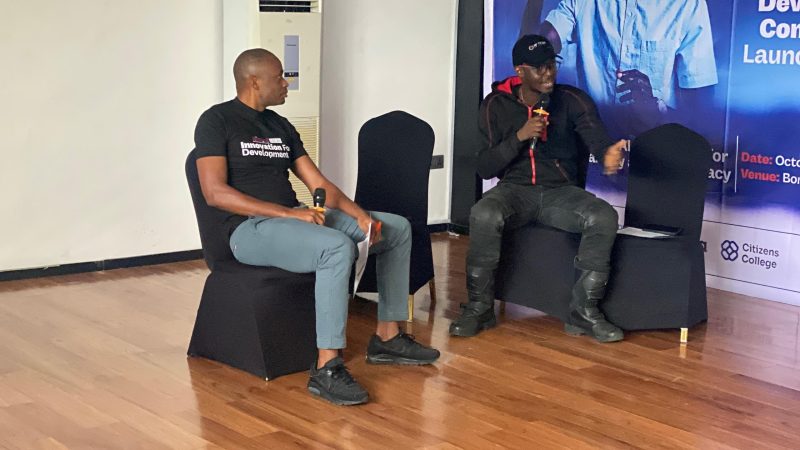

Technology experts and media stakeholders have identified infrastructural deficits, ethical considerations, and localised innovation as critical factors that will shape Artificial Intelligence (AI) adoption for media sustainability and democratic development in Nigeria.
This was at a fireside chat convened by the New Thoughts Media Support Foundation (NTMSF) to explore the intersection of technology, ethics, and media in the country.
Speaking during the session on “Ethical Issues, Infrastructural Impediments and Opportunities in AI and Tech Adoption for Media Sustainability and Democracy in Nigeria,” technology entrepreneur Lanre Ogunkunle highlighted how weak infrastructure remains a major obstacle to Nigeria’s participation in the global AI revolution.
Ogunkunle, who has worked across media, technology, and renewable energy sectors, shared his experience deploying technology solutions in education and institutions across Nigeria.
“We once deployed a critical internet-based solution, but a power failure rendered the entire system useless. No matter how advanced your device is, when there is no power, it becomes irrelevant,” he said, stressing the urgent need to fix Nigeria’s infrastructural gaps to support technological innovation.
He noted that, unlike in other regions where technological revolutions are driven by strong infrastructure and visionary entrepreneurs, Africa still lags. However, he described the current AI revolution as “a levelling field,” presenting a rare opportunity for African innovators to compete globally if they act strategically.
Ogunkunle emphasised that Nigeria must move beyond being a mere consumer of foreign AI products to becoming a producer and adapter of AI solutions suited to local contexts.
“It’s best to adopt and adapt. If you adopt without adapting, it causes disaster,” he explained, citing Google’s integration of Nigerian voices in navigation tools as an example of effective localisation.
He called for stronger collaboration between media professionals and technologists to ensure that AI systems reflect local languages, cultures, and data.
“Many people in the media work in isolation from tech developers, and vice versa. To make AI work effectively here, we need to collaborate and build localised solutions trained with our own data,” he said.
Discussing ethics, Ogunkunle drew parallels between AI and tools like cars and guns, noting that technology itself is neutral; its impact depends on its users.
“The same AI that can power misinformation can also enhance storytelling. It’s neither good nor bad; it’s about the intent of the user,” he stated.
He warned against the unethical use of AI-generated images and videos in breaking news, which can mislead the public, particularly in environments with weak fact-checking systems.
A participant further underscored the need for ethical standards in newsrooms, stressing that authoritativeness, accuracy, and authenticity — described as the “three A’s” — must guide AI-assisted journalism.
“Breaking news does not make you an authority. Accuracy and authenticity are what give credibility,” the participant noted.
Ogunkunle identified Nigeria’s power and connectivity deficits as the biggest barriers to widespread AI adoption, particularly in rural and underserved areas. He noted that national statistics on device ownership and internet subscriptions often overestimate true coverage because multiple devices and SIM cards are concentrated in urban centres like Lagos.
He shared a personal experience of visiting a rural school where the lack of electricity and infrastructure hindered students’ exposure to technology, emphasising that resolving these systemic issues would unlock hidden talents and accelerate innovation.
“Infrastructure is key. Once power and connectivity penetrate rural areas, people can naturally advance their knowledge and contribute meaningfully,” he added.
Participants also expressed concern that the future of AI is currently being shaped by a small group of global elites. They called for broader inclusion of African voices in global AI development and urged stakeholders to democratize knowledge to empower more people to participate.
“The only way to make AI accessible is to democratize knowledge. If knowledge is commercialised, talent in remote places will remain undiscovered,” one participant argued.
Ogunkunle concluded by urging Nigerians, especially those in media and related fields, to familiarise themselves with AI tools early rather than wait until the technology becomes too advanced to catch up with.
“About 30 years ago, the internet was difficult to navigate. Then search engines came and made it easier. Now, AI is not just showing links, it’s delivering content directly. Catch the train while it’s still boarding,” he advised.