

The DOHS Cares Foundation has called for urgent legislative action to address the growing incidence of femicide in Nigeria, urging lawmakers to recognise gender-related killings of women and girls as a distinct national crisis requiring dedicated legal and policy responses.
The organisation’s Executive Officer, Ms Ololade Ajayi, said the persistent killing of women and girls across the country demands immediate government intervention, stronger accountability mechanisms, and a comprehensive Femicide Prevention and Accountability Law.
According to Ajayi, many gender-related killings are often dismissed as “domestic disputes,” “relationship issues,” or “crimes of passion,” a practice she said obscures the systemic nature of the violence.
“Across Nigeria, women and girls continue to be killed simply because they are women. These killings often occur in the context of intimate partner violence, family violence, sexual violence, harmful gender norms, and misogyny,” she said.
She disclosed that the foundation’s Femicide Observatory documented more than 133 cases of women and girls killed in gender-related violence in 2024. By December 2025, the observatory had tracked over 330 cases of femicide nationwide.
“That amounts to approximately one woman being killed every 49 hours. This year alone, we have already recorded more than 40 cases of gender-related killings of women and girls,” Ajayi stated.
She noted that the figures represent mothers, daughters, sisters, students, professionals, and breadwinners whose lives were violently cut short.
“We believe Nigeria must begin calling these killings what they are: femicide. Naming the problem correctly is the first step toward addressing it effectively,” she added.
Ajayi said the organisation has launched a nationwide advocacy campaign aimed at raising awareness about the prevalence and patterns of femicide, exposing gaps in government response, and promoting legislative reforms.
As part of the campaign, she called on media organisations to adopt the term “femicide” when reporting gender-related killings of women and girls, while urging law enforcement agencies to establish dedicated Femicide Response Units.
“We will be spotlighting media organisations as partners in accountability and encouraging law enforcement officials and agencies to implement Femicide Response Units within their structures,” she said.
The foundation also challenged members of the National Assembly to review femicide data from their respective states through the organisation’s Femicide Observatory and convene public hearings on the issue within the next 30 days.
“Most importantly, we are calling on members of the National Assembly to examine femicide data from their states and convene public hearings on femicide in Nigeria on or before July 1, 2026,” Ajayi said.
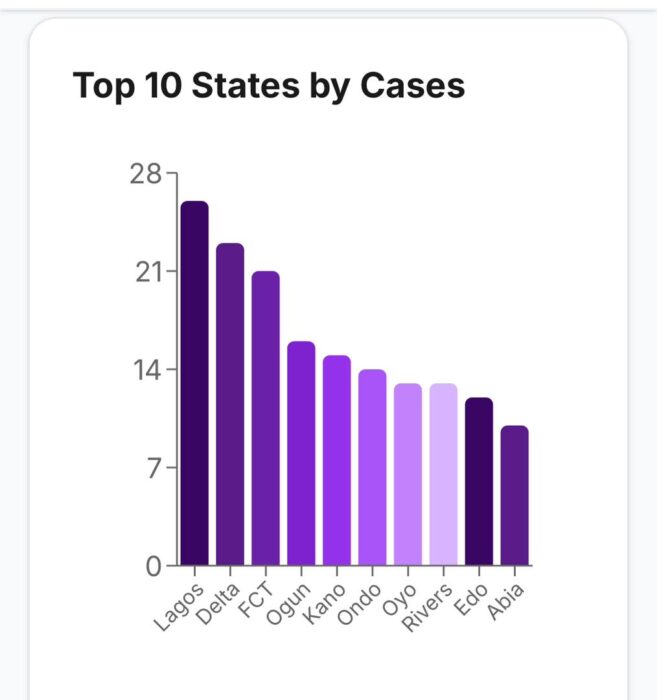
According to data compiled by the observatory, Lagos, Delta, the Federal Capital Territory (FCT), Ogun, Kano, Ondo, Oyo, Rivers, Edo, and Abia states currently record some of the highest incidences of femicide in the country.
Ajayi said lawmakers representing the affected states have both a moral and constitutional responsibility to respond to the crisis.
She specifically urged senators and members of the House of Representatives from the states to champion public hearings that would bring together victims’ families, survivors, civil society organisations, researchers, law enforcement agencies, traditional rulers, faith leaders, and other stakeholders.
“These hearings should provide an opportunity for all stakeholders to contribute to the development of effective legislative and policy responses,” she said.
Describing femicide as a public policy challenge rather than a private tragedy, Ajayi stressed the need for preventive systems, accountability frameworks, specialised response structures, and legislation that recognises the unique nature of gender-related killings.
“The continued killing of women cannot remain a private tragedy discussed only after another headline emerges. Femicide is a public policy issue requiring public solutions. We need prevention systems, accountability mechanisms, dedicated response structures, and legislation that recognises the unique nature of gender-related killings,” she said.