

By Juliana Francis
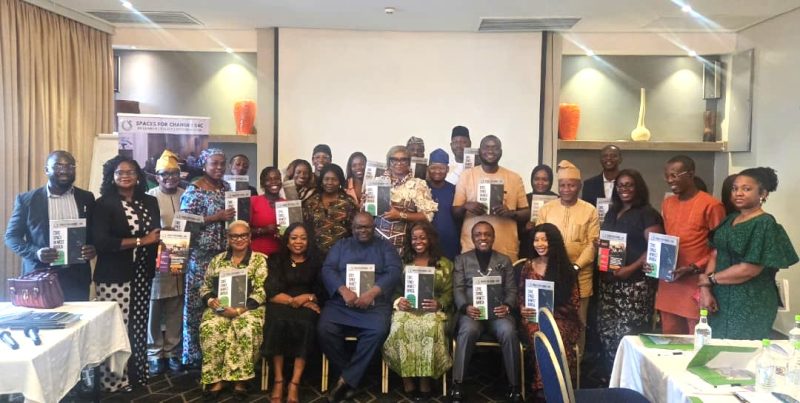
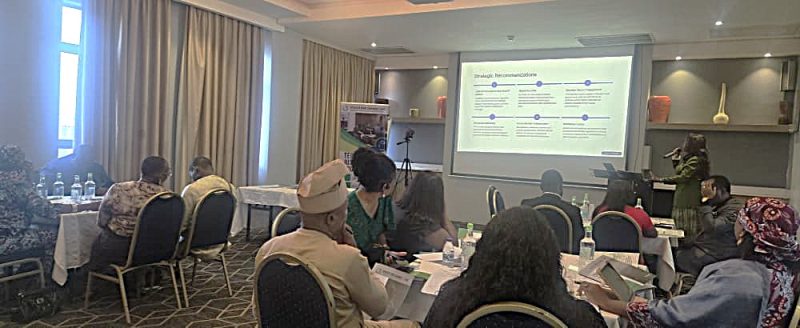
A grave-like silence filled the conference hall at the Radisson Hotel, Ikeja, Lagos State, on February 27, 2026, when Spaces for Change (S4C), with support from the Ford Foundation and the Civic Space Resource Hub (CSR-HUB), held a stakeholder consultative dialogue titled “Building Multisectoral Partnership for Online Safety and Security in Nigeria.”
At one point, the room became so quiet that a pin drop would have been audible, as victims of surveillance technologies and experts shared their experiences.
One victim, a man who declined to disclose his name for fear of further targeting, recounted how he was placed under surveillance by the National Intelligence Agency (NIA).
The agency operates under the Office of the National Security Adviser and works alongside other Nigerian intelligence and security organisations such as the Department of State Services (DSS) and the Defence Intelligence Agency (DIA).
According to the victim, when operatives came for him in the early hours of the morning, he initially believed they were from the Department of State Services (DSS).
It was only after his release that he said he discovered the operatives were from the NIA and had allegedly been monitoring his phone and movements.
The man insisted he had committed no crime, saying his only involvement was participating in protests calling for an end to bad governance in Nigeria.
He narrated: “I was a victim of illegal surveillance carried out by the NIA. It was my first encounter with them. They first called my phone, trying to lure me out so they could arrest me, but I avoided the trap.
“They continued to track me. They got my home address and came in the middle of the night to arrest me. They arrived in about 12 vehicles and began shouting my name. It occurred to me that they seemed to have access to my phone.
“The first thing they did when they entered our apartment was check my phone to confirm they had the right target. They not only tracked my phone; they also had access to my messages, phone calls, and records of people I spoke with on different days and at different times.”
He recalled that after his arrest, he was later transferred to the Special Intelligence Response Team of the Nigeria Police Force (IRT).
The IRT also confirmed they had materials used to monitor me. I was kept in detention for two months,” he said.
The narrator alleged that it has become common for some Nigerian security agencies to keep citizens under surveillance and later ‘kidnap’ them under the guise of arrest.
“Initially, I thought it was DSS that came to my apartment to pick me up. It was only after my release that I learned it was NIA,” he added.
Members of the august gathering, made up largely of lawyers and stakeholders from the private and public sectors, also shared troubling accounts of how Artificial Intelligence (AI), which remains largely unregulated, is increasingly being used as a surveillance tool.
The Executive Director of S4C, Victoria Ibezim-Ohaeri, in her opening remarks, explained that the dialogue was convened to examine how technology is affecting civic freedoms and what can be done to ensure safer and more responsible use.
She said, “I would like to end by asking: why does this matter? I refer again to what is happening with RFI. It shows that we must make the system work and protect civic freedom. Today you may be protected, but tomorrow you may not.
“If you live in a country where systems function properly, you are protected whether you are in or out of power. We should not run a society where protection exists only for those in power. Many Nigerians are not in power. Nobody in this room is in power. So, we should not wait until we are in power before due process and systems begin to work.
“The same system we abuse today can eventually turn against us. If abuse becomes entrenched and institutionalised, once we lose protection, that same abuse will return.”
Ibezim-Ohaeri urged participants, including regulators, companies, lawyers, law firms, the NBA, and civil society groups, to advocate for stronger safeguards.
She also raised concerns about the implications of widespread surveillance.
Ibezim-Ohaeri referenced the ongoing issue between the National Security Adviser (NSA), Mallam Nuhu Ribadu and former Governor of Kaduna State, Nasir El-Rufai.
In February 2026, El-Rufai said during a TV interview that someone had tapped Ribadu’s phone, and that he listened to a conversation in which the NSA allegedly ordered security operatives to arrest him.
Authorities filed cybercrime and national-security charges against El-Rufai. The charges were based partly on his admission on television that he and others had access to the NSA’s intercepted phone communications. Prosecutors said the alleged interception violated the Cybercrimes Act (2024) and the Nigerian Communications Act.
Security agencies argue that tapping the NSA’s phone would be a serious breach of national security.
Ibezim-Ohaeri expressed concern: “I am worried because the National Security Adviser (NSA) is not an ordinary Nigerian. Do you understand what it means to be a National Security Adviser, and yet his phone is being monitored?
“If it is easy for the NSA’s conversations to be tapped, then even private and intimate exchanges, things you and I say to our spouses, could be overheard. For me, that is deeply troubling.”
She warned that surveillance technologies pose a broader danger, suggesting that virtually all Nigerians could become victims.
“Consider the case in Equatorial Guinea, where corruption investigations exposed the most private aspects of people’s lives. That is what technology does: it digs out vulnerabilities. Nobody is completely safe.
“A regulator may defend government surveillance as being in the public interest. But when power shifts, the same issues return. Many people who feel persecuted today wish they had built stronger systems earlier, systems that would have protected them.”
According to Ibezim-Ohaeri, the event also served as the unveiling of the Civic Space in West Africa: Trends, Threats, and Futures database report (2nd edition Report).
“This digital database tracks every crackdown on civic freedoms in West Africa. Over six years, from 2017 to 2022, we recorded 639 incidents. Between 2022 and 2024, that number rose to 801. We also saw a shift from the judiciary being ignored to its increasing use as a tool of civic oppression,” she said.
“Earlier this week, we trained judges and presented evidence showing how courts have become pathways for wrongful detention. When judges grant repeated adjournments, it can give legitimacy to abuse. Government institutions should not become weapons; they should strengthen the system.”
She noted that technology now enables extensive wiretapping and surveillance, adding that concerns also exist about how such technologies are acquired and used.
“During an interview, I mentioned state governments, including Kaduna, which acquired significant surveillance technologies during a governor’s tenure. The question is whether those technologies are still in use and whether they may have fallen into the wrong hands.
“We conducted a follow-up report on technology proliferation, asking whether suppliers should also be held accountable. Governments and suppliers claim these tools are restricted to government use, but evidence suggests they are reaching private hands. This kind of deployment affects civic engagement.”
Ibezim-Ohaeri further warned that as Nigeria approaches the 2027 elections, protecting freedoms of expression, association, and assembly will be critical.
Her words: “When people cannot speak freely, online or offline, fear spreads. Citizens must be able to question candidates and their competence without becoming targets. When people are arrested for supporting a candidate or victimised for their associations, constitutional rights are violated.
“Restrictions create fear, censorship, and apprehension, which undermine democracy. Private companies also play a role. Telecoms, internet providers, and content platforms are not government-owned, yet regulations sometimes compel them to share information with authorities. Out of fear of losing licences, they may act in ways that harm civil society.
“That is why we are having these conversations, to ensure that, as the 2027 elections approach, civic spaces remain open, and citizens can participate freely.”
Other speakers at the event included Dr. Amanim Akpabio, Associate Professor in the Department of Private Law at the University of Uyo; Abdullahi Abubakar Aliyu, Deputy Manager at the National Information Technology Development Agency (NITDA); Ms. Amarachi Okonkoh, Data Privacy and Digital Infrastructure specialist at GEPLAW; Linda Obaji, Legal Officer at the Nigeria Data Protection Commission (NDPC); Mr. Ade Atobatele of Remarkable Idea Ltd; Mr. Rotimi Ogunyemi, Technology Attorney and Partner at BOC Legal; Ms. Atinuke Ibrahim, Manager of Regulatory Affairs at the Association of Licensed Telecom Operators of Nigeria (ALTON); Ms. Judith Chiamaka, Digital Rights Programme Associate at S4C; and Michael Itegbe, Technology Officer at S4C.