


Juliana Francis
Nestlé, the Swiss multinational giant, stands as one of the world’s largest food and beverage companies.
Its portfolio spans everything from infant formula and bottled water to cereals, chocolates, dairy products, and pet food. Among its most iconic brands is Nescafé, a household name in instant coffee.
Nescafé sources coffee beans from over 20 countries, recognising that women play a pivotal role in cultivating high-quality coffee.
Through its initiative, the Nescafé Plan, Nestlé is not only committed to delivering great coffee but also to uplifting farming communities.
Launched in 2010 and reimagined in 2022 as Nescafé Plan 2030, the programme emphasises regenerative agriculture, responsible sourcing, and farmer empowerment.
Nestlé aims to achieve 100% responsibly sourced coffee by 2025, a goal that hinges on close collaboration with farmers.
In Vietnam, the programme has helped farmers increase coffee yields by up to 25%, directly boosting incomes. Over 148,000 farmers across 16 countries have participated in Nescafé Plan 2030 training programmes, learning sustainable practices that improve both productivity and resilience.
One standout story is that of Mai Thi Nhung, a coffee entrepreneur in Vietnam’s Central Highlands. Her farm thrives not only on coffee but also through intercropping, growing pepper, durian, tomatoes, and plantain.
This diversified approach enhances biodiversity, stabilises income, and strengthens the farm’s resilience, especially since coffee takes between three to four years to mature for harvesting.
The challenges faced by coffee farmers, climate change, unpredictable harvests, and limited access to financing, mirror those confronting women cocoa farmers in Nigeria.
Nestlé highlights that over 125 million people globally depend on coffee for their livelihoods, underscoring the vast potential to improve rural incomes and stability.
In Nigeria, cocoa remains a vital economic crop.
Mohammed Alhassan’s report, “Cocoa Production Processing: Gripping Economic Importance,” mentioned that at present, the production capacity of cocoa in Nigeria has reached approximately 385,000 metric tons per annum, an increase of 215,000 metric tons from the 2000 production level.
This disposition, he stated, places Nigeria as the fourth-highest cocoa-producing nation in the world after the Ivory Coast, Indonesia, and Ghana.
“By implication, Nigeria competes favorably with other frontline producing nations in supplying the world market,” said Alhassan
Alhassan further argues that evidence has shown that the growth rate of cocoa production has been declining, which has given rise to a fall in the fortunes of the subsector, among other reasons.
Mr Victor Agosile, a seasoned cocoa merchant with over two decades of experience, explains that cocoa takes five years to mature and requires regular chemical spraying to combat pests.
His network of agents supports farmers by funding and collecting cocoa for export, contributing to employment and foreign exchange earnings. Major buyers include Cadbury and Nestlé.
Agosile also emphasises the critical role women play in cocoa production, describing their impact as “immense” in driving nation-building and employment.
He notes that cocoa ranks fifth among Nigeria’s top revenue sources after petroleum, and with stronger government support, its contribution could grow significantly.
Pilot programmes in Mexico, Côte d’Ivoire, and Indonesia offer women farmers financial incentives for adopting sustainable practices.
These payments empower them to reinvest in their farms and families, creating a ripple effect of prosperity.
Whether in the coffee fields of Vietnam or the cocoa farms of Nigeria, one truth remains clear: empowering farmers, especially women, is key to building resilient agricultural communities and a more sustainable future.
Ms Victoria Uwadoka of Nestlé Nigeria, Nestlé’s Corporate Affairs Manager, once affirmed the company’s commitment to sourcing raw materials locally, including cocoa from Ondo State, which consistently meets international standards.
By prioritising high-quality domestic supply over imports, Nestlé not only strengthens Nigeria’s economy but also empowers producers through its corporate social responsibility initiatives.
As one of Nigeria’s leading beverage manufacturers, its influence is far-reaching. Yet, a pressing question remains: Are women cocoa farmers in Nigeria receiving the same support from Nestlé as their counterparts in other countries?
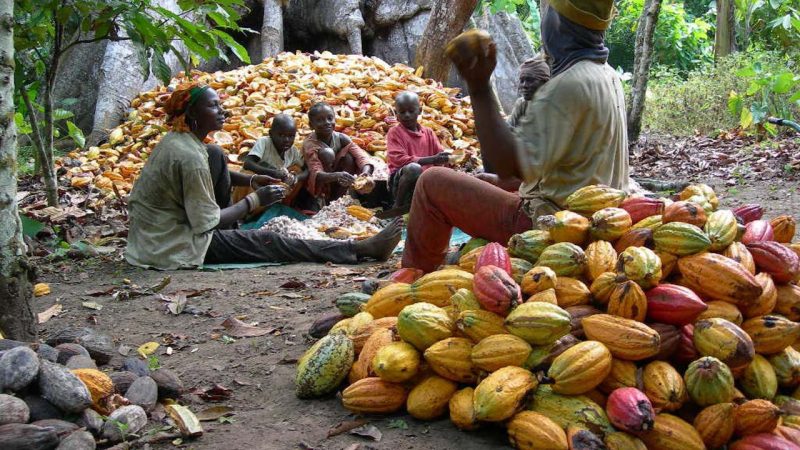
In Ayede-Ogbese, a farming community in Akure North Local Government, Ondo State, cocoa is more than a crop or farming; it is a way of life that is passed down through generations.
It shapes livelihoods and identities. But for women like Madam Akinnola, the journey has been anything but easy.
The woman, who farms at Aba Akogun camp near Oke Agunla, said: “I was born into cocoa farming. Cocoa farming is not easy for women. Planting, spraying, nurturing, weeding, harvesting, sun-drying, nothing is easy.”
Despite her family’s five-decade history in agriculture, Akinnola says they have never received government assistance.
“I have never seen or heard of anyone supporting us. I am very sure,” she stated firmly.
When asked about support from private companies like Nestlé, globally renowned for cocoa-based products, her response was cautious.
“Maybe they have representatives somewhere, but they never get to the real farmers. I’m hearing of this kind of programme for the first time.”
In Oba-Ile, Ms Funmilayo shares a similar story. “My grandfather farmed cocoa, my father too; it’s a family occupation,” she said. “But the Ondo State government has not been helping, whether through finance or farm inputs. Nothing at all.”
She added that no major cocoa beverage producers had reached out to their community.
Mr Ajibola Akintade, a farmer in Akure South Local Government, echoed these frustrations. “In the last five to 10 years, there has been no help from the Ondo State government. That is why our trade has been badly hampered.”
Across Ondo State, farmers agree that the lack of support hits women hardest. “Many women are out there working on their husbands’ farms, while others manage their own farms,” one farmer explained. “But there is no support. We have been waiting.”
For these farmers, the appeal is simple and urgent. If given the chance to speak directly to the governor, Madam Akinnola says her message would be clear:
“Assist us in food and cocoa production.”
Women cocoa farmers play a vital role in sustaining cocoa production and rural communities. Though often overlooked, women’s labour is a driving force behind rising cocoa production.
Their contributions significantly boost output, and when empowered, they elevate lives, enhance product quality, and strengthen businesses.
The Cocoa Life Programme is designed to do just that: empower women in cocoa-growing communities. By improving family finances, increasing school attendance, diversifying income sources, and fostering sustainable development, the programme helps build resilient, thriving communities.
Through strategic partnerships, Cocoa Life enables women to take control of resources, assume leadership roles, and amplify their voices.
This empowerment sparks lasting, positive change, not just for individuals, but for entire communities.
When women control income, they reinvest in their families and communities. This reinvestment drives long-term well-being, economic stability, and environmental sustainability. Their empowerment is not just beneficial, it’s essential to the success of rural economies.
As the programme emphasises: “We believe when women rise, cocoa thrives. Women are a catalyst for change and are essential for helping cocoa-growing communities to thrive. Empowering women at the individual, household and community level strengthens Cocoa Life’s impact. That’s why promoting women’s empowerment is at the heart of our program and carries throughout our work across our three key focus areas.”
In July 2025, Women cocoa farmers called on the federal and state governments to ensure their inclusion in the African Cocoa Agenda 2063, citing the need for financial support, training, and access to markets.
The leader of the Association of Women in Trade and Agriculture (AWITA), Cocoa Cluster in Ile-Oluji, Mrs Akinbusola Morohunmubo, said: “We are central to cocoa farming in the Southwest, but we face many barriers, from rising costs of inputs to lack of training and exclusion from major decision-making platforms. If Nigeria is serious about leveraging the African Cocoa Agenda 2063, then women must be included and supported.”
The African Cocoa Agenda 2063 is a continent-wide framework championed by the African Union to transform cocoa production into a sustainable, inclusive, and profitable sector that contributes significantly to economic development.
Cocoa farmers in Ghana and Côte d’Ivoire also enjoy support from Nestlé, leaving the place of Nigerian cocoa farmers, especially women, nebulous.
According to International Cocoa Initiatives, Nestlé in Ghana and Côte d’Ivoire launched an income accelerator to combat child labour and boost cocoa farmers’ livelihoods.
The programme, which was described as “a sweeping initiative,” was designed to tackle child labour, improve household incomes, and ensure full traceability across its cocoa supply chain.
The programme, launched in partnership with the International Cocoa Initiative (ICI), offers cash incentives to farming families who meet specific social and agricultural benchmarks.
Households can earn up to 500 Swiss francs (approximately ₦913,485 today) annually by enrolling children aged 6–16 in school, adopting good farming practices like pruning, planting shade trees, and diversifying income sources.
Payments are not tied to cocoa output, and bonuses are awarded for fulfilling all criteria. To promote gender equity, half of the payments go to the registered farmer and half to their spouse.
The programme also includes support for Village Savings and Loans Associations and gender training for couples. It launched in 2022 with 10,000 families in Côte d’Ivoire and aims to reach 160,000 households across Côte d’Ivoire and Ghana by 2030.
The rollout is backed by KIT Royal Tropical Institute, IDH, The Sustainable Trade Initiative, Rainforest Alliance, and ICI, which praised the programme’s evidence-based design and holistic approach.
On October 4, 2025, this reporter reached out to corporate officers Ms Toju and, later, Ms Victoria Uwadoka at Nestlé Nigeria, seeking clarity on how the company supports women cocoa farmers in Nigeria.
The inquiry referenced Nestlé’s previous efforts in Vietnam, where support for women coffee farmers reportedly led to increased incomes and other benefits.
Further questions were raised about the selection process for beneficiaries and how uninformed farmers could access such support to improve their livelihoods and household welfare in Nigeria.
After nearly a week of follow-up via phone calls, SMS, and WhatsApp, Nestlé did not provide direct answers. Instead, on October 10, the company responded: “We are working on it. However, if you cannot wait, cause I respect your press time, please proceed without us. I will not hold you back.”