

Human rights activist and presidential aspirant Omoyele Sowore generated a heated debate online after posing a question about what Nigeria’s minimum wage should be in today’s economy.
Sowore, in a post on X (formerly Twitter), asked: “What should be the minimum monthly wage required for a Nigerian worker to live decently in today’s economy? Not just to survive.
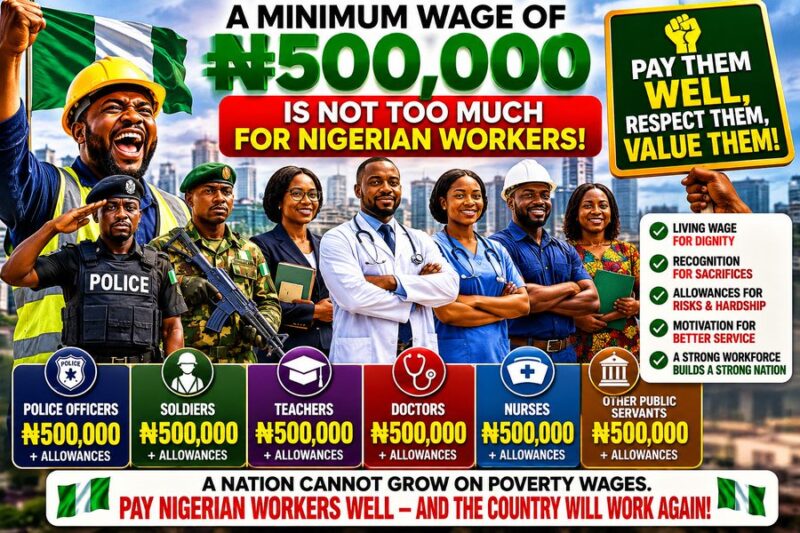
“Not just to pay transport fares and buy food. But to afford decent housing, quality healthcare, good education for their children, transportation, savings, recreation, and a dignified standard of living. If you worked full-time, what monthly salary would allow you and your family to live comfortably in Nigeria today? ₦200,000? ₦500,000? ₦1,000,000? Or more? A nation’s minimum wage should guarantee dignity, not poverty.”
The post quickly drew reactions from Nigerians across different walks of life, with opinions ranging from support to sharp criticism.
Some users questioned Sowore’s credibility and the feasibility of his proposal.
TLO argued that less than 5 per cent of the population should not consume 95 per cent of the federation’s money, urging Sowore to contest for local government chairman instead.
Agada of Cityzen asked how much Sowore pays his own workers, while OluMuyiwa accused him of campaigning with emotions without explaining how such wages would be funded.
Others raised concerns about inflation. Olumide Bello warned that raising minimum wage to ₦500,000 would trigger hyperinflation, pushing up hospital fees, food prices, and rent.
Cruise Centre insisted that fixing the economy was better than increasing salaries.
Roland Nnamdi Gabriel said the mentality was wrong, arguing that wages would never be enough if the root causes of rising costs were not addressed.
D.R pointed to fuel prices as a major driver of inflation, urging solutions there instead.
Several commentators called for systemic reforms rather than wage hikes.
Tarzan emphasised improving the value of the naira, while its Emzyy said the wage debate was pointless without tackling housing, electricity, and water.
Ayenajeyi argued that wages alone cannot resuscitate the economy, and Oluwatigbemiga Fidelix suggested affordable housing and cheaper food as alternatives to salary increments.
Yet, some voices supported higher wages. Peter Birma declared that anything below ₦500,000 monthly for a family man was “struggling with dignity.”
AA humorously agreed with a ₦1 million minimum wage but added that garri must remain cheap.
Omo Alaafin Odoya insisted Nigeria had enough money if corruption was curbed, while Udinwenyi NFts argued that Nigeria had a spending problem, not a revenue problem, and could afford ₦500,000 monthly wages.
The debate also produced satirical takes. AA suggested abolishing public holidays, pegging wages at ₦1 million, and even legislating that every man be awarded multiple wives.
Mr Blinx mocked Sowore’s economics, noting that what ₦50,000 could buy in 2015 now costs ₦500,000. Balistic_Missile dismissed the idea as “stack stupidity,” questioning what trade-offs would be made in the budget.
Broader concerns were also raised. Abdulafeez Raji said there might be no need for wage increases if prices of goods and services were reduced.
Omojo Iyata asked what hope existed for ordinary Nigerians without government jobs when food prices rose.
Van reminded Sowore that he had already pegged the figure at ₦500,000 on national TV and demanded to know how he would fund it while still financing capital projects.