
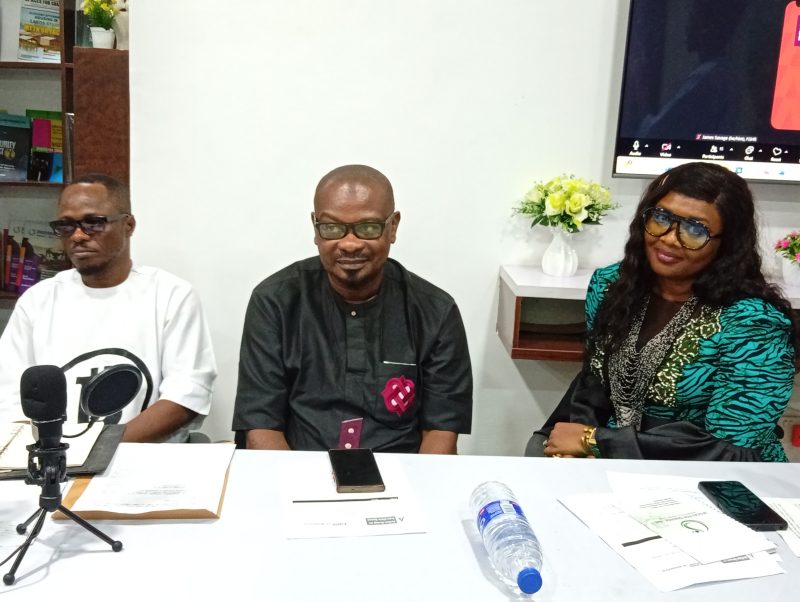

The Rule of Law and Accountability Advocacy Centre (RULAAC) has welcomed the discharge and acquittal of rights activist, Comrade Emmanuel Acha, after more than 200 days in detention, describing the ruling as a victory for the rule of law and civic space in Nigeria.
In a statement issued on Friday, RULAAC’s Executive Director, Mr Okechukwu Nwanguma, said the organisation stood in solidarity with Spaces for Change and the Action Group on Free Civic Space (AGFCS) to mark what he called the end of an “unjust imprisonment.”
“This outcome is not just a personal victory for Comrade Acha and his family; it is a collective victory for the rule of law, for civic space, and for all human rights defenders who continue to work under increasingly hostile conditions in Nigeria,” Nwanguma said.
According to RULAAC, Acha’s arrest and prosecution followed a familiar pattern of what it described as the criminalisation of dissent.
Nwanguma noted that the activist was arrested in the early hours of the morning, denied immediate access to his lawyers and family, and charged with serious offences that were ultimately found by the court to be unsupported by evidence.
“He dared to challenge the actions of a state government through lawful means, and in response, the full coercive power of the state was deployed against him,” Nwanguma said.
RULAAC said it viewed the case as emblematic of a wider crisis involving the misuse of the criminal justice system, including the deployment of Strategic Litigation Against Public Participation (SLAPPs) to intimidate critics and silence dissenting voices.
“What we witnessed in court was revealing,” Nwanguma added. “Despite the severity of the allegations, arms possession, murder and instigation of violence, the prosecution could not produce firearms, could not produce victims, and could not establish any credible link between Comrade Acha and the alleged crimes.”
While welcoming the acquittal, the organisation stressed that the prolonged detention had already caused significant harm. “Justice delayed may still be justice delivered, but it leaves scars on individuals, on families, and on democratic space,” Nwanguma said.
He also highlighted the role of collective action in securing the outcome, crediting Spaces for Change, AGFCS members, committed lawyers and supportive funders, including the Fund for Global Human Rights. “Without this solidarity, coordinated advocacy, strategic litigation and sustained media engagement, this outcome might have been very different,” he noted.
RULAAC reaffirmed its commitment to defending activists and human rights defenders, challenging abuses of police and prosecutorial powers, exposing the misuse of criminal law to settle political or personal scores, and insisting that the justice system must never be used as a tool of repression.
The organisation congratulated Acha on his release and commended his resilience, while reminding authorities that acquittal after prolonged detention does not erase the harm caused or absolve the system of responsibility.
“The struggle to protect civic space in Nigeria continues,” Nwanguma said. “But today’s victory sends a clear message: solidarity works, the law still matters, and repression can be resisted.”
RULAAC further suggested that when Acha has recovered from the ordeal, he could consider documenting his prison experience as part of broader advocacy for prison and criminal justice reform, noting that first-hand accounts of incarceration can expose systemic abuses and challenge official narratives.