

Human rights activist, Comrade Emmanuel Acha, on Friday, recounted his arrest, prolonged detention and eventual acquittal, alleging grave human rights violations and political persecution by security agencies acting on the orders of the Ebonyi State Government.
Acha spoke at a press briefing organised by the Action Group on Free Civic Space (AGFCS) at the office of Spaces for Change (S4C) in Ikeja, Lagos, where he narrated what he described as his “abduction, illegal detention and ultimate victory of justice” after spending 273 days in custody without credible evidence against him.
“I stand before you today to share my harrowing experience of abduction, illegal detention, and the eventual triumph of justice,” Acha told journalists. “My story is not just about my personal ordeal but a reflection of the dangers faced by human rights defenders in Nigeria.”
According to Acha, his ordeal began in the early hours of March 19, 2025, when he was allegedly abducted from his residence in Enugu by heavily armed, unidentified security operatives.
“At about 5:30 am, I was unlawfully abducted from my home without any arrest warrant,” he said. “I was handcuffed and treated like a common criminal.”
He stated that he was first taken to the Abakpa Area Command of the Nigeria Police in Enugu before being transferred to another team of operatives who allegedly informed him he was being taken to Abakaliki “on the order of the state governor.”
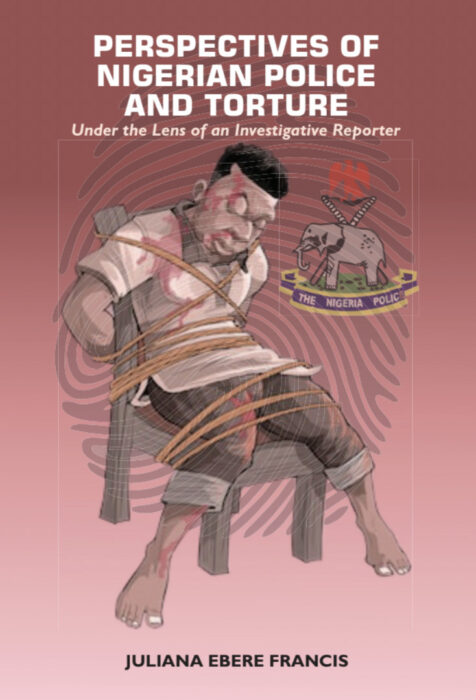
Acha said he was held incommunicado at the Ebonyi State Criminal Investigation Department (CID), where he was denied access to his family and legal counsel and allegedly subjected to physical and psychological torture.
On March 21, 2025, Acha said he was arraigned before a Magistrate Court in Abakaliki without legal representation and remanded at the Abakaliki Custodial Centre on what he described as “trumped-up charges.”
“I spent 271 days in prison under inhumane conditions that violated every known human rights standard,” he said.
He alleged overcrowding, poor sanitation, inadequate medical care and routine abuse of inmates by warders and fellow detainees.
“I witnessed many preventable deaths while in custody,” Acha said. “Many inmates had been awaiting trial for nine to fifteen years without any verdict.”
Acha said he was charged with offences including promotion of inter-communal war, unlawful possession of firearms and sponsoring killings—allegations he described as “baseless and politically motivated.”
During the nine-month trial, he claimed the prosecution failed to present credible evidence.
“The Investigative Police Officer admitted under oath that no arms were recovered from me,” he said, adding that key prosecution witnesses failed to appear in court.
On December 16, 2025, the court discharged and acquitted him following a no-case submission by his counsel, Akaraiwe Ikeazor, SAN.
“This victory was not just personal; it was a vindication of justice and the rule of law,” Acha said. “But it does not erase the trauma and losses I suffered.”
The activist said his detention had severe psychological, economic and social consequences for him and his family.
“My incarceration resulted in anxiety, depression and a deep sense of helplessness,” he said. “I lost my livelihood, my office engagements, and even my family accommodation. My wife and children endured stigma and hardship.”
He noted that despite his acquittal, he has received no compensation or redress for the losses incurred.
Acha warned that his experience highlights broader threats to civic space in Nigeria, particularly the use of state power to intimidate activists.
“The abuse of the justice system to justify arbitrary detention undermines our democracy,” he said. “Human rights defenders are increasingly criminalised for standing up for marginalised communities.”
He called on the Nigerian government to compensate victims of wrongful detention and implement safeguards to protect activists from reprisal.
“True justice goes beyond court rulings,” Acha said. “It requires active measures to guarantee the safety and dignity of those who defend civic rights.”
Acha expressed gratitude to civil society organisations, including AGFCS, Spaces for Change, and the Fund for Global Human Rights, for their legal, media and advocacy support, as well as to individuals who mobilised for his release.
“I remain committed to the struggle for civic space, justice and human rights in Nigeria,” he said. “My experience has strengthened my resolve to continue this fight.”
The briefing ended with renewed calls from activists and civil society groups for accountability, reforms within the justice system, and stronger protections for human rights defenders across the country.