

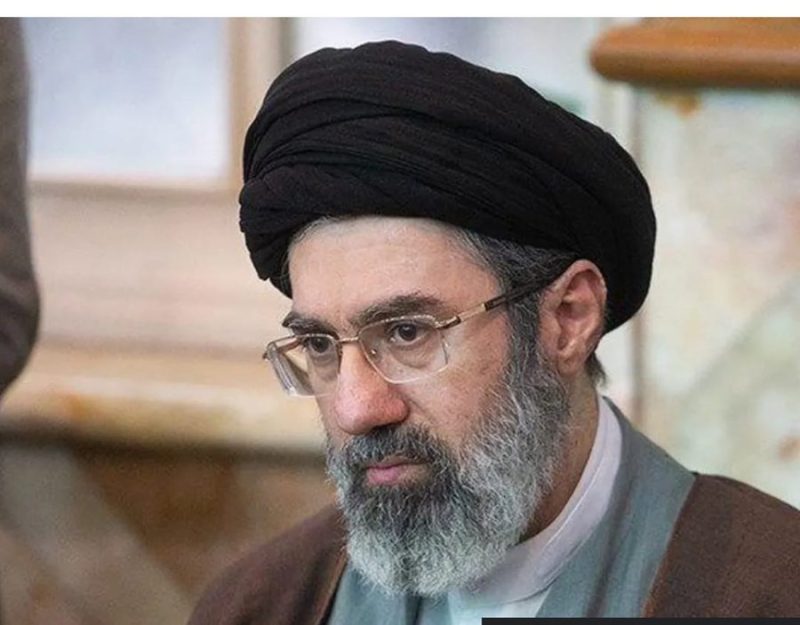

Iran has appointed Mojtaba Khamenei as its new Supreme Leader following the death of his father, Ali Khamenei, who was reportedly killed in joint United States–Israeli airstrikes that targeted senior Iranian leadership in late February 2026.
The 56-year-old cleric was selected by Iran’s powerful Assembly of Experts, an 88-member body of senior clerics responsible for appointing the country’s Supreme Leader. The announcement comes amid escalating military tensions in the Middle East following the strikes that killed several Iranian officials and triggered a wider regional conflict.
The late Ali Khamenei, who led Iran for more than three decades after succeeding Ruhollah Khomeini in 1989, was killed on February 28, 2026, during airstrikes around Tehran reportedly carried out jointly by the United States and Israel.
His death created an immediate leadership vacuum at the top of Iran’s political system. Under the country’s constitution, the Assembly of Experts is tasked with selecting a new Supreme Leader whenever the office becomes vacant. After days of consultations, the body voted to appoint Mojtaba Khamenei as the third Supreme Leader since the Iranian Revolution of 1979.
Before his elevation, Mojtaba Khamenei was widely regarded as a powerful behind-the-scenes figure within Iran’s ruling establishment. Although he never held a major public office, analysts say he maintained strong ties with the Islamic Revolutionary Guard Corps and other conservative political networks close to his father.
His appointment marks the first time a son has succeeded his father as Iran’s Supreme Leader, raising debate among observers about whether the transition represents a dynastic shift in a system originally designed to avoid hereditary rule.
Iranian political leaders and security officials have pledged loyalty to the new leader, describing the transition as a sign of unity during a period of conflict. At the same time, the appointment has drawn sharp reactions from foreign governments amid the ongoing confrontation between Iran, the United States and Israel.
Analysts say Mojtaba Khamenei now faces the challenge of steering Iran through one of the most volatile periods in its modern history, with military hostilities continuing across the region and tensions with Western powers at a peak. #Securitynewsalert.com