

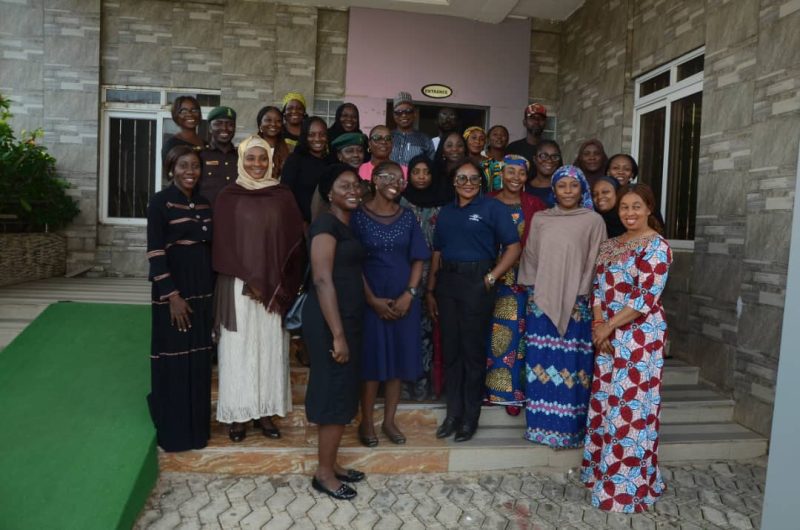

…Launches Capacity Building and Monitoring Committees to Boost Criminal Justice Reform
To deepen justice reform and enhance accountability within Nigeria’s criminal justice system, the CLEEN Foundation has commenced a comprehensive five-day capacity-building initiative to strengthen the implementation of the Administration of Criminal Justice Law (ACJL) across 12 states: Adamawa, Gombe, Jigawa, Kaduna, Plateau, Benue, Ekiti, Lagos, Enugu, Imo, Akwa Ibom, and Cross River.
The integrated programme features a two-day capacity-building workshop for policing, law enforcement, and judicial stakeholders, followed by a three-day training and formal establishment of State ACJL Monitoring Committees (ACJMCs) in the project states.
The initiative aims to bridge critical gaps in the application of the ACJL and enhance coordination among justice sector actors, including the police, judiciary, and monitoring bodies.
According to the Foundation’s Programme Manager, Chigozirim Okoro, the training is designed to improve technical knowledge, operational competence, and inter-agency collaboration among key justice sector players.
“The first phase targets police officers, correctional officers, prosecutors, magistrates, judges, and officials from Ministries of Justice, as well as representatives from the National Human Rights Commission, Nigerian Bar Association, Legal Aid Council, and other law enforcement agencies such as ICPC, EFCC, NSCDC, DSS, Customs, FRSC, NIS, and the media,” Okoro explained.
She added that participants would undergo intensive sessions on rights-based policing, case management, and practical application of ACJL provisions through scenario-based learning and role-play exercises.
“The second phase of the initiative will focus on capacity building and formal inauguration of State ACJL Monitoring Committees,” she said. “These committees, established under Section 469 of the ACJA and corresponding state laws, play a crucial role in monitoring compliance, promoting transparency, and ensuring justice delivery aligns with the principles of fairness and efficiency.”
Representatives from the Legal Aid Council, NHRC, NBA, FIDA, civil society, the media, and other justice sector institutions will also be trained on advocacy, coalition building, data collection, monitoring techniques, and committee governance.
While the ACJA has been domesticated in the 12 implementing states, the Foundation noted that many State Monitoring Committees remain inactive or underfunded, undermining the objectives of the law. The project, therefore, seeks to ensure that these committees are properly constituted, adequately resourced, and fully functional.
“Effective administration of criminal justice requires both knowledge and accountability mechanisms. Strengthening the capacity of actors and institutionalising monitoring are essential steps toward achieving justice reform,” the Foundation stated.
The five-day activity will be conducted sequentially across the 12 target states within three weeks. CLEEN Foundation will work closely with state justice sector stakeholders to ensure full participation and sustainability of outcomes.
At the end of the intervention, law enforcement and judicial stakeholders are expected to demonstrate improved understanding of ACJL provisions and procedures, while the newly inaugurated State ACJL Monitoring Committees will begin coordinated tracking of implementation efforts.
This initiative, the Foundation emphasised, reaffirms its commitment to enhancing transparency, accountability, and public trust in Nigeria’s criminal justice system.