

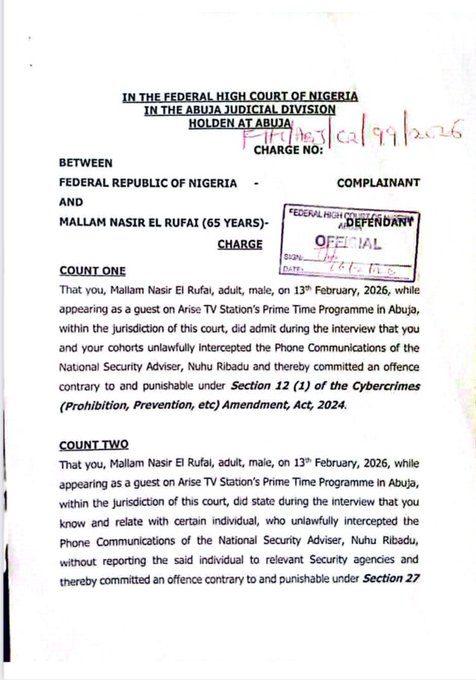

Human rights lawyer Inibehe Effiong has questioned the legal basis of a cybercrime charge reportedly filed against former Kaduna State Governor, Nasir El‑Rufai, over allegations involving the National Security Adviser, Nuhu Ribadu.
Effiong, in a public statement issued on February 16, sighted by securitynewsalert.com, expressed reservations about the charge, arguing that it contains several legal inconsistencies that could weaken the prosecution’s case.
According to him, one of the major issues is the reference to the Department of State Services (DSS), which he claims is not recognised by law. Effiong explained that the National Security Agencies Act only establishes the State Security Service (SSS), not the DSS, as stated in the charge.
He further argued that the Act does not grant the SSS prosecutorial powers, raising questions about the agency’s role in initiating the alleged case against El-Rufai.
Effiong also queried whether comments reportedly made by El-Rufai during an interview on Arise TV could legally qualify as an extrajudicial statement. He noted that for a statement to be regarded as extrajudicial and confessional under Nigerian law, it must be made under caution, which he said was not the case.
The lawyer added that El-Rufai did not admit to personally wiretapping the National Security Adviser but allegedly stated that he was informed by another party. Effiong maintained that El-Rufai could rely on constitutional protections against self-incrimination, which prevent courts from compelling individuals to give evidence against themselves.
While stressing that he is not a supporter of the former governor, Effiong concluded that the charge, as currently framed, appears legally questionable, noting that the courts will ultimately determine its validity.