

By Okechukwu Nwanguma
At a time when Nigerians are being slaughtered in their communities, abducted on highways, and forced to live under siege by criminal elements, the response from the government of President Bola Ahmed Tinubu has been deeply troubling.
Rather than demonstrate urgency, clarity, and resolve, officials have chosen a familiar refuge: blame the opposition.
We are told that insecurity is being “sponsored” by political adversaries seeking electoral advantage. This claim, whether true or not, is beside the point – and dangerously so.
Governance is not an exercise in excuse-making. The constitutional duty of the state is unequivocal: the security and welfare of the people must come first. This duty does not evaporate because the threat is politically inconvenient. It does not diminish because the perpetrators may be linked to opposition figures. If anything, such allegations should compel even more decisive action – not rhetorical deflection.
Across the country, the reality is stark and unforgiving. In parts of the North-West, bandits operate with impunity, raiding villages and abducting citizens for ransom. In the South-East, communities live under the shadow of both non-state actors and heavy-handed, often unaccountable, security operations. In other regions, highways have become hunting grounds for kidnappers, while rural populations are abandoned to fend for themselves.
Even more alarming is the audacity with which terrorist groups now operate. Reports from Borno State indicate that Boko Haram insurgents who abducted civilians are demanding an outrageous ransom of five billion naira for their release, while openly warning the government and security forces not to attempt a rescue.
That a non-state armed group can issue such threats with apparent confidence speaks volumes about the erosion of state authority. It raises a disturbing question: how did we arrive at a point where terrorists not only abduct citizens at will but also dictate terms to a sovereign government? This is not merely a security lapse; it is a direct challenge to the legitimacy and capacity of the Nigerian state.
Citizens are not asking for explanations. They are demanding protection.
If the government possesses credible intelligence that political actors are sponsoring violence, then it must act – swiftly, lawfully, and transparently. Name the perpetrators. Arrest them. Prosecute them. Anything short of this suggests either a lack of evidence or a lack of will. Both are unacceptable.
What Nigerians are witnessing instead is a pattern: insecurity persists, outrage grows, and government responds with statements that shift responsibility rather than assume it. This approach not only fails to address the crisis – it worsens it by eroding public trust and emboldening perpetrators.
The continued reference to “sponsors” without visible action raises critical questions. Who are these sponsors? Where are the arrests? Where are the prosecutions? Why does the violence continue unabated if the government claims to know those behind it?
Leadership is tested in moments of crisis. It requires honesty, accountability, and the courage to act decisively. It demands that those entrusted with power prioritise the safety of citizens above political calculations or public relations narratives.
Nigeria is at a tipping point. The normalisation of mass abductions, killings, and territorial control by non-state actors is a direct threat to national stability. Every day that passes without a coherent, effective response pushes communities further into fear and despair.
The government must change course – urgently.
It must move beyond rhetoric and demonstrate results. It must strengthen intelligence gathering, improve coordination among security agencies, ensure accountability for abuses, and restore public confidence through transparency and justice.
Above all, it must accept responsibility.
Nigerians do not care who is to blame. They care about staying alive. They care about returning safely from work, sending their children to school without fear, and sleeping at night without the sound of gunfire.
The message to those in power is simple and non-negotiable: stop the excuses. Confront insecurity with the seriousness it demands.
Or admit that you are unable to fulfil the most fundamental obligation of government.
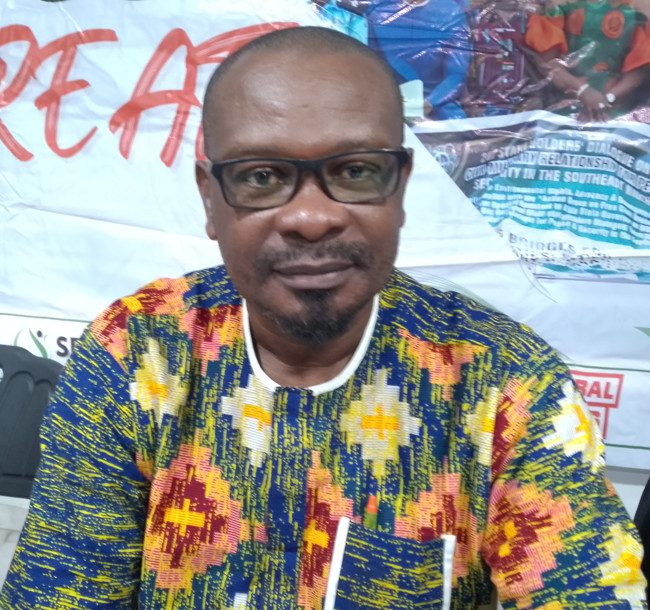
Mr Okechukwu Nwanguma is the Executive Director of RULAAC