

By Nnamdi
This week, the Nigerian House of Representatives passed a constitutional amendment paving the way for state police, and the reaction across the country has been close to euphoric.
Governors, security analysts, and ordinary Nigerians exhausted by banditry, kidnapping, and a federal police force stretched thin across 36 states have welcomed the move as the breakthrough we’ve been waiting for. Finally, the thinking goes, governors will have the tools to protect their own people. But before we celebrate too loudly, we should ask the question nobody in the chamber seemed eager to raise: will state police actually solve Nigeria’s security crisis, or simply hand 36 governors a new weapon to turn on their own citizens?
The call for state police in Nigeria sounds reasonable at first. “Let governors control their own security,” reformers argue. “They know their terrain better than Abuja does.” It’s an appealing pitch, particularly to anyone who has watched the Nigeria Police Force fail, repeatedly and often violently, to protect the citizens it’s meant to serve.
But before Nigeria restructures its security architecture, it must confront a harder question: can the states handle this power without turning it into another instrument of oppression?
Based on the evidence already in front of us, the answer is no.
Corruption would be decentralised, not eliminated
Nigeria’s corruption problem is not an Abuja phenomenon. It runs from federal ministries down through local government councils, and there is little reason to believe state capitals are somehow cleaner. Handing governors direct control over police hiring, promotions, postings, and budgets simply relocates the same patronage networks that already determine who gets state contracts. If “godfatherism” decides who builds the next road, what exactly would stop it from deciding who becomes a divisional police officer? The likely result isn’t less corruption but thirty-six separate fiefdoms, each with recruitment for sale and accountability that evaporates somewhere around the state assembly door. Corruption currently concentrated at the centre would simply be franchised outward.
Abuse of power would become local and personal
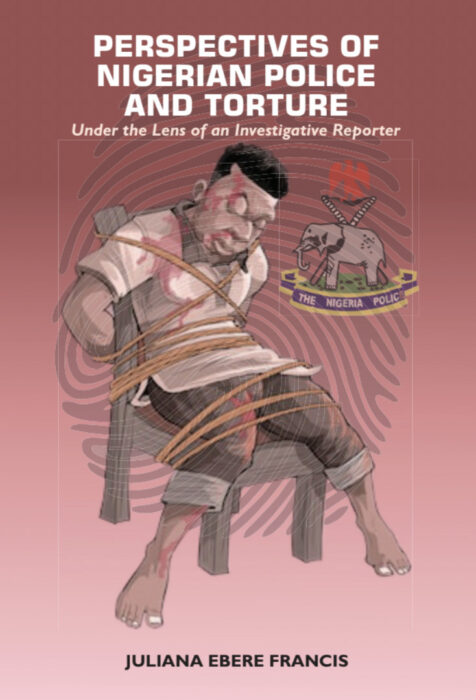
Nigerians have already seen previews of this film. Ebube Agu in Imo and Ebonyi, Amotekun in the southwest, Agunechemba in Anambra, Hisbah in Kano, some of these outfits have done genuine good. But many have also faced accusations of harassing political opponents, extorting traders, and settling scores on behalf of the governors who created them.
When a police force answers only to a state’s chief executive, dissent becomes dangerous in a new and immediate way. A critical journalist, an opposition candidate, or a protesting student would no longer be dealing with a distant Inspector General in Abuja. They’d be facing a police commissioner whose career depends entirely on the governor’s goodwill. That is a structural invitation to impunity.
Impunity thrives where oversight is weakest
The Nigerian Police Force is deeply flawed, but it operates under at least nominal federal oversight, a Police Service Commission, and the scrutiny of national media. State police would operate in environments with far thinner institutional defences. Many state assemblies function as rubber stamps for the executive. State judiciaries are chronically underfunded and frequently intimidated. Civil society organisations are sparse outside Lagos and Abuja.
In that vacuum, “excesses” don’t stay excesses; they become policy. Once a governor discovers that his own police force can be used to suppress protests, intimidate traditional rulers, or shape an election outcome, there is little incentive to ever stop.
A fragile union doesn’t need more fault lines
Security is one of the last genuinely national institutions Nigeria has left. Fragmenting it along state lines, in a country already strained by ethnic, religious, and political divisions, risks turning routine boundary disputes into armed standoffs. What happens when Kano’s police and Jigawa’s police clash over a herder’s dispute? Or when Rivers State police detain Delta-bound goods at an internal border? A centralised police force is far from perfect, but its existence is a daily, structural reminder that Nigeria is still one country.
A better path exists
None of this is a defence of the status quo. The federal police force is underfunded, overstretched, and too often brutal. But reforming an existing institution is safer than multiplying its dysfunctions thirty-six times over. Nigeria’s energy would be better spent on adequate funding, real training standards, body cameras, independent complaints commissions, and insulating the Inspector General’s tenure from political interference.
State police sounds like devolution. In Nigeria’s current political climate, it is more likely to be the devolution of abuse. Until the country can hold one federal police force accountable, it isn’t ready to hold thirty-six more. #Securitynewsalert.com