
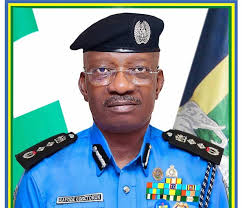

The Inspector-General of Police (IGP), Kayode Adeolu Egbetokun, has declared that Nigeria’s true security does not rest in its military strength but in the moral and mental fortitude of its citizens. He called for a “whole-of-society covenant” to confront the nation’s complex challenges.
Speaking at a Strategic Conference on Security and Development held at the Lagos State University of Education (LASUED), Oto-Ijanikin, the IGP emphasised that a nation’s first line of defence is its people, not its army.
According to him, insecurity is a societal failure “rooted in the collapse of values, education, and civic discipline.”
Egbetokun’s keynote address championed the concept of a “Town–Gown Partnership,” which he said must evolve from a mere dialogue into a “national doctrine of collaboration” uniting all sectors of society. “The patrol van and the classroom are fighting the same war—one battles ignorance, the other its consequences,” he said. “Nigeria’s future will not be secured by guns, but by brains and moral discipline.”
He explained that the “town” represents the vibrant energy of markets, media, and communities, while the “gown” symbolises the intellectual capital of universities and research institutions. When these forces merge, he said, the nation can move “from reaction to prediction and from survival to innovation.”
The IGP urged that this critical partnership extend across the entire national landscape. Government and academia, he said, must collaborate to design evidence-based policies with measurable outcomes. Similarly, security agencies and communities should work together to transform policing from mere enforcement into a genuine partnership.
Egbetokun also underscored the economic and moral dimensions of this partnership. He highlighted the importance of linking business and education to turn research into enterprise and create jobs for young people, while religious and civic institutions must help rebuild the nation’s moral compass.
He called on media professionals and educators to jointly promote truth, tolerance, and national unity, while traditional institutions and modern governance should blend ancestral wisdom with contemporary innovation.
The IGP stressed the moral foundation of security, declaring that no security plan can succeed where the nation’s conscience is “asleep.” “While laws punish crime, morality prevents it,” he said, describing the classroom and the pulpit as “the first police stations of the mind.”
He urged educational institutions to teach citizenship alongside skills, producing nation-builders rather than mere job seekers. He added that the Police Force, under his command, is committed to professionalism and ethical conduct, saying, “An officer who stands for integrity becomes a teacher in uniform.”
Addressing emerging threats, the IGP acknowledged that modern dangers are “faster, smarter, and harder to detect,” noting that a single keystroke or viral post can inflict damage more swiftly than physical violence.
To meet these challenges, he said, the Nigeria Police Force is transforming to become intelligence-led, technology-driven, and community-focused. This includes expanding cybercrime units, modernising forensic labs, and deploying drones and data analytics—all aimed at preventing crimes rather than merely reacting to them.
However, he cautioned that while technology is vital, “algorithms cannot inspire communities.” Real security, he concluded, must be born out of relationships built through academic and community partnerships.
The IGP also issued a stark warning against the growing menace of misinformation, describing it as a “silent bomb” that erodes public trust and threatens national security more than weapons ever could.
Speaking at the same conference, he noted that falsehoods spread faster than violence and can destabilise a nation within hours. He lamented that the Police Force has been a frequent target of manipulated videos and unfounded allegations circulating on social media, which he described as deliberate disinformation campaigns by “enemies of the state” seeking to discredit security institutions.
Egbetokun urged Nigerians to combat misinformation not with censorship, but with civic education and digital literacy, emphasising that policing cannot succeed without public trust.
He proposed a restructured Town–Gown partnership under a new philosophy he termed “Knowledge–Community,” stressing that true security solutions lie in merging the Police’s understanding of what happens (crime) with scholars’ insights into why it happens (root causes). He envisioned a future where Nigerian universities serve as think tanks for public safety, providing expert analysis to support policing strategies.
To actualise this vision, the IGP outlined a framework for collaboration between universities and the Police. He explained that policing must evolve into a data-driven system that converts operational data into predictive models capable of identifying crime hotspots before incidents occur.
The Police, he said, will work with universities to conduct youth behavioural studies that explore why young people drift toward crime and design evidence-based interventions. The collaboration will also focus on cybersecurity and digital ethics education, developing joint programs to promote digital literacy and strengthen cyber defences among citizens.
Furthermore, both institutions will establish community conflict management frameworks to build dialogue and restorative justice systems that enhance police-citizen trust. Finally, universities will help evaluate public perception and the impact of police reforms to ensure accountability and transparency.
Concluding his address, Egbetokun declared that security is not a task but a culture, calling on scholars, officers, and citizens to unite in rebuilding national stability. “When knowledge stands guard, ignorance retreats. When communities unite, criminals scatter. And when truth takes the microphone, falsehood loses its audience,” he said.