
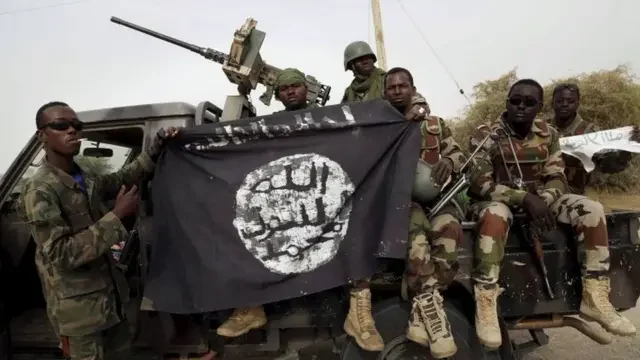

The Islamic State’s West Africa Province (ISWAP) has claimed responsibility for a deadly assault on the village of Mondag, resulting in the execution of 11 Christian residents and the destruction of a local church.
The group stated the attack was carried out in direct retaliation for U.S. military strikes ordered by President Trump in late December.
The massacre occurred just days after U.S. forces, operating with the cooperation of the Nigerian government, launched a series of cruise missile strikes on Christmas Day. Those strikes targeted jihadist strongholds in the Sokoto region and reportedly inflicted significant casualties on militant positions.
According to security reports, the militants entered Mondag using automatic weapons, targeting the civilian population and religious infrastructure. Witnesses described a scene of chaos as gunmen set fire to the village church and numerous residential homes, forcing the surviving population to flee into the surrounding bushland.
Security analysts and human rights observers have raised alarms over the escalating violence in northern Nigeria. ISWAP propaganda channels have since publicised the massacre, framing the violence as a message of defiance against Western military intervention and a “civilizational” conflict.
This latest bloodshed follows a pattern of targeted violence against Christian communities in Adamawa and surrounding states, leading to mass displacement as villagers flee hit-and-run tactics. The intentional destruction of schools and places of worship has further served to destabilise local communities already under pressure from years of insurgency.
While the Nigerian government continues to coordinate with international allies to suppress militant activity, the vulnerability of civilian populations remains high. Critics of the current strategy argue that while military strikes effectively degrade jihadist capabilities, they often trigger retaliatory violence against soft targets.
The massacre in Mondag serves as a stark reminder of the volatile security landscape in Nigeria, where religious minorities frequently find themselves caught in the crossfire of a conflict that many advocates are now describing as a genocide in slow motion.