

Juliana Francis
In 2023, in Delta State, a 10-year-old boy was sent for skill acquisition by his parents. The parents wanted him to understudy a barber living and working in their community.
The barber’s shop is directly opposite the home of the child, and so every day, after school hours, he would go to the barber’s shop, learning how to expertly wield a clipper and cut hair.
However, on the first day of going to the barber as an apprentice, the man immediately sexually groomed the child by showing him a pornographic video of two men having sex on his phone.
He then asked the 10-year-old apprentice: “Do you like what you saw in the movie?”
The child, unsure of how he was supposed to respond to such a bizarre question, simply said: “Yes, sir.”
The barber asked: “Should we practice it?”
The child replied again: “Yes, sir.”
The barber brought an oily substance and began to sodomise the child. When the child cried out in pain, he left his anus and penetrated his mouth.
This horrifying act continued without the child’s parents, even neighbours knowing what was going on. Whenever the barber takes the child into his room, nobody raises an eyebrow because he and the child are the same gender.
The sexual abuse of this child went on for two years without anyone being the wiser.
During one fateful Christmas holiday, the child travelled to his village to spend Christmas with his grandmom. In less than 48 hours, the granny discovered that the child had been repeatedly violated.
How? The little boy was seen chasing all his cousins and other male children in the community with his manhood, attempting to sodomise them.
The distraught granny had to quickly call his parents and ask them to come down to the village, and then they moved to the Police station.
The case was brought before the Divisional Police Officer (DPO), in charge of Ogborikoko Division, Delta State Police Command, Mrs. Agbede Omotsetemi Zuokumor.
Omotsetemi, who was concerned about the child and his habits he was already exhibiting, determined to thoroughly investigate the matter and get justice for the abused child.
She narrated: “After petting and talking with him, he confessed to me that his uncle did this and that to him. We invited the barber, who admitted to the crime and said it was the devil’s work.
“We took the child for medical examination and it was discovered that the barber had damaged the child’s anus and also infected him with HIV. A test was carried out on the barber, and he was HIV positive. The effect of Sexual and Gender Based Violence on society and on that little child is grave. We charged the barber to court and he is now in Prison.”
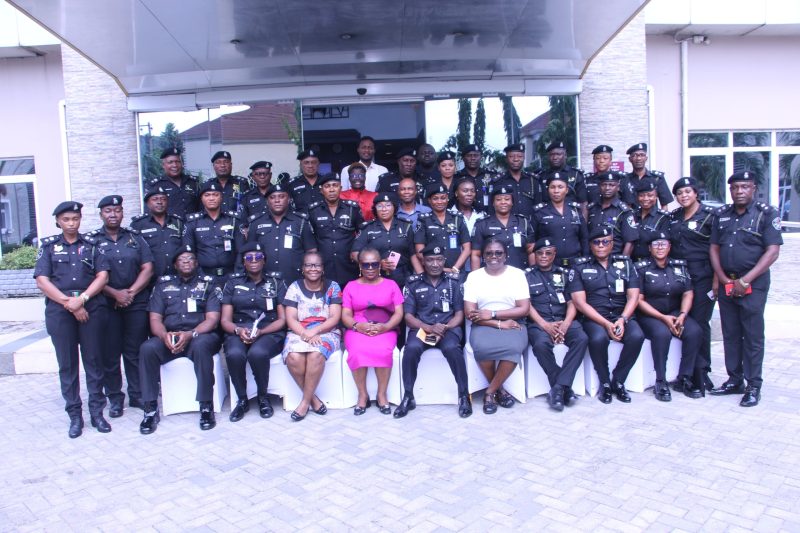
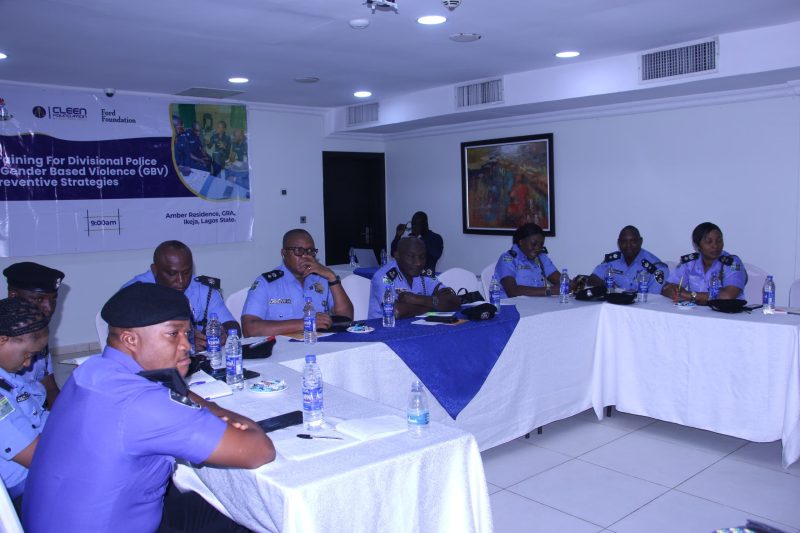
Our reporter chatted with Omotsetemi on Wednesday, 4th of June 2025, at the Amber House, in GRA, Ikeja, Lagos State, where she and 29 other DPOs, along with a Deputy Commissioner of Police (DCP), Mr Yahuza Shall, and an Assistant Commissioner of Police (ACP), Mr Chinedum Aniagboso, both from the Department of Training, Force Headquarters, attended a training organised by CLEEN Foundation.
The training, which focused on how DPOs can prevent Gender violence, was supported by Ford Foundation.
The case study of the 10-year-old apprentice is one of the reasons for the training.
CLEEN Foundation believes that it is better to ensure that GVB is prevented, therefore, DPOs should be proactive in implementing plans to prevent it, rather than for them to become reactive.
The 30 DPOs were drawn from six states: Lagos, Ogun, Enugu, Imo, Edo and Delta. While the DCP and ACP were from the Department of Training, Force Headquarters, Abuja.
According to CLEEN, the goal of the training is to enhance the individual and institutional capacities of the DPOs to be able to coordinate efficient and effective prevention as a response to GBV.
Similarly, the objective is to equip the DPOs with knowledge, skills and tools necessary to prevent GBV, responds to survivors with empathy and promote gender equality within their communities.
The training started on the 2nd and ended on the 4th of June 2025.
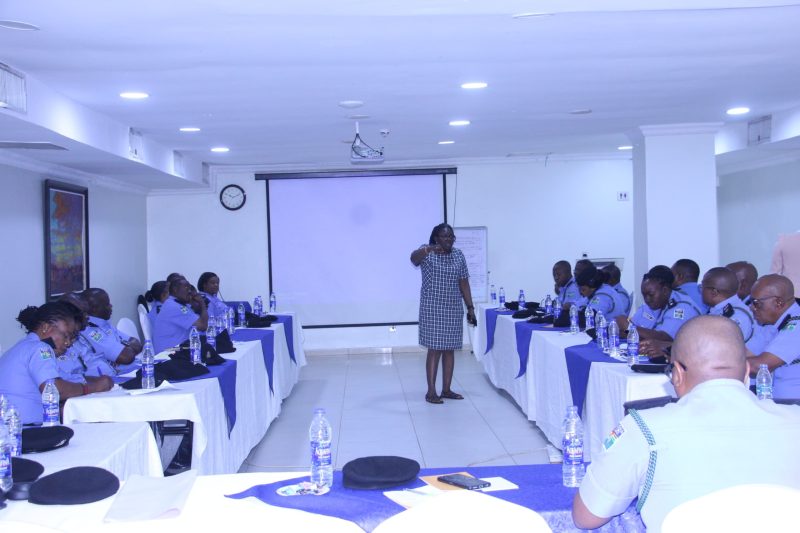
The Programme Advisor, CLEEN Foundation, Ms. Blessing Abiri, talking about what informed the training, said: “We know that the approach that police usually take is reactive in terms of responding to GBV issues, and by that time, of course, the damage and harm would have been done.
“Again, we were looking at what other options or innovative ways we can address this, and then we said we should look at preventive measures, which is to sensitise the officers on how they could develop preventive strategies, to engage with the community on how to reduce or prevent GBV.
“We know we can’t eradicate it, but at least with some preventive measures, these officers can reduce it within their communities and the divisions where they operate from. Two or three weeks ago, we were in the north, so the training is segmented into the north and the south.
“From Monday to Wednesday, when the training started, we’ve seen a change of mindsets. Many of these officers didn’t believe that it was possible or doable to come up with measures for prevention. Again, some came with mindsets of responding from a reactive position but in the last three days, we’ve been able to show them that it’s doable and what also kept or crowned it all for us was our ability to bring some senior police officers, like like Commissioner of Police Edo State, Monday Agbonika, who knew it was doable.
“Agbonika gave the officers the sense that it was possible to prevent GBV. He also urged them to go back to their various divisions and begin to take steps to ensure that this GBV prevention is introduced and incorporated into the response to GBV issues.”
The DPOs were trained on understanding GBV, the causes and impacts. This was handled by the facilitator, Dr Isioma Kemakolam.
The second technical session was on the relevant Legal Framework on GBV.
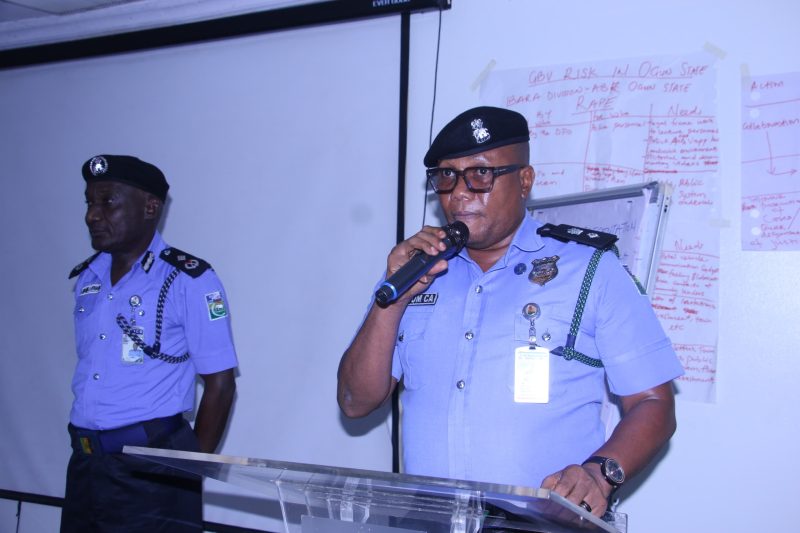
They were also trained on proactive prevention measures, mapping GBV of jurisdictions and posting, Community knowledge, attitudes, and practices about gender-based violence prevention, integrating prevention into GBV response, effective strategies; looking at evidence-based tactics, partnering with nongovernmental organisations, improving station protocols, to mention but a few.
The officers, mostly Chief Superintendents of Police (CSPs) were divided into groups or state commands, and then asked to come up with action plan development on checking and preventing GBV.
During presentation of the action plans and role play, the different DPOs, from different state commands almost all had similar action plans, which among many are training of police officers, carrying out sensitisation programmes for parents, guardians and students, Teachers, community and religious leaders and collaborating with nongovernmental organisations.
For some officers who thought outside the box, they mentioned coming out with flyers, having a radio jingle, hotlines, special courts, surveillance teams, patrols, and ensuring that general hospitals have a gender desk to respond to GBV. These ideas are expected to be financed by NGOs, said the DPOs.
The presentations were done by state command representatives for the action plans. The DPO, Sapele Division, CSP, Mr Johnbull Obioguru, presented for the Delta State Police Command, DPO, Uromi Division, CSP Mr Oluku Othueke, presented for the Edo State Police Command, CSP Bernard Azuka Mama, presented for Enugu State Police Command, CSP Obidinanwa Juliana Omoladum, presented for Imo State Police Command, CSP Oloko Wale, presented for Lagos State Police Command, while a Superintendent of Police (SP), Mr Olabisi Kamorudeen, presented for Ogun State Police Command.
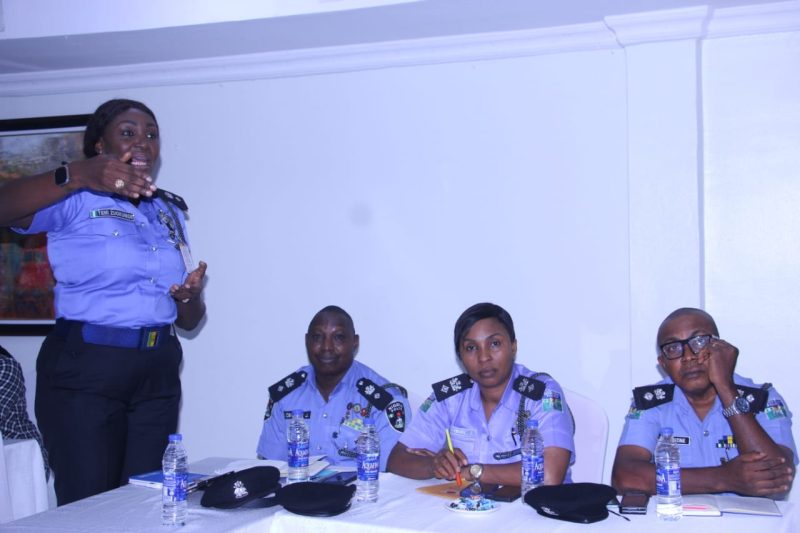
Speaking about the training, Omotsetemi said: “I have learned so much. I have learned how to interact with members of the public to get the job done. I also learned how to create a base or a hostel where one could keep victims of GBV.
“I CLEEN Foundation for collaborating with the Nigeria Police Force, to train us on this issue. We promise to go back and retrain the men and officers working under us, so that we can have a gender-based violence-free Society.
“For every gender-based case reported at my division, I will ensure I investigate the case to a logical conclusion, I will be stricter, and will not give room for influence from anywhere.
“I will train core DPOs in the Delta State Police Command on what I have learned, to ensure that any case of gender-based violence that is reported at their divisions is well handled and the perpetrator prosecuted.”
Another participant, CSP Atta Ignatius, Divisional Police Officer in charge of Udenu in Enugu State Police Command, said: “This is my first time attending a gender-based violence course, and I’ve learnt a lot. The course impacted much on me, in the sense that I have come to know those things I never regarded as very important. Now, as a DPO, I’ve been made to know areas I’m supposed to focus attention on, and how to arrange the master plan for an action that I’m supposed to take in the event of the occurrence of a gender-based offence.
“Meanwhile, in my area, I’ve had issues, I’ve handled matters, so many matters, which I’ll not be able to classify. But it’s only when it gets to the law court, sometimes the magistrate would prefer to rearrange the charge to fit into the circumstances of the offence.”
He explained that following the training, he now knew the tenets of all GBV offences.
“We had issues of interference from different angles when matters came up. But now, I have learnt a lesson that makes me firm in taking decisions about certain cases that appear in my office. I’m going back to do a different thing in criminal disposition,” said Ignatius.
DCP Shall, who said that he was representing DIG Frank Mba, said: “The training, although organised by the department in collaboration with CLEEN Foundation, is for DPOs who are strategic officers drawn from Ogun, Lagos, Imo, Enugu, Edo and Delta states. From the response of the DPOs during the training, it was very clear that they have imbibed the training and they are ready for a change.
“From all indications, we are going to get positive feedback from them. I have earlier briefed the course participants that we are going to come up with a Standard Operating Procedure (SOP) after the training.
“This SOP will be taken to the DIG, who will give it to the IGP for implementation. Inside the SOP, all the procedures and guidelines will be spelt out on how to carry out their duties, on how to tackle this gender-based violence. Of course, cyber-bullying is part of gender-based violence because it’s targeted at vulnerable and weaker persons.
“The training did not start now. It has been going on. CLEEN Foundation has earlier conducted one in Kaduna, which covers most of the northern states. There is another one done in Maduiguri, which covers most of the states in the northeast. I think as time goes on, they are going to cover the whole country.
“In the department, we only deal with training. We don’t handle cases. So those cases are handled at the divisional level, at the state CID and the command headquarters. Like I told you, the IG is very passionate about any issue that has to do with gender based. That is why, if you look at the composition of the division police officers, more than half of them are women.”
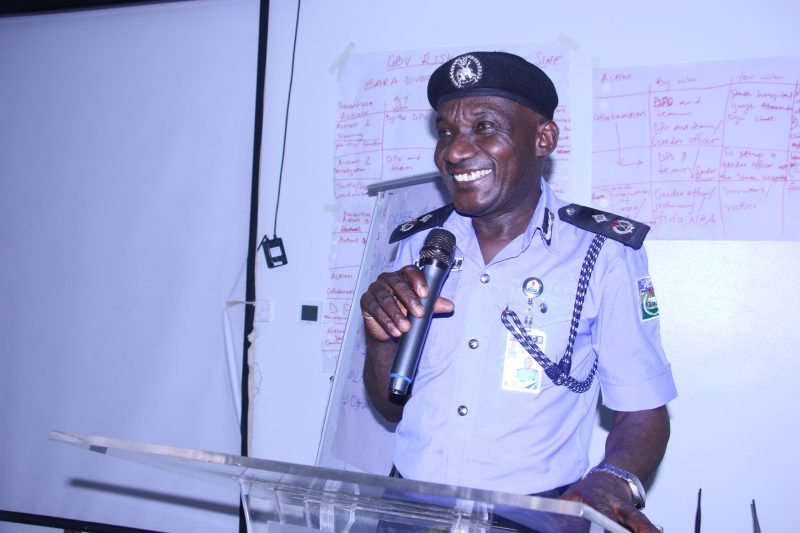
DCP Shall, giving his closing remarks said: “We should face GBV with the seriousness it deserves, because it can cause a lot problems, including communal clash. We now have action plan; we have seen that we can solve this problem and reduce it to the barest minimal.
“As a DPO or police officer, you cannot solve it alone, you must involve other people and be able to show that you have made efforts and results before you can get people to key in.
“We must all show commitment, show we can reduce it to the barest minimum, we have acquired substantial knowledge, it is now left to us to go and share this knowledge with our subordinates and then also monitor them. We appreciate CLEEN Foundation for educating us and making us agents of change.”
The DPOs were presented with a certificate for participation in the immersive training.