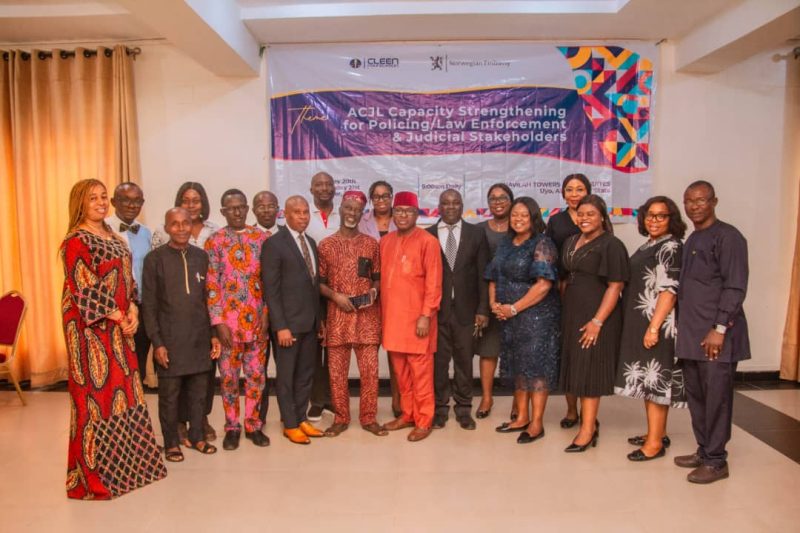

The CLEEN Foundation today commenced a two-day capacity-strengthening workshop in Uyo, bringing together key figures from the police, law enforcement, and the judiciary to address critical gaps in the implementation of the Akwa Ibom State Administration of Criminal Justice Law (ACJL).
The event, held at the Havilah Towers Hotel, aims to enhance the efficacy of the law, which was passed in 2022 but has faced significant setbacks.
In his opening remarks, Mr. Peter Maduoma, the Acting Executive Director of CLEEN Foundation, identified the core challenges hindering the law’s success. He pointed to “a major setback in budgeting for the implementation of the law, provision of resources for the operations of the statutory ACJMC (Administration of Criminal Justice Monitoring Committee), [and] gaps… in the capacity of law enforcement officers, judicial actors… to effectively apply the provisions of the ACJL.”
The workshop is designed to bridge these gaps by deepening technical understanding, strengthening collaboration, and equipping stakeholders with practical tools to operationalise the law.
Mr. Maduoma stated the workshop’s specific objectives: to Enhance the understanding and application of the ACJL provisions, build practical skills for monitoring and evaluating ACJL compliance, and Foster inter-agency frameworks for a consistent, rights-based application of the law and develop strategies to tackle systemic issues like trial delays, custodial congestion, and rights violations.
The Acting Executive Director revealed that the workshop is part of a larger, 12-state project titled “Strengthening Right-Based Approach to ACJA Frameworks and Advancing Women, Peace, and Security in Nigeria.”
The project, which launched nationally in Abuja on August 26, 2025, is funded by the Norwegian Ministry of Foreign Affairs, represented by the Norwegian Embassy in Nigeria. Mr Maduoma extended gratitude to Ambassador Svein Baera and his team for their confidence in the foundation.
Drawing on CLEEN Foundation’s 27-year history in promoting public safety and social justice, Mr Maduoma expressed confidence in the project’s success. He called on all participants as “critical stakeholders” to provide “valuable and strategic contributions” over the two-day session.